
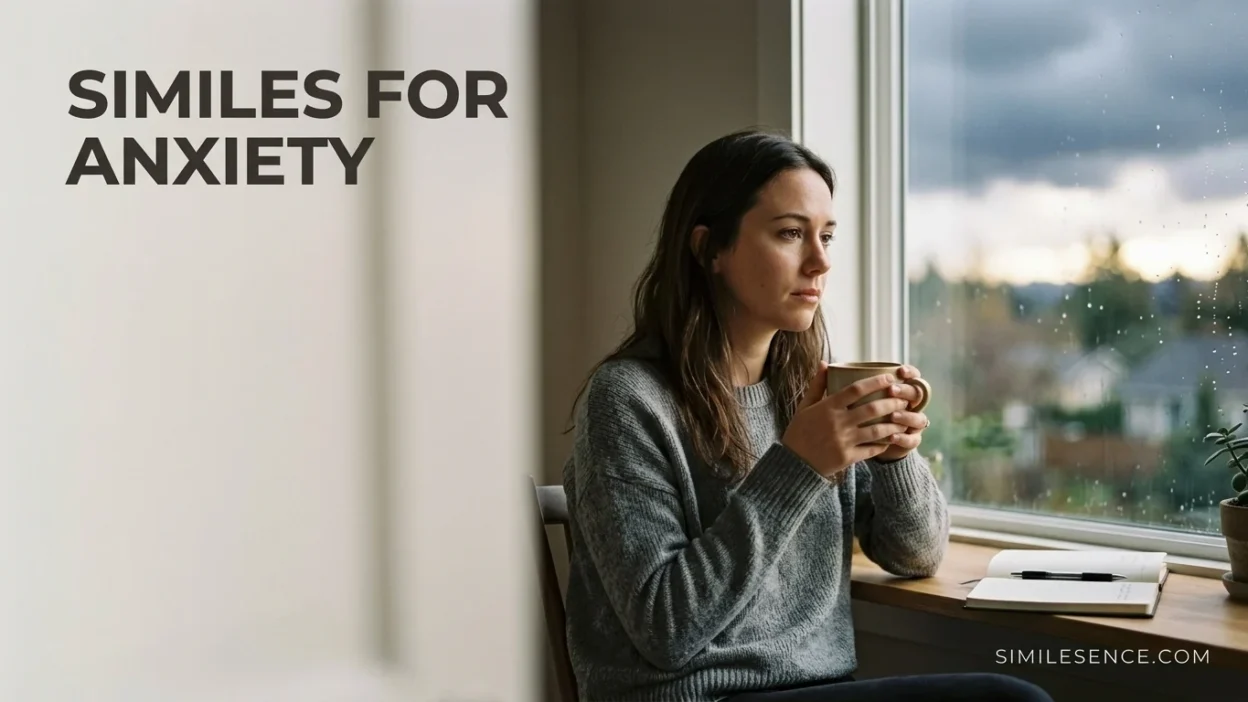
Have you ever felt nervous before a big test, a job interview, or an important conversation? Maybe your heart raced, your hands felt cold, or your thoughts would not slow down. These feelings can be hard to explain, but the right words can help others understand what you are going through. That is where similes for anxiety can make a difference.
A simile compares two different things using words such as like or as. For example, you might say, “My anxiety felt like a storm inside my head.” This comparison helps readers picture the confusion and worry you feel.
In creative writing, similes make emotions easier to understand. Instead of simply saying, “I was anxious,” you can describe your feelings in a more vivid and memorable way. You can use these expressions in stories, poems, journal entries, or everyday conversations.
In this guide, we will explore 20 similes for anxiety, their meanings, and simple example sentences. You will also find a short exercise to practice identifying and creating similes. Let’s explore how these creative comparisons can bring your writing to life!
20 Similes for Anxiety With Meanings and Examples
Here are 20 useful similes that describe nervousness, worry, fear, and the uneasy feeling that comes with anxiety.
1. Anxiety Like a Storm Inside My Head
Meaning: Feeling overwhelmed by many worried thoughts at once.
This simile compares anxious thoughts to a storm. Just as a storm brings strong winds and heavy rain, anxiety can make your mind feel noisy and unsettled.
Examples:
- My anxiety felt like a storm inside my head before the big exam.
- Her thoughts raced like a storm whenever she worried about the future.
2. Nervous as a Cat in a Room Full of Dogs
Meaning: Feeling frightened, uncomfortable, or unsafe.
A cat surrounded by dogs might feel threatened and look for a way to escape. This comparison describes someone who feels nervous in an uncomfortable situation.
Examples:
- I felt as nervous as a cat in a room full of dogs during my first interview.
- He looked as nervous as a cat in a room full of dogs when everyone stared at him.
3. Anxiety Like a Heavy Stone on My Chest
Meaning: Feeling emotionally weighed down by worry.
A heavy stone is difficult to carry. In the same way, anxiety can feel like a burden that makes it hard to relax.
Examples:
- The thought of speaking in public felt like a heavy stone on my chest.
- Her worries sat like a heavy stone on her chest all morning.
4. Thoughts Racing Like a Train Without Brakes
Meaning: Having thoughts that move too quickly to control easily.
A train without brakes cannot stop when needed. This simile describes a mind filled with fast-moving worries.
Examples:
- My thoughts raced like a train without brakes before the results came out.
- He lay awake as his thoughts raced like a train without brakes.
5. Anxiety Like a Dark Cloud Following Me
Meaning: Feeling that worry is always nearby.
A dark cloud can make a bright day seem gloomy. Similarly, anxiety can make it difficult to enjoy the moment.
Examples:
- My worries felt like a dark cloud following me throughout the day.
- She felt as if anxiety were a dark cloud following her into every new situation.
6. Shaking Like a Leaf in the Wind
Meaning: Trembling because of fear or nervousness.
Leaves shake when strong winds blow. This simile describes the physical signs of feeling anxious.
Examples:
- I was shaking like a leaf in the wind before my school speech.
- He stood outside the interview room, shaking like a leaf in the wind.
7. Anxiety Like a Ticking Time Bomb
Meaning: Feeling tense, as if something bad could happen at any moment.
A ticking time bomb creates a sense of pressure and urgency. This comparison describes the feeling of waiting anxiously for something to happen.
Examples:
- Waiting for the final results felt like sitting beside a ticking time bomb.
- She felt like a ticking time bomb as the deadline came closer.
8. My Stomach Twisting Like a Piece of Rope
Meaning: Feeling uneasy or nervous in your stomach.
Anxiety can sometimes cause a tight or unsettled feeling in the stomach. This simile makes that sensation easier to picture.
Examples:
- My stomach twisted like a piece of rope before I walked onto the stage.
- His stomach felt like a piece of rope as he waited for the doctor’s call.
9. Anxiety Like Waves Crashing Against a Shore
Meaning: Feeling repeated waves of worry that are difficult to ignore.
Waves keep moving toward the shore, one after another. In the same way, anxious thoughts can return again and again.
Examples:
- Worry came over me like waves crashing against a shore.
- Her fears rolled in like waves crashing against a shore whenever she thought about the future.
10. As Uneasy as a Bird Trapped in a Cage
Meaning: Feeling trapped, restless, or unable to find peace.
A trapped bird wants to escape but cannot easily do so. This simile describes the discomfort of feeling stuck in a stressful situation.
Examples:
- I felt as uneasy as a bird trapped in a cage while waiting for my turn.
- He felt like a bird trapped in a cage when he could not stop worrying.
11. Anxiety Like Walking on Thin Ice
Meaning: Feeling that one small mistake could cause trouble.
Thin ice can break under someone’s weight. This comparison describes the fear of making a mistake or facing an uncertain situation.
Examples:
- Talking to my angry boss felt like walking on thin ice.
- She felt as if she were walking on thin ice while discussing the difficult topic.
12. My Heart Beating Like a Drum
Meaning: Feeling your heart pound because of nervousness or fear.
A drum produces loud, repeated beats. This simile helps readers imagine a rapidly beating heart.
Examples:
- My heart was beating like a drum before I opened the exam paper.
- His heart pounded like a drum as he waited to hear his name.
13. Anxiety Like a Knot That Will Not Untie
Meaning: Feeling stuck in worry that is difficult to resolve.
A tight knot can be hard to loosen. This simile describes thoughts or feelings that seem impossible to sort out.
Examples:
- The problem in my mind felt like a knot that would not untie.
- Her worries formed a knot that would not untie, even after she talked about them.
14. As Restless as a Bird Before a Storm
Meaning: Feeling unable to relax because you expect something difficult.
Birds may behave differently when a storm approaches. This comparison describes the uneasy feeling that something stressful might happen.
Examples:
- I was as restless as a bird before a storm on the night before my exam.
- He paced around the room, as restless as a bird before a storm.
15. Anxiety Like a Shadow That Never Leaves
Meaning: Feeling as if worry stays with you throughout the day.
A shadow follows you when the light is right. This simile describes anxiety that seems to remain in the background of everyday life.
Examples:
- Her fear felt like a shadow that never leaves.
- Anxiety followed him like a shadow that never leaves whenever he faced a new challenge.
16. As Tense as a Tightly Pulled String
Meaning: Feeling stiff, nervous, or under pressure.
A tightly pulled string is stretched and ready to snap. This comparison describes the tension that builds when someone feels anxious.
Examples:
- I felt as tense as a tightly pulled string before the announcement.
- He sat as tense as a tightly pulled string while waiting for the interview to begin.
17. Anxiety Like Being Lost in a Thick Fog
Meaning: Feeling confused, uncertain, or unable to see what comes next.
Thick fog makes it difficult to see the road ahead. Similarly, anxiety can make the future feel unclear.
Examples:
- My plans seemed hidden like a road lost in thick fog.
- She felt as though she were lost in a thick fog when she tried to make a big decision.
18. Worry Spinning Like a Wheel That Never Stops
Meaning: Thinking about the same problems again and again.
A spinning wheel keeps moving without reaching a destination. This simile describes repetitive thoughts that make it hard to rest.
Examples:
- My mind kept spinning like a wheel that never stops before bedtime.
- His worries spun like a wheel that never stops as he thought about tomorrow.
19. Anxiety Like a Cage Around My Mind
Meaning: Feeling mentally trapped by fear or worry.
A cage limits movement and freedom. This comparison describes how anxiety can make someone feel unable to think freely or enjoy the present.
Examples:
- My fears felt like a cage around my mind during the difficult week.
- She felt trapped by worry, as if a cage surrounded her thoughts.
20. As Nervous as a Mouse in a Noisy Room
Meaning: Feeling small, uncomfortable, or frightened in a busy environment.
A mouse may hide when surrounded by loud sounds and unfamiliar activity. This simile describes nervousness in a crowded or overwhelming place.
Examples:
- I felt as nervous as a mouse in a noisy room at the school assembly.
- He was as nervous as a mouse in a noisy room when he entered the crowded hall.
How to Use Similes for Anxiety in Your Writing
Similes work best when they help readers picture a feeling rather than simply naming it. You can use them in short sentences, longer descriptions, poems, and personal stories.
Here are three easy ways to use similes in writing.
1. Describe physical feelings.
Instead of writing, “I was nervous,” try this:
“My heart was beating like a drum as I waited for my turn.”
This sentence helps readers imagine how nervous the character feels.
2. Show what is happening inside the mind.
Instead of writing, “I could not stop worrying,” try this:
“My thoughts raced like a train without brakes.”
The comparison makes the character’s thoughts feel fast and difficult to control.
3. Show how anxiety affects everyday life.
Instead of writing, “She worried about the future,” try this:
“Her anxiety followed her like a dark cloud, even on sunny days.”
This sentence shows how worry can affect someone’s mood.
Remember, you do not need to use a simile in every sentence. Choose comparisons that fit your meaning and help readers connect with the situation.
Practical Exercise: Test Your Knowledge of Similes
Now it is your turn! Try these 10 questions to practice identifying and completing similes about anxiety.
Questions
1. Fill in the blank.
My heart was beating like a ______ before the speech.
a) Drum
b) Pillow
c) Flower
2. Identify the simile.
Which sentence contains a simile?
a) I felt nervous before the test.
b) My thoughts raced like a train without brakes.
c) I studied for two hours.
3. Complete the sentence.
She was shaking like a ______ in the wind.
a) Leaf
b) Stone
c) Chair
4. What does this simile mean?
“Anxiety felt like a dark cloud following me.”
a) The weather was always rainy.
b) Worry seemed to stay with the person.
c) The person enjoyed walking outside.
5. Choose the correct comparison.
My stomach twisted like ______ before the interview.
a) A piece of rope
b) A bright star
c) A glass of water
6. Identify the comparison words.
In the sentence “He felt as nervous as a mouse in a noisy room,” which words help form the simile?
7. Complete the sentence with your own idea.
My anxiety felt like ______ because ______.
8. True or false?
A simile compares two different things using words such as “like” or “as.”
9. Choose the best simile.
Which sentence best describes thoughts that will not stop?
a) My thoughts raced like a train without brakes.
b) My thoughts were written in a notebook.
c) My thoughts were quiet and still.
10. Write your own simile.
Create one sentence comparing nervousness to something you can see or imagine.
Answers and Explanations
1. Answer: a) Drum
A drum makes repeated beats. The comparison helps readers imagine a rapidly beating heart.
2. Answer: b) My thoughts raced like a train without brakes.
This sentence compares racing thoughts to a train that cannot stop easily. The word “like” signals the simile.
3. Answer: a) Leaf
A leaf can shake in the wind, just as a nervous person may tremble.
4. Answer: b) Worry seemed to stay with the person.
A dark cloud creates a gloomy feeling. Here, it represents worry that does not seem to go away.
5. Answer: a) A piece of rope
A twisted rope helps readers picture the tight, uneasy feeling that anxiety can create in the stomach.
6. Answer: “As nervous as.”
These words connect the person’s nervousness to the image of a mouse in a noisy room.
7. Example answer:
“My anxiety felt like a storm because my thoughts would not settle.”
This is a simile because it compares anxiety to a storm using “like.” Your answer can be different if it clearly expresses the feeling.
8. Answer: True.
Similes compare different things using words such as “like” or “as.”
9. Answer: a) My thoughts raced like a train without brakes.
This comparison suggests that thoughts move quickly and are difficult to control.
10. Example answer:
“I felt as nervous as a bird facing a strong wind.”
This sentence compares nervousness to a bird facing a difficult situation. You can create your own comparison using an object, animal, place, or natural event.
Conclusion
Similes for anxiety help you describe feelings that can sometimes be difficult to put into words. By comparing nervousness to a storm, worry to a dark cloud, or racing thoughts to a train without brakes, you can make your writing clearer and more engaging.
These creative writing similes are useful for students, teachers, poets, storytellers, and anyone who wants to express emotions in a vivid way. They also help readers understand what a character might be feeling without needing a long explanation.
As you practice, think about what anxiety feels like and what images come to mind. Then connect those images using “like” or “as.” Read your sentence aloud and see whether the comparison makes sense.
Most importantly, have fun experimenting with words. Your own similes may become the most memorable parts of your writing.

Henry Gavin is the Administrator of SimileSence, ensuring high-quality content about similes, idioms, and metaphors. He manages daily operations, supports editorial excellence, and helps readers explore figurative language with confidence.