
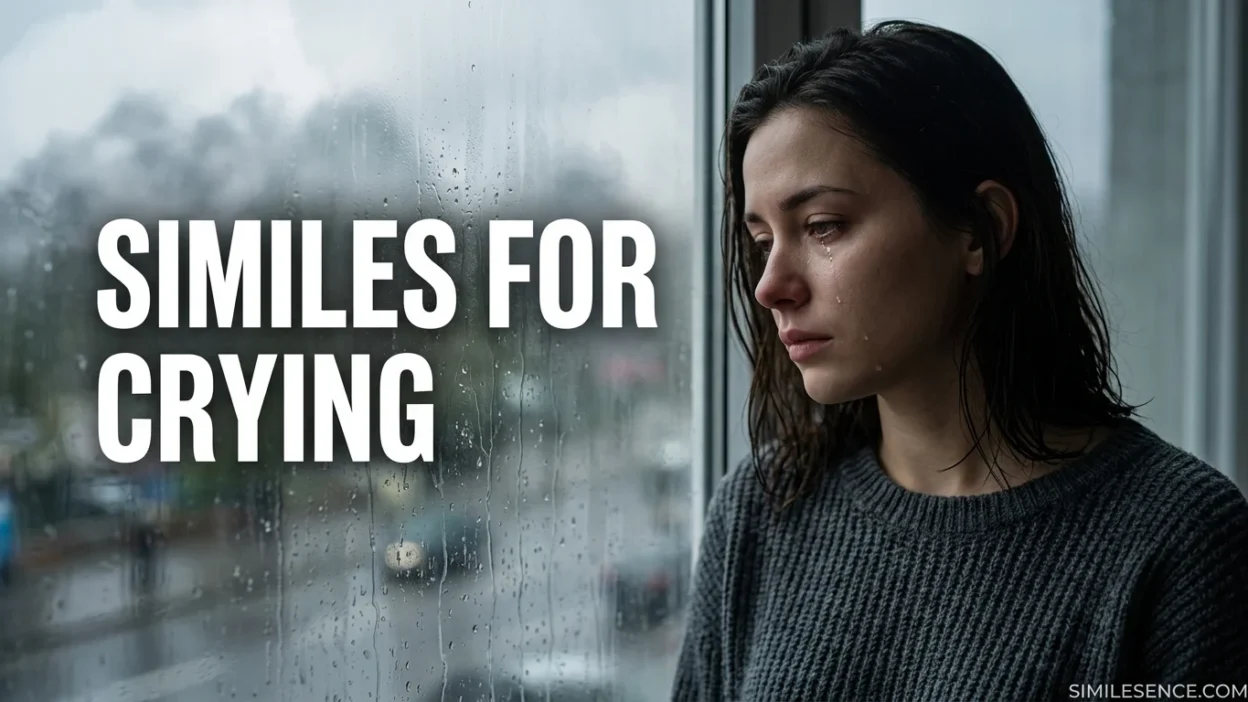
Crying is something everyone understands, but describing it in writing can be tricky. Simply saying “she was crying” tells the reader what happened, but it does not always show how the moment felt. This is where similes for crying can make your writing more powerful.
A simile compares one thing to another using words such as “like” or “as.” For example, “Her tears fell like rain” compares tears to falling rain. In simple terms, similes help readers picture an emotion instead of just reading about it.
if you are writing a story, poem, essay, or social media caption, the right comparison can bring a scene to life. A quiet cry can be compared to a soft drizzle, while intense sobbing might be described like a storm.
Let’s explore 20 creative writing similes for crying. Each example includes its meaning and two simple simile sentences so you can learn how to use similes in writing naturally.
20 Similes for Crying
1. Crying Like a River
Simile: She was crying like a river flowing after heavy rain.
Meaning: Crying a lot, with tears that seem endless.
What it conveys: This comparison creates an image of continuous tears and deep sadness.
Examples:
- The little girl was crying like a river after losing her favorite toy.
- He cried like a river when he heard the sad news.
2. Tears Falling Like Rain
Simile: Her tears fell like rain from a dark cloud.
Meaning: Tears were falling quickly and continuously.
What it conveys: This simile connects crying with the steady fall of rain.
Examples:
- Tears fell from her eyes like rain during the farewell.
- His tears fell like rain as he remembered his old friend.
3. Crying Like a Baby
Simile: He was crying like a baby after hearing the heartbreaking story.
Meaning: Crying openly and emotionally.
What it conveys: It suggests someone is showing strong emotions without trying to hide them.
Examples:
- She cried like a baby when her dog went missing.
- I was crying like a baby during the emotional movie.
4. Tears Like Pearls
Simile: Her tears rolled down her cheeks like tiny pearls.
Meaning: The tears looked small, round, and bright.
What it conveys: This gives crying a delicate and poetic image.
Examples:
- Tears rolled down her face like pearls.
- Tiny tears gathered in her eyes like shining pearls.
5. Crying Like a Broken Heart
Simile: She cried like a heart broken into a thousand pieces.
Meaning: She was crying because of deep emotional pain.
What it conveys: The comparison emphasizes heartbreak and emotional suffering.
Examples:
- He cried like a heart broken into pieces after the breakup.
- She sat alone, crying like her heart had shattered.
6. Tears Flowing Like a Stream
Simile: Her tears flowed like a stream down her cheeks.
Meaning: Tears were moving steadily and continuously.
What it conveys: This creates a calm but emotional picture of someone crying.
Examples:
- Her tears flowed like a stream as she read the letter.
- Tears flowed down his face like a quiet stream.
7. Crying Like a Storm
Simile: He was crying like a storm had broken inside him.
Meaning: His crying was intense and difficult to control.
What it conveys: The storm represents powerful emotions happening all at once.
Examples:
- She cried like a storm after hearing the terrible news.
- His emotions burst out, and he cried like a storm.
8. Tears Like a Waterfall
Simile: Tears poured from her eyes like a waterfall.
Meaning: She was crying heavily.
What it conveys: The image suggests a large and unstoppable amount of tears.
Examples:
- Tears poured down his cheeks like a waterfall.
- She cried, and her tears fell like a waterfall.
9. Crying as Soft as Drizzle
Simile: She was crying as softly as drizzle on a window.
Meaning: She was crying quietly and gently.
What it conveys: This is useful for scenes where sadness is quiet rather than dramatic.
Examples:
- She cried as softly as drizzle falling outside.
- His tears came as softly as drizzle on a cold morning.
10. Tears Rolling Like Drops of Dew
Simile: Tears rolled down her cheeks like drops of dew.
Meaning: Her tears were small and gentle.
What it conveys: This creates a peaceful and delicate image.
Examples:
- Tears rolled down her face like morning dew.
- Small tears appeared like drops of dew on her cheeks.
11. Crying Like a Child in the Rain
Simile: He stood there crying like a child caught in the rain.
Meaning: He looked helpless, sad, and vulnerable.
What it conveys: The comparison highlights innocence and emotional weakness.
Examples:
- She stood by the door crying like a child in the rain.
- He looked lost, crying like a child caught in a sudden storm.
12. Tears Streaming Like a Waterfall
Simile: Her tears were streaming like a waterfall down her face.
Meaning: She was crying intensely.
What it conveys: It shows that the person cannot easily stop the tears.
Examples:
- Tears streamed down his face like a waterfall.
- She watched the old video with tears streaming like a waterfall.
13. Crying Like the Sky After a Storm
Simile: She cried like the sky after a heavy storm.
Meaning: She released a lot of emotion after a difficult experience.
What it conveys: The comparison suggests emotional release after pressure has built up.
Examples:
- She cried like the sky after a storm finally passed.
- He let his tears fall like rain after the long struggle.
14. Tears Falling Like Autumn Leaves
Simile: Her tears fell like autumn leaves from a tired tree.
Meaning: Her tears fell slowly and steadily.
What it conveys: This creates a sad, reflective, and poetic mood.
Examples:
- Her tears fell like autumn leaves onto her coat.
- Tears dropped from his eyes like leaves drifting from a tree.
15. Crying Like a Wounded Bird
Simile: She cried like a wounded bird calling for help.
Meaning: Her crying sounded desperate and painful.
What it conveys: This comparison emphasizes vulnerability and distress.
Examples:
- The child cried like a wounded bird after the accident.
- She called his name, crying like a wounded bird.
16. Tears Burning Like Fire
Simile: Her tears felt like fire against her cheeks.
Meaning: Her crying was connected to intense emotional pain or anger.
What it conveys: Fire makes the emotion feel strong and painful.
Examples:
- Her tears burned like fire as she remembered the betrayal.
- He wiped away tears that felt like fire on his face.
17. Crying Like a Raincloud
Simile: He was crying like a raincloud that could not stop pouring.
Meaning: He was producing tears continuously.
What it conveys: The image makes the crying feel endless and overwhelming.
Examples:
- She cried like a raincloud after saying goodbye.
- He sat quietly, crying like a raincloud ready to burst.
18. Tears Shining Like Glass
Simile: Tears shone in her eyes like tiny pieces of glass.
Meaning: Her tears were visible and sparkling in the light.
What it conveys: This focuses more on the appearance of tears than their amount.
Examples:
- Tears shone in his eyes like pieces of glass.
- Her eyes were filled with tears shining like glass.
19. Crying Like the Sea
Simile: She cried like the sea crashing against the shore.
Meaning: Her crying was powerful and emotional.
What it conveys: The sea suggests movement, force, and overwhelming feelings.
Examples:
- He cried like the sea crashing against the rocks.
- Her sobs came like waves from a restless sea.
20. Tears Falling Like Snowflakes
Simile: Her tears fell like snowflakes in the winter air.
Meaning: Her tears fell softly and gently.
What it conveys: This creates a quiet, beautiful, and slightly melancholic image.
Examples:
- Her tears fell like snowflakes onto the empty page.
- Tears dropped softly like snowflakes as she said goodbye.
How to Use Similes for Crying in Writing
The best simile depends on the emotion you want your reader to feel. You might say someone is “crying like a storm” when their emotions are wild and intense. For quiet sadness, “crying as softly as drizzle” may work better.
Think about three things before choosing a comparison:
- How intense is the crying?
- What emotion is causing it?
- What image fits the scene?
For example, a character who has just lost someone might need a powerful image such as “tears poured like a waterfall.” A character quietly remembering the past might be better described with “tears fell like autumn leaves.”
This is one of the easiest ways to make your simile sentences feel natural rather than forced.
Practical Exercise: Test Your Simile Skills
Try these 10 questions before checking the answers.
Questions
1. Complete the simile:
Her tears fell like ______.
2. Which simile best describes very heavy crying?
A. Tears fell like snowflakes.
B. Tears poured like a waterfall.
C. Tears shone like glass.
3. Complete the sentence:
He was crying as softly as ______.
4. What does “her tears flowed like a stream” suggest?
A. Her tears were steady.
B. She was angry.
C. She was laughing.
5. Create a simile comparing tears to rain.
6. Which simile best shows intense emotions?
A. Crying like a storm.
B. Crying as softly as drizzle.
C. Tears like dew.
7. Complete the simile:
Her tears rolled down her cheeks like ______.
8. Is this a simile?
“His tears were like rain.”
9. Write a simile for someone crying quietly.
10. Which comparison creates the most poetic image?
A. She cried a lot.
B. Her tears fell like autumn leaves.
C. She was sad.
Answers and Explanations
1. Example answer:
“Her tears fell like rain.”
This works because it compares tears with something that falls naturally and steadily.
2. B — Tears poured like a waterfall.
A waterfall suggests a large and powerful flow, making it suitable for heavy crying.
3. Example answer:
“He was crying as softly as drizzle.”
Drizzle is light and gentle, so it creates an image of quiet crying.
4. A — Her tears were steady.
A stream flows continuously, making it a useful comparison for steady tears.
5. Example answer:
“Her tears fell like rain against a window.”
The comparison helps readers picture the tears and creates a clear emotional image.
6. A — Crying like a storm.
A storm suggests strong movement and powerful emotion.
7. Example answer:
“Her tears rolled down her cheeks like drops of dew.”
Dew creates a soft and delicate image.
8. Yes.
“Like” compares tears with rain, so it is a simile.
9. Example answer:
“She cried as softly as drizzle.”
This shows that the character is sad but not crying loudly.
10. B — Her tears fell like autumn leaves.
This comparison creates a visual and emotional image, making the sentence more creative.
Why Similes Make Crying More Powerful
A simple sentence such as “She was crying” gives the reader information. A creative simile can give the reader an image and a feeling.
Compare these two sentences:
Simple: She cried after hearing the news.
With a simile: Her tears fell like rain after she heard the news.
The second sentence gives the reader something to imagine. That is the real meaning of similes in creative writing: they connect an emotion or idea with something familiar.
You can also create your own comparisons. Think about what crying looks, sounds, or feels like. Does it resemble rain, a storm, waves, or falling leaves? Once you find the right image, turn it into a sentence using like or as.
Conclusion
Similes for crying can turn a simple emotional moment into a vivid scene. Instead of only telling readers that someone is sad, you can show the emotion through an image they can easily understand.
For example, tears can fall like rain, flow like a stream, or pour like a waterfall. Each comparison creates a slightly different feeling. Some similes suggest quiet sadness, while others show powerful emotional pain.
The key is to choose a comparison that matches your scene. Don’t be afraid to experiment with your own creative writing similes. Look around you, notice how things move and feel, and use those observations to describe emotions in fresh ways. With practice, creating natural and memorable simile sentences becomes much easier.

Sophia Taylor is a passionate language writer specializing in similes, idioms, and metaphors. She creates engaging, easy-to-understand content that helps readers explore figurative language, improve communication skills, and enjoy the beauty of English expressions.