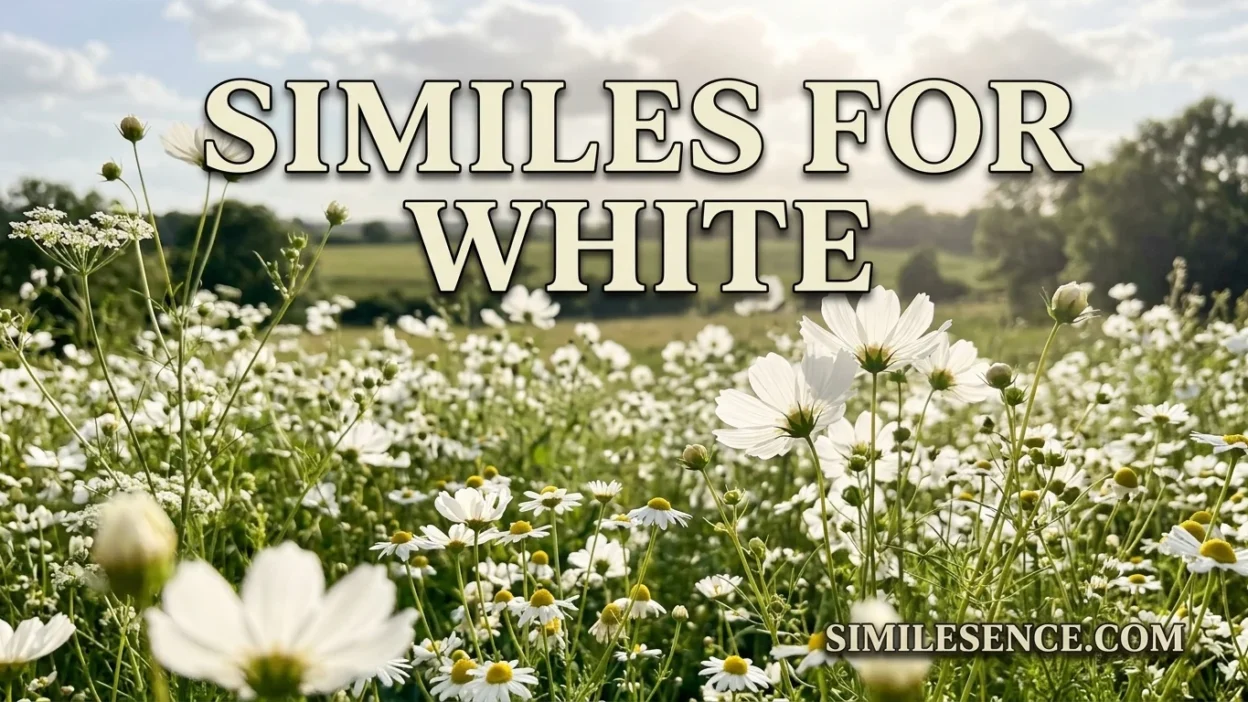
White is a simple color, but it can create many different feelings. It can suggest purity, peace, softness, brightness, coldness, or even emptiness. When you use similes for white, you can turn a basic description into something much more vivid and memorable.
A simile compares one thing with another by using words such as “like” or “as.” For example, instead of saying, “The snow was white,” you might say, “The snow was as white as a sheet of paper.” Suddenly, the reader can picture it more clearly.
Similes are useful in poems, stories, essays, descriptions, and everyday writing. They help readers see what you see and feel the mood behind your words. In simple terms, a good simile makes an ordinary description more interesting.
So, if you want to learn how to describe white creatively, you’re in the right place. Let’s explore 20 beautiful examples of similes for white, their meanings, and simple sentences you can use as inspiration.
20 Similes for White
1. White as Snow
Simile: The blanket was as white as snow.
Meaning: Something is extremely white and bright.
What it conveys: This classic comparison creates an image of clean, bright whiteness.
Example sentences:
- Her dress was as white as snow.
- The fresh walls looked as white as snow in the sunlight.
2. White Like a Cloud
Simile: The pillow looked white like a soft cloud.
Meaning: Something is white, soft, and gentle.
What it conveys: This simile gives a peaceful and comfortable feeling.
Example sentences:
- The cotton was white like a cloud.
- Her fluffy dress looked white like a cloud.
3. White as Milk
Simile: The paint was as white as milk.
Meaning: Something has a smooth, pure white color.
What it conveys: This comparison emphasizes a soft and clean shade of white.
Example sentences:
- The walls were as white as milk.
- The kitten had fur as white as milk.
4. White Like a Pearl
Simile: Her necklace was white like a pearl.
Meaning: Something is bright, smooth, and beautiful.
What it conveys: This comparison adds elegance and beauty to the description.
Example sentences:
- Her teeth were white like pearls.
- The tiny shell was white like a pearl.
5. White as a Ghost
Simile: His face became as white as a ghost.
Meaning: His face suddenly became very pale.
What it conveys: This simile often suggests fear, shock, or surprise.
Example sentences:
- She turned as white as a ghost when she heard the news.
- His face was as white as a ghost after the frightening sound.
6. White Like Fresh Paper
Simile: The page was white like fresh paper.
Meaning: Something is clean, blank, and bright white.
What it conveys: This creates an image of something untouched and spotless.
Example sentences:
- The new notebook was white like fresh paper.
- The empty canvas looked white like a clean sheet of paper.
7. White as Cotton
Simile: The clouds were as white as cotton.
Meaning: Something looks soft, fluffy, and white.
What it conveys: It creates a gentle and comfortable visual image.
Example sentences:
- The clouds were as white as cotton.
- His shirt was as white as fresh cotton.
8. White Like Frost
Simile: The grass looked white like frost.
Meaning: Something has a cold, pale, white appearance.
What it conveys: This comparison creates a chilly winter feeling.
Example sentences:
- The morning field was white like frost.
- The windows looked white like frost on a cold morning.
9. White as a Lily
Simile: Her dress was as white as a lily.
Meaning: Something is pure, delicate, and bright white.
What it conveys: This simile gives the description a graceful and natural feeling.
Example sentences:
- Her gown was as white as a lily.
- The flower looked as white as a lily in the moonlight.
10. White Like a Swan
Simile: The bird was white like a swan.
Meaning: Something is bright white and graceful.
What it conveys: This comparison suggests beauty, elegance, and purity.
Example sentences:
- Her flowing dress was white like a swan’s feathers.
- The bird’s feathers were white like a swan.
11. White as Chalk
Simile: The wall was as white as chalk.
Meaning: Something has a very pale, plain white color.
What it conveys: This comparison creates a simple and clear image.
Example sentences:
- The old classroom wall was as white as chalk.
- His face looked as white as chalk after the shock.
12. White Like Moonlight
Simile: The path was white like moonlight.
Meaning: Something appears pale, soft, and glowing.
What it conveys: This creates a calm and slightly magical image.
Example sentences:
- The snow looked white like moonlight.
- Her dress seemed white like moonlight under the stars.
13. White as a Diamond
Simile: The crystal was as white as a diamond.
Meaning: Something is bright, clear, and beautiful.
What it conveys: This comparison suggests brilliance and value.
Example sentences:
- The decoration was as white as a diamond.
- Her smile looked white as a diamond in the bright light.
14. White Like Sugar
Simile: The sand was white like sugar.
Meaning: Something is bright white and fine.
What it conveys: This creates an image of a clean, pale surface.
Example sentences:
- The beach was covered with sand white like sugar.
- The powder looked white like sugar on the table.
15. White as a Dove
Simile: The feathers were as white as a dove.
Meaning: Something is pure, soft, and bright white.
What it conveys: This comparison often creates a peaceful feeling.
Example sentences:
- The bird had feathers as white as a dove.
- Her scarf was as white as a dove’s wings.
16. White Like a Winter Morning
Simile: The town looked white like a winter morning.
Meaning: Everything appeared pale and covered in white.
What it conveys: This gives the reader a calm and chilly winter image.
Example sentences:
- The village looked white like a winter morning.
- The snowy streets were white like a winter morning.
17. White as a Sheet
Simile: His face became as white as a sheet.
Meaning: Someone became very pale because of fear, shock, or illness.
What it conveys: This is a common way to show a sudden change in someone’s appearance.
Example sentences:
- She went as white as a sheet when she saw the accident.
- He looked as white as a sheet after the frightening news.
18. White Like Foam
Simile: The waves were white like foam.
Meaning: Something is bright white and light.
What it conveys: This comparison creates a fresh and lively image.
Example sentences:
- The ocean waves were white like foam.
- The soap bubbles looked white like foam.
19. White as a Swan’s Feather
Simile: Her scarf was as white as a swan’s feather.
Meaning: The scarf was extremely white and soft-looking.
What it conveys: This adds elegance and softness to the description.
Example sentences:
- The scarf was as white as a swan’s feather.
- His shirt looked as white as a swan’s feather.
20. White Like a Blank Canvas
Simile: The wall was white like a blank canvas.
Meaning: The wall was completely clean and empty.
What it conveys: This comparison can suggest possibility, creativity, and a fresh beginning.
Example sentences:
- The empty wall was white like a blank canvas.
- Her notebook looked white like a blank canvas waiting for ideas.
Practical Exercise: Test Your Simile Skills
Try answering these questions before checking the answers.
Questions
1. Complete the simile:
The snow was as white as ________.
2. Which sentence contains a simile?
A. The flower is white.
B. The flower has five petals.
C. The flower is white like a pearl.
3. Complete the sentence:
The clouds were as white as ________.
4. What does “white as a ghost” usually suggest?
5. Find the simile:
A. The wall was white.
B. The wall was white like fresh paper.
C. The wall was very clean.
6. Complete the simile:
The waves were white like ________.
7. What two things are compared in “Her dress was as white as a lily”?
**8. Create your own simile describing white snow.
9. Complete the sentence:
His face became as white as a ________.
**10. Write your own simile for something white and soft.
Answers and Explanations
1. Snow.
“The snow was as white as snow” is a common comparison, although “as white as a cloud” or “as white as milk” can create a stronger image.
2. C. The flower is white like a pearl.
The word “like” connects the flower with a pearl.
3. Cotton.
“The clouds were as white as cotton” compares their color and fluffy appearance.
4. It usually suggests that someone looks very pale because of fear, shock, or surprise.
5. B. The wall was white like fresh paper.
It directly compares the wall to fresh paper.
6. Foam.
“The waves were white like foam” creates a clear picture of bright, frothy waves.
7. The dress is compared with a white lily.
The comparison suggests purity and brightness.
8. One possible answer is:
“The snow was white like a blanket covering the earth.”
9. Sheet.
“His face became as white as a sheet” suggests that he suddenly became pale.
10. One possible answer is:
“The clouds were white like soft pillows.”
Remember, creative writing similes can have many correct answers. The best comparison is one that creates a clear picture in the reader’s mind.
Conclusion
Similes make simple descriptions much more powerful. Instead of saying something is simply white, you can compare it to snow, milk, clouds, pearls, lilies, moonlight, or other familiar things. These comparisons help readers understand not only the color but also the mood, texture, brightness, or feeling behind it.
Learning the meaning of similes is easy when you start with everyday objects and scenes. Think about what something looks like, feels like, or reminds you of. Then turn that idea into a comparison using “like” or “as.”
The next time you describe something white, try creating your own simile. A small comparison can make your writing brighter, clearer, and much more memorable.

Henry Gavin is the Administrator of SimileSence, ensuring high-quality content about similes, idioms, and metaphors. He manages daily operations, supports editorial excellence, and helps readers explore figurative language with confidence.