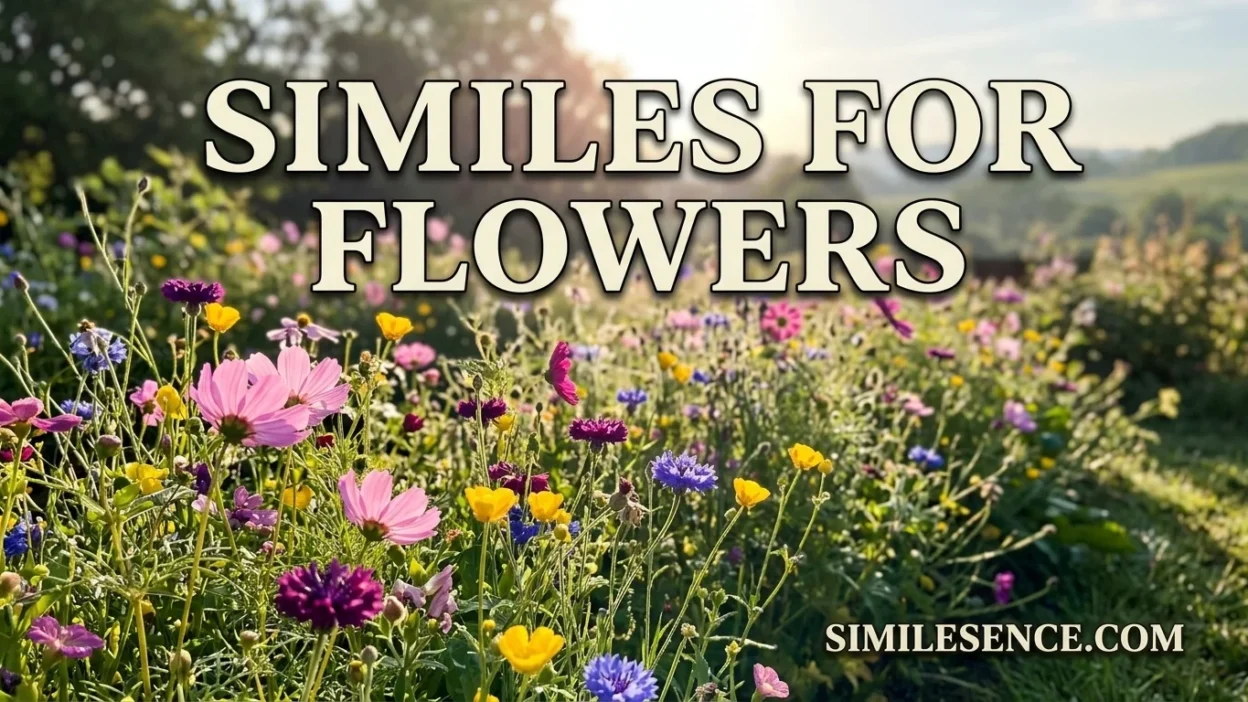
Flowers have a natural way of making writing feel bright, soft, and full of life. But instead of simply saying that a flower is beautiful, you can use a simile to help your reader picture it. A simile compares two different things using words such as “like” or “as.”
For example, saying, “The rose was beautiful” tells us something. But “The rose was like a ruby glowing in the morning sun” gives us a much clearer picture.
That is the magic of similes. They turn simple descriptions into colorful images. if you are writing a poem, story, school assignment, greeting card, or social media caption, creative writing similes can make your words more memorable.
In this guide, let’s explore 20 beautiful similes for flowers, along with their meanings and simile sentences. You’ll also get a short exercise to practice identifying and creating your own comparisons.
20 Similes for Flowers
1. Flowers Were Like Colorful Stars
Simile: The flowers were like colorful stars scattered across the garden.
Meaning: The flowers looked bright and beautiful.
What it conveys: This comparison shows how flowers can stand out like tiny points of light.
Example sentences:
- The wildflowers were like colorful stars across the green field.
- Red and yellow flowers looked like stars beneath the morning sun.
2. The Rose Was Like a Ruby
Simile: The red rose was like a ruby shining in the sunlight.
Meaning: The rose was deep red and beautiful.
What it conveys: This simile compares the rich color of a rose to a precious gemstone.
Example sentences:
- Her garden rose was like a ruby among green leaves.
- The fresh rose looked like a ruby after the rain.
3. Flowers Were Like a Rainbow
Simile: The flower bed was like a rainbow spread across the garden.
Meaning: The flowers had many bright colors.
What it conveys: This creates an image of a colorful and cheerful garden.
Example sentences:
- The spring flowers were like a rainbow on the hillside.
- Her garden looked like a rainbow after everything began to bloom.
4. The Lily Was Like a White Cloud
Simile: The lily was as white as a soft cloud.
Meaning: The lily was very white and delicate.
What it conveys: It gives the flower a peaceful, clean, and gentle feeling.
Example sentences:
- The white lily was like a cloud floating among the green leaves.
- Each lily looked as soft as a cloud in the morning light.
5. The Sunflower Was Like a Golden Sun
Simile: The sunflower was like a golden sun standing in the garden.
Meaning: The sunflower was bright and yellow.
What it conveys: This comparison highlights the flower’s warm and cheerful appearance.
Example sentences:
- The sunflower looked like a golden sun beside the fence.
- Tall sunflowers stood like little suns in the field.
6. The Daisy Was Like a Tiny Star
Simile: The little daisy was like a tiny star in the grass.
Meaning: The daisy looked small, bright, and noticeable.
What it conveys: This makes a simple flower seem magical and special.
Example sentences:
- A white daisy was like a tiny star among the green grass.
- Every little daisy looked like a star after the rain.
7. The Flowers Were Like Silk
Simile: The flower petals felt like soft silk.
Meaning: The petals were very smooth and delicate.
What it conveys: This simile focuses on the soft texture of flower petals.
Example sentences:
- The rose petals felt like silk beneath my fingers.
- Her hands gently touched petals that were like silk.
8. The Garden Was Like a Painted Picture
Simile: The garden was like a painted picture filled with flowers.
Meaning: The garden looked extremely beautiful and colorful.
What it conveys: It helps the reader imagine a carefully created scene full of color.
Example sentences:
- In spring, the garden was like a painted picture.
- With roses and lilies everywhere, the yard looked like a painted picture.
9. The Petals Were Like Velvet
Simile: The petals were as soft as velvet.
Meaning: The petals felt smooth and soft.
What it conveys: This comparison gives the reader a clear sense of their gentle texture.
Example sentences:
- The red petals were as soft as velvet.
- She touched the flower because its petals felt like velvet.
10. The Flowers Were Like Dancing Flames
Simile: The orange flowers were like dancing flames in the garden.
Meaning: The flowers were bright orange and seemed lively.
What it conveys: This creates a warm, energetic image.
Example sentences:
- The orange blossoms were like dancing flames in the evening light.
- Bright flowers looked like little flames moving in the breeze.
11. The Rose Was Like a Blushing Face
Simile: The pink rose was like a blushing face.
Meaning: The rose had a soft pink or red color.
What it conveys: This gives the flower a gentle, shy, and emotional quality.
Example sentences:
- The pink rose was like a blushing face in the morning sun.
- Her favorite flower looked like a shy face turning pink.
12. Flowers Were Like Little Smiles
Simile: The flowers were like little smiles growing in the garden.
Meaning: The flowers made the garden feel happy.
What it conveys: This comparison connects flowers with joy and warmth.
Example sentences:
- Yellow flowers were like little smiles along the pathway.
- Every blossom looked like a little smile after the rain.
13. The Flower Was Like a Butterfly
Simile: The flower was like a butterfly resting on a green stem.
Meaning: The flower was colorful and delicate.
What it conveys: This creates a light and graceful image.
Example sentences:
- The purple flower was like a butterfly resting in the garden.
- Its delicate petals looked like the wings of a butterfly.
14. The Garden Was Like a Rainbow Carpet
Simile: The garden was like a rainbow carpet covering the ground.
Meaning: Many colorful flowers covered the garden.
What it conveys: It emphasizes the large number and variety of flowers.
Example sentences:
- Spring turned the meadow into a rainbow carpet.
- The flower field looked like a rainbow carpet from a distance.
15. The Flowers Were Like Fireworks
Simile: The flowers were like fireworks bursting with color.
Meaning: The flowers were bright, colorful, and eye-catching.
What it conveys: This makes a flower garden feel exciting and lively.
Example sentences:
- The blooming garden was like fireworks in the daylight.
- Red, pink, and yellow flowers looked like colorful fireworks.
16. The Lavender Was Like a Purple Sea
Simile: The lavender field was like a purple sea stretching to the horizon.
Meaning: A large area of lavender looked purple and endless.
What it conveys: This gives a strong sense of size, beauty, and movement.
Example sentences:
- The lavender field was like a purple sea beneath the blue sky.
- From the hill, the flowers looked like a purple sea.
17. The Flowers Were Like Gentle Bells
Simile: The flowers moved like gentle bells in the breeze.
Meaning: The flowers moved softly and gracefully.
What it conveys: This comparison creates a peaceful and musical feeling.
Example sentences:
- The small blossoms swayed like gentle bells in the wind.
- Flowers moved like tiny bells as the breeze passed through them.
18. The Cherry Blossoms Were Like Pink Snow
Simile: The cherry blossoms looked like pink snow falling from the trees.
Meaning: The pale pink blossoms covered the branches and ground.
What it conveys: This creates a soft, dreamy springtime image.
Example sentences:
- The cherry blossoms were like pink snow beneath the trees.
- The petals floated down like soft pink snow.
19. The Flowers Were Like Morning Stars
Simile: The flowers were like morning stars shining with fresh beauty.
Meaning: The flowers looked bright and fresh early in the day.
What it conveys: This comparison gives the scene a peaceful and magical mood.
Example sentences:
- The fresh blossoms were like morning stars in the garden.
- Dew-covered flowers looked like tiny morning stars.
20. The Flower Was Like a Smile After Rain
Simile: The little flower was like a smile after a long rain.
Meaning: The flower brought happiness after a dull or difficult time.
What it conveys: This simile connects flowers with hope, joy, and renewal.
Example sentences:
- The first spring flower was like a smile after a long rain.
- Seeing the bright blossom was like finding a smile after a storm.
Practical Exercise: Test Your Simile Skills
Try these questions before looking at the answers.
Questions
1. Complete the simile:
The sunflower was like a ________.
2. Which comparison is a simile?
A. The rose is red.
B. The rose is like a ruby.
C. The rose has petals.
3. Complete the sentence:
The petals were as soft as ________.
4. What does this simile suggest?
“The flower garden was like a rainbow.”
5. Complete the simile:
The lavender field looked like a purple ________.
6. Find the simile:
A. The lily was white.
B. The lily had six petals.
C. The lily was like a white cloud.
7. What two things are compared in “The flowers were like little smiles”?
8. Create your own simile for a red flower.
9. Complete the sentence:
The daisy was like a tiny ________.
10. Create a simile describing flowers moving in the wind.
Answers
1. The sunflower was like a golden sun.
This compares the bright yellow sunflower to the sun.
2. B. The rose is like a ruby.
The word “like” creates the comparison.
3. Silk or velvet.
Both describe something soft and smooth.
4. It suggests that the garden was full of bright and different colors.
5. Sea.
The comparison shows that the lavender field looked wide and purple.
6. C. The lily was like a white cloud.
This sentence directly compares the lily with a cloud.
7. The flowers are compared to smiles.
The comparison suggests that the flowers bring happiness.
8. One possible answer is:
“The red flower was like a ruby.”
9. Star.
The comparison makes the small daisy seem bright and special.
10. One possible answer is:
“The flowers moved like dancers in the wind.”
There can be many correct answers when creating your own similes. The goal is to make a clear comparison that helps the reader imagine the scene.
Conclusion
Similes can make simple descriptions feel much more vivid. Instead of only saying that flowers are colorful, soft, bright, or beautiful, you can compare them with things your reader already knows.
A flower can be like a ruby, a star, a rainbow, silk, or even a smile. These comparisons give your writing more color and help readers create pictures in their minds.
As you practice, think about what a flower looks, feels, smells, or moves like. Then connect it to something familiar. That is a simple way to learn how to use similes in writing.
So, pick your favorite flower and create three new comparisons today. Your next poem, story, or description might just bloom with better words.

Sophia Taylor is a passionate language writer specializing in similes, idioms, and metaphors. She creates engaging, easy-to-understand content that helps readers explore figurative language, improve communication skills, and enjoy the beauty of English expressions.