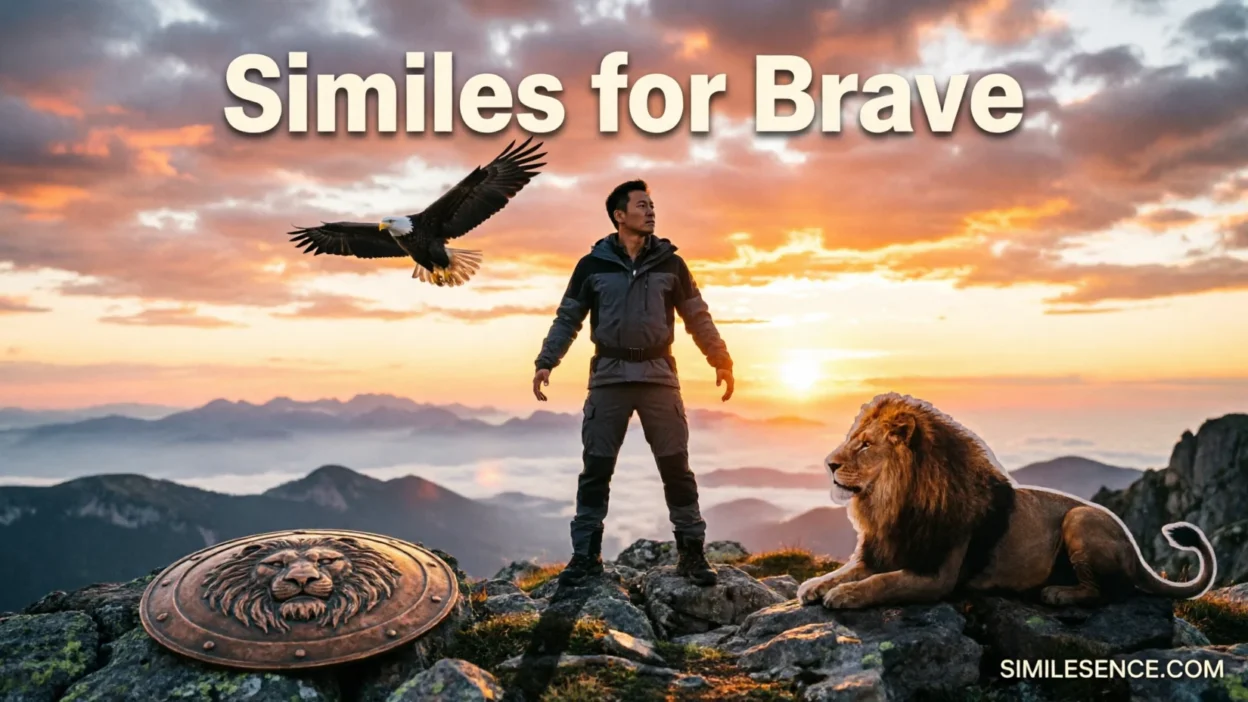
Have you ever wanted to describe someone who is brave without simply saying, “She is brave”? A good simile can make that idea much more vivid. Similes compare one thing to another using words such as “like” or “as.” They help readers picture an idea instead of just being told about it.
For example, saying “He was as brave as a lion” gives us a stronger image than simply saying, “He was brave.” We immediately imagine courage, strength, and confidence.
In simple terms, similes make ordinary sentences more colorful and memorable. They are useful in stories, poems, school assignments, speeches, and everyday creative writing. You might say a brave person is “like a fearless warrior” or “as bold as a lion.”
Let’s explore some creative writing similes for brave. Each example below includes its meaning and simple simile sentences so you can see how to use similes in writing naturally.
20 Similes for Brave
1. As Brave as a Lion
Simile: He was as brave as a lion when he faced the danger.
Meaning: This means someone is very courageous and fearless.
What it conveys: Lions are often used as symbols of courage and strength, so this simile creates a powerful image of bravery.
Examples:
- Maya was as brave as a lion when she stood up for her friend.
- The young soldier was as brave as a lion in the difficult battle.
2. Brave Like a Fearless Warrior
Simile: She stood brave like a fearless warrior.
Meaning: This describes someone who faces problems without giving up.
What it conveys: The comparison suggests strength, courage, and determination.
Examples:
- He walked into the challenge brave like a fearless warrior.
- She remained brave like a fearless warrior despite the difficult situation.
3. As Bold as a Tiger
Simile: The boy was as bold as a tiger when he entered the dark room.
Meaning: This means someone is confident and willing to face danger.
What it conveys: The tiger gives the sentence a strong and fearless feeling.
Examples:
- She was as bold as a tiger when she defended her team.
- The explorer was as bold as a tiger in the dangerous forest.
4. Brave Like a Lionheart
Simile: He was brave like a lionheart when everyone else stepped back.
Meaning: This means a person has great courage.
What it conveys: It highlights bravery during a difficult or frightening moment.
Examples:
- She acted brave like a lionheart when the storm began.
- The firefighter was brave like a lionheart as he entered the building.
5. As Fearless as a Hero
Simile: The young girl was as fearless as a hero.
Meaning: This describes someone who does not allow fear to stop them.
What it conveys: It creates the image of a person confidently facing danger.
Examples:
- He was as fearless as a hero when he rescued the lost child.
- She remained as fearless as a hero during the emergency.
6. Brave Like a Mountain
Simile: He stood brave like a mountain against every challenge.
Meaning: This means someone is strong, steady, and difficult to frighten.
What it conveys: A mountain suggests strength, stability, and endurance.
Examples:
- She stood brave like a mountain when criticism came her way.
- The captain remained brave like a mountain during the crisis.
7. As Courageous as a Soldier
Simile: He was as courageous as a soldier facing the unknown.
Meaning: This means someone shows great courage in a difficult situation.
What it conveys: The comparison suggests discipline, strength, and determination.
Examples:
- Sarah was as courageous as a soldier when she spoke before the crowd.
- The boy was as courageous as a soldier during the emergency.
8. Brave Like a Falcon
Simile: She was brave like a falcon soaring above the storm.
Meaning: This describes someone who remains confident even when things become difficult.
What it conveys: The falcon adds a sense of freedom, confidence, and strength.
Examples:
- He remained brave like a falcon during the difficult journey.
- She faced the challenge brave like a falcon.
9. As Bold as Brass
Simile: He was as bold as brass when he questioned the unfair decision.
Meaning: This means someone is very confident and unafraid to speak.
What it conveys: It suggests boldness and strong self-confidence.
Examples:
- She was as bold as brass when she asked the difficult question.
- The student was as bold as brass during the debate.
10. Brave Like a Storm
Simile: He was brave like a storm, powerful and impossible to ignore.
Meaning: This describes someone whose courage is strong and forceful.
What it conveys: The storm creates an image of powerful energy and determination.
Examples:
- She entered the competition brave like a storm.
- His spirit was brave like a storm when trouble arrived.
11. As Strong as a Bear
Simile: The firefighter was as brave and strong as a bear.
Meaning: This describes someone with both physical and emotional courage.
What it conveys: A bear suggests strength, confidence, and fearlessness.
Examples:
- He was as strong as a bear when he carried the injured man.
- The athlete stayed as brave and strong as a bear throughout the challenge.
12. Brave Like a Knight
Simile: The young hero was brave like a knight protecting his kingdom.
Meaning: This means someone courageously protects others or faces danger.
What it conveys: The knight creates an image of honor, courage, and loyalty.
Examples:
- She was brave like a knight when she defended her younger brother.
- He stood brave like a knight against the unfair accusation.
13. As Fearless as Fire
Simile: Her spirit was as fearless as fire.
Meaning: This means her courage was powerful and difficult to stop.
What it conveys: Fire suggests energy, power, and an unstoppable spirit.
Examples:
- Her heart was as fearless as fire during the competition.
- He remained as fearless as fire when the plan failed.
14. Brave Like a Wolf
Simile: He faced the challenge brave like a wolf protecting its pack.
Meaning: This means someone is courageous and protective.
What it conveys: The wolf adds a feeling of loyalty, strength, and determination.
Examples:
- She was brave like a wolf when her family needed her.
- The leader stood brave like a wolf during the crisis.
15. As Courageous as a Captain
Simile: She was as courageous as a captain during the difficult voyage.
Meaning: This describes someone who remains brave while leading others.
What it conveys: It suggests leadership, responsibility, and confidence.
Examples:
- He was as courageous as a captain when the team faced defeat.
- Maria remained as courageous as a captain during the emergency.
16. Brave Like a Shield
Simile: He stood brave like a shield between his friend and danger.
Meaning: This means someone bravely protects another person.
What it conveys: A shield represents protection, courage, and sacrifice.
Examples:
- She stood brave like a shield when her brother was threatened.
- The guard was brave like a shield during the attack.
17. As Bold as a Hawk
Simile: The speaker was as bold as a hawk when she addressed the crowd.
Meaning: This means someone is confident and courageous.
What it conveys: The hawk creates an image of sharp focus, confidence, and strength.
Examples:
- He was as bold as a hawk during the interview.
- She remained as bold as a hawk despite the pressure.
18. Brave Like a Rising Sun
Simile: She was brave like a rising sun after a difficult night.
Meaning: This describes courage that brings hope after hardship.
What it conveys: The rising sun suggests hope, renewal, and strength.
Examples:
- He returned brave like a rising sun after his failure.
- Her courage shone brave like a rising sun.
19. As Steady as a Rock
Simile: He was as brave and steady as a rock during the crisis.
Meaning: This means someone stays calm and strong when facing trouble.
What it conveys: A rock suggests stability, strength, and emotional control.
Examples:
- She remained as steady as a rock while everyone panicked.
- The leader was as brave and steady as a rock.
20. Brave Like a Star in the Dark
Simile: Her courage was like a star shining in the dark.
Meaning: This means someone’s bravery gives hope during a difficult time.
What it conveys: The star creates a warm image of hope, courage, and guidance.
Examples:
- His kindness and courage were like a star in the dark.
- She became like a star in the dark for her frightened friends.
How to Use Similes for Brave in Writing
Using similes is simple once you understand the basic pattern. Start with the person, action, or feeling you want to describe. Then think of something that naturally represents courage.
For example:
Basic sentence:
The girl was brave.
Sentence with a simile:
The girl was as brave as a lion when she faced the challenge.
You can also use “like”:
Basic sentence:
He faced the danger bravely.
Sentence with a simile:
He faced the danger like a fearless warrior.
When creating your own similes, choose comparisons that match the type of bravery you want to show. A lion can suggest strength, while a star can suggest hope. A shield can suggest protection, while a mountain can suggest steady courage.
Practical Exercise: Test Your Simile Skills
Try these questions before checking the answers.
Questions
1. Complete the simile:
She was as brave as a ______.
2. Which word best completes this sentence?
“He faced the danger like a ______.”
a) pillow
b) fearless warrior
c) spoon
3. What does this simile mean?
“He stood as steady as a rock.”
4. Complete the sentence:
“Her courage was like a ______ shining in the dark.”
5. Which sentence uses a simile correctly?
a) He was brave.
b) He was as brave as a lion.
c) He bravery lion.
6. What does “brave like a knight” suggest?
7. Create your own simile using the word “like” to describe a brave person.
8. Complete the sentence:
“The firefighter was as courageous as a ______.”
9. What does this simile convey?
“Her spirit was as fearless as fire.”
10. Rewrite this sentence using a simile:
“The boy was very brave.”
Answers and Explanations
1. Lion
A common answer is “lion” because lions are often associated with courage and strength.
2. b) fearless warrior
“Fearless warrior” creates a clear image of someone facing danger without giving up.
3.
It means the person remained calm, strong, and steady during a difficult situation.
4. Star
A star shining in darkness can represent hope and courage during hard times.
5. b) He was as brave as a lion.
This is a simile because it compares the person’s bravery to a lion using “as.”
6.
It suggests courage, honor, protection, and a willingness to face danger.
7.
Answers can vary. For example: “She faced the challenge like a fearless warrior.”
8. Soldier
“As courageous as a soldier” is a natural comparison that suggests bravery and determination.
9.
It conveys powerful, energetic, and unstoppable courage.
10.
One possible answer is: “The boy was as brave as a lion.” Other creative answers can also work if they make a clear comparison.
Why Similes Make Writing Better
Similes can turn a simple statement into a picture in the reader’s mind. Instead of saying that someone is brave, you can show what their bravery feels like.
For example, “She was brave like a shield” suggests protection, while “She was brave like a rising sun” suggests hope.
This is why examples of similes are useful for students, writers, and anyone learning creative writing. They help you choose stronger words and make your simile sentences more interesting.
The best similes are also easy to understand. You do not need a complicated comparison. A simple image that fits the situation can be more powerful than an unusual one.
Conclusion
Similes are an easy and creative way to make your writing more vivid. When you compare bravery to something strong, fearless, or powerful, readers can picture the quality instead of simply reading the word “brave.”
From “as brave as a lion” to “like a star in the dark,” each comparison creates a slightly different feeling. That is the beauty of similes: you can choose an image that matches your exact meaning.
As you practice how to use similes in writing, try creating your own comparisons. Think about animals, nature, people, objects, or places that represent courage to you. Then turn those ideas into simple simile sentences. With practice, your writing can become clearer, stronger, and much more memorable.
Henry Gavin is the Administrator of SimileSence, ensuring high-quality content about similes, idioms, and metaphors. He manages daily operations, supports editorial excellence, and helps readers explore figurative language with confidence.