
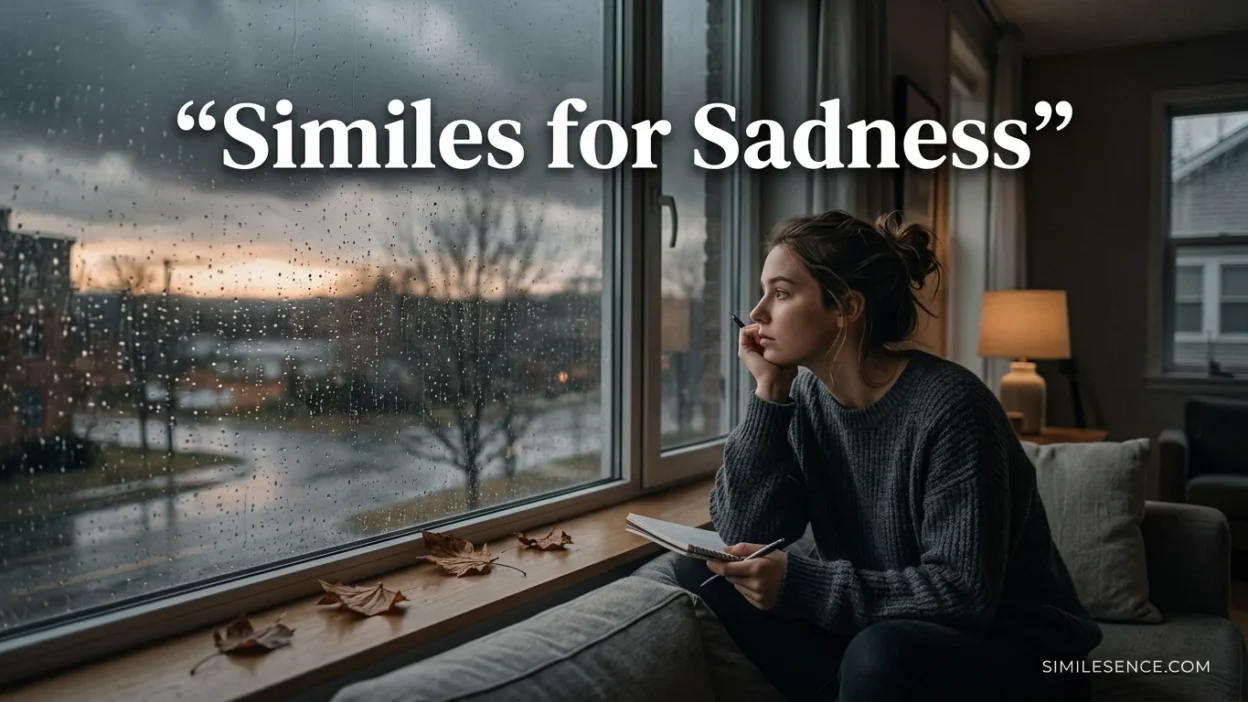
Sadness can be hard to explain. Sometimes saying “I feel sad” does not show how deep the feeling really is. This is where similes for sadness can make your writing stronger and more vivid.
A simile compares one thing with another using words such as “like” or “as.” For example, you might say, “Her sadness was like a heavy cloud hanging over her.” The reader can now picture the feeling instead of simply being told about it.
In simple terms, similes help turn emotions into pictures. They make your words easier to feel and remember. if you are writing a story, poem, school assignment, or social post, creative writing similes can help you express sadness in a fresh way.
You may be wondering what makes a good simile for sadness. Let’s explore 20 examples of similes that can describe loneliness, grief, disappointment, and quiet sorrow. Each example includes its meaning and simile sentences so you can see how to use it naturally.
20 Similes for Sadness
1. Sad as a rainy day
Simile: “He felt as sad as a rainy day.”
Meaning: This compares sadness to the gloomy feeling of a rainy day.
What it conveys: It creates a quiet, dull, and lonely mood.
Examples:
- She felt as sad as a rainy day after hearing the news.
- He looked as sad as a rainy day without a single smile.
2. Sadness like a heavy cloud
Simile: “Sadness hung over her like a heavy cloud.”
Meaning: Her sadness feels like a dark cloud that will not go away.
What it conveys: This shows emotional heaviness and a gloomy mood.
Examples:
- Sadness followed him like a heavy cloud all morning.
- The bad news hung over the family like a heavy cloud.
3. Sad as a lonely bird
Simile: “He was as sad as a lonely bird.”
Meaning: The person feels alone and unhappy.
What it conveys: It combines sadness with loneliness.
Examples:
- She sat by the window as sad as a lonely bird.
- After his friends left, he felt as sad as a lonely bird.
4. Tears like falling rain
Simile: “Her tears fell like rain.”
Meaning: Her tears were falling quickly and continuously.
What it conveys: This creates a strong visual image of deep sadness.
Examples:
- Tears rolled down her cheeks like falling rain.
- His tears fell like rain when he said goodbye.
5. Sadness as deep as the ocean
Simile: “Her sadness was as deep as the ocean.”
Meaning: Her sadness felt extremely deep.
What it conveys: It suggests powerful emotions that are difficult to measure.
Examples:
- His sadness was as deep as the ocean after losing his friend.
- She carried a sadness as deep as the ocean inside her heart.
6. Heavy-hearted like a stone
Simile: “He felt heavy-hearted like a stone.”
Meaning: His heart felt weighed down by sadness.
What it conveys: This simile shows emotional pain and heaviness.
Examples:
- She walked home heavy-hearted like a stone.
- He felt heavy-hearted after reading the letter.
7. Sad as a wilted flower
Simile: “She looked as sad as a wilted flower.”
Meaning: Her sadness is compared to a flower that has lost its life and freshness.
What it conveys: It gives the sadness a delicate and emotional image.
Examples:
- She sat quietly, as sad as a wilted flower.
- His face looked as sad as a wilted flower in winter.
8. Sadness like an empty room
Simile: “His sadness felt like an empty room.”
Meaning: His sadness made him feel alone and empty.
What it conveys: It suggests loneliness, silence, and emotional emptiness.
Examples:
- After she left, his sadness felt like an empty room.
- The house seemed filled with sadness like an empty room.
9. Sad as a broken heart
Simile: “He was as sad as a broken heart.”
Meaning: His sadness was connected to emotional pain or loss.
What it conveys: It expresses deep personal sorrow.
Examples:
- She looked as sad as a broken heart after the breakup.
- He felt as sad as a broken heart when his dream ended.
10. Sadness like a shadow
Simile: “Sadness followed him like a shadow.”
Meaning: His sadness stayed with him wherever he went.
What it conveys: This shows sadness that is difficult to escape.
Examples:
- Her sadness followed her like a shadow throughout the day.
- He tried to smile, but sadness followed him like a shadow.
11. Sad as a dark night
Simile: “He felt as sad as a dark night.”
Meaning: His sadness is compared to the darkness of night.
What it conveys: It creates a feeling of loneliness and hopelessness.
Examples:
- After the loss, she felt as sad as a dark night.
- His heart felt as sad as a dark night without stars.
12. Tears like a broken stream
Simile: “Her tears flowed like a broken stream.”
Meaning: Her crying seemed difficult to control.
What it conveys: It suggests an emotional release after intense sadness.
Examples:
- Her tears flowed like a broken stream as she remembered him.
- He cried, with tears flowing like a broken stream.
13. Sadness as cold as winter
Simile: “His sadness was as cold as winter.”
Meaning: His sadness made him feel emotionally cold and distant.
What it conveys: It creates a strong sense of loneliness and emotional pain.
Examples:
- Her sadness felt as cold as winter.
- He carried a silence as cold as winter after the argument.
14. Sad like a forgotten song
Simile: “She felt sad like a forgotten song.”
Meaning: She feels ignored, forgotten, or left behind.
What it conveys: This gives sadness a poetic and nostalgic feeling.
Examples:
- He felt sad like a forgotten song no one wanted to hear.
- She sat alone, sad like a forgotten song.
15. Sadness like a weight on his shoulders
Simile: “Sadness rested on him like a weight on his shoulders.”
Meaning: His sadness feels like a physical burden.
What it conveys: It shows how strongly sadness can affect someone.
Examples:
- Sadness rested on her like a weight on her shoulders.
- He walked slowly, carrying sadness like a weight on his shoulders.
16. Sad as a wilting leaf
Simile: “He looked as sad as a wilting leaf.”
Meaning: His energy and happiness seemed to be fading.
What it conveys: It creates a gentle image of weakness and sorrow.
Examples:
- She looked as sad as a wilting leaf after the argument.
- His smile faded, leaving him as sad as a wilting leaf.
17. Sadness like a silent storm
Simile: “Her sadness was like a silent storm.”
Meaning: She was experiencing strong emotions without showing them openly.
What it conveys: It shows hidden emotional pain.
Examples:
- Behind his smile was sadness like a silent storm.
- She carried sadness like a silent storm inside her.
18. Sad as a deserted house
Simile: “He felt as sad as a deserted house.”
Meaning: He felt empty, abandoned, and alone.
What it conveys: It creates a powerful picture of loneliness.
Examples:
- After everyone left, she felt as sad as a deserted house.
- His heart seemed as sad as a deserted house.
19. Sadness like a fading sunset
Simile: “Her sadness spread like a fading sunset.”
Meaning: Her sadness slowly filled her thoughts and feelings.
What it conveys: It creates a beautiful but sorrowful image.
Examples:
- Sadness spread through him like a fading sunset.
- She watched the sky, feeling sadness like a fading sunset.
20. Sad as a cloud without sunlight
Simile: “He felt as sad as a cloud without sunlight.”
Meaning: He felt gloomy and without happiness.
What it conveys: It suggests that joy and hope are missing.
Examples:
- She felt as sad as a cloud without sunlight.
- After the disappointment, he looked as sad as a cloud without sunlight.
How to Use Similes for Sadness in Writing
Good similes do more than add fancy words. They help readers feel what your character feels.
When writing about sadness, think about the emotion you want to show. Is your character lonely, heartbroken, disappointed, or grieving? Choose an image that matches that feeling.
For example, if your character feels lonely, you could write:
“She felt as lonely as a single star in a dark sky.”
If the sadness is difficult to escape, you might say:
“His sadness followed him like a shadow.”
Try to choose images your readers can easily picture. This makes your simile sentences clear and powerful.
Practical Exercise: Test Your Simile Skills
Try answering these questions before checking the answers.
Questions
- Complete the simile: “Her tears fell like ______.”
- Which simile best shows loneliness?
- A. Sad as a bright sun
- B. Sad as a lonely bird
- C. Sad as a cheerful child
- Complete the sentence: “Sadness followed him like a ______.”
- What does “sadness like a heavy cloud” suggest?
- Which simile creates an image of emotional emptiness?
- A. Sadness like an empty room
- B. Happiness like sunshine
- C. Joy like music
- Create your own simile using “as sad as ______.”
- What does “her tears fell like rain” mean?
- Complete the simile: “Her sadness was as deep as the ______.”
- Which simile suggests hidden emotional pain?
- A. Sadness like a silent storm
- B. Happiness like sunshine
- C. Excitement like fireworks
- Write one simile that describes a person who feels forgotten.
Answers
- Rain. “Her tears fell like rain” shows that she was crying heavily or continuously.
- B. Sad as a lonely bird. A lonely bird gives readers a clear picture of isolation.
- Shadow. “Sadness followed him like a shadow” suggests that he could not easily escape his sadness.
- It suggests that sadness feels heavy and gloomy, almost like a dark cloud hanging overhead.
- A. Sadness like an empty room. An empty room can represent loneliness and emotional emptiness.
- Answers will vary. For example: “She was as sad as a wilted flower.” This suggests that her happiness and energy were fading.
- It means her tears were falling in large amounts or without stopping, much like rain.
- Ocean. “Her sadness was as deep as the ocean” shows extremely deep emotional pain.
- A. Sadness like a silent storm. It suggests strong feelings that may be hidden from others.
- Answers will vary. For example: “He felt sad like a forgotten song.” This suggests that he feels ignored or left behind.
Conclusion
Similes can turn a simple statement into a powerful image. Instead of saying, “She was sad,” you can say, “Her sadness followed her like a shadow.” Suddenly, the reader can picture and feel the emotion.
The best similes for sadness connect an emotion with something familiar, such as rain, clouds, shadows, flowers, or an empty room. These comparisons make creative writing more colorful and help readers understand a character’s feelings.
As you practice, do not worry about creating perfect similes right away. Look around you and think about what sadness reminds you of. Then turn that idea into a comparison using like or as.
Keep experimenting with your own simile sentences. The more you practice, the easier it becomes to use similes naturally and make your writing more memorable.

John Kyle is a passionate writer specializing in similes, idioms, metaphors, and figurative language. He creates clear, engaging, and educational content that helps readers understand and confidently use English expressions.