
Summer is a season full of bright colors, warm days, cool drinks, outdoor fun, and long evenings. But how can you bring those feelings to life in your writing? One simple way is by using similes for summer.
A simile compares two different things using words such as “like” or “as.” For example, you might say, “The sun was as bright as a golden coin.” The sun is not really a coin, but the comparison helps the reader imagine its brightness.
In simple terms, similes make ordinary descriptions more interesting. Instead of saying, “It was a hot day,” you could say, “The afternoon was as hot as an oven.” Suddenly, the reader can almost feel the heat.
if you are writing a story, poem, school assignment, or social media caption, creative writing similes can make your words more vivid. Let’s explore 20 examples of similes for summer and see how you can use them naturally in your own writing.
20 Similes for Summer
1. As Hot as an Oven
Simile: The summer afternoon was as hot as an oven.
Meaning: Extremely hot.
What it conveys: This simile helps the reader imagine intense summer heat.
Examples:
- The beach was as hot as an oven at noon.
- By lunchtime, the city felt as hot as an oven.
2. Like a Golden Ball
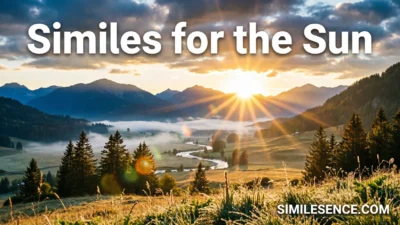
Simile: The summer sun hung in the sky like a golden ball.
Meaning: The sun looked round, bright, and golden.
What it conveys: It creates a warm and cheerful picture of a sunny summer day.
Examples:
- The sun rose like a golden ball over the hills.
- Above the quiet lake, the summer sun looked like a golden ball.
3. As Bright as a Sunflower
Simile: Her yellow summer dress was as bright as a sunflower.
Meaning: Something is very bright and cheerful.
What it conveys: This comparison gives the description a happy and colorful feeling.
Examples:
- The flowers were as bright as sunflowers in the morning light.
- His beach towel was as bright as a sunflower.
4. Like a Cool Breeze
Simile: The evening air felt like a cool breeze after a long, hot day.
Meaning: Something feels refreshing and pleasant.
What it conveys: It shows the relief that comes when cooler air arrives after summer heat.
Examples:
- The open window felt like a cool breeze in the stuffy room.
- Her kind words were like a cool breeze on a hot afternoon.
5. As Blue as the Summer Sky
Simile: The sky was as blue as the summer sky after a storm.
Meaning: Something has a deep, clear blue color.
What it conveys: This simile creates a peaceful picture of a clear summer day.
Examples:
- The lake was as blue as the summer sky.
- His eyes looked as blue as the summer sky.
6. Like Melted Ice Cream
Simile: The ice cream dripped down the cone like melted ice cream.
Meaning: Something is soft, runny, or quickly melting.
What it conveys: It captures the fast-moving effect of summer heat.
Examples:
- The chocolate began sliding down the cone like melted ice cream.
- The snowman disappeared like melted ice cream under the summer sun.
7. As Warm as a Blanket
Simile: The summer evening was as warm as a blanket.
Meaning: Something feels pleasantly warm and comforting.
What it conveys: This comparison gives the evening a cozy feeling.
Examples:
- The warm air felt as warm as a blanket around us.
- The garden was as warm as a blanket at sunset.
8. Like a Sparkling Jewel
Simile: The ocean looked like a sparkling jewel beneath the sun.
Meaning: Something looks bright, beautiful, and precious.
What it conveys: It helps readers picture sunlight shining across the water.
Examples:
- The sea looked like a sparkling jewel from the hilltop.
- Drops of water on the leaves shone like sparkling jewels.
9. As Fresh as a Summer Morning
Simile: The garden smelled as fresh as a summer morning.
Meaning: Something feels clean, pleasant, and refreshing.
What it conveys: This simile connects freshness with the peaceful feeling of summer mornings.
Examples:
- The flowers smelled as fresh as a summer morning.
- The clean air was as fresh as a summer morning after rain.
10. Like Fire on the Pavement
Simile: The hot pavement felt like fire beneath our feet.
Meaning: The pavement was extremely hot.
What it conveys: It gives the reader a strong sense of summer heat.
Examples:
- The road shimmered like fire in the afternoon sun.
- The sand felt like fire beneath my bare feet.
11. As Sweet as Watermelon
Simile: The summer watermelon was as sweet as honey.
Meaning: Something tastes extremely sweet.
What it conveys: It connects a favorite summer fruit with sweetness.
Examples:
- The watermelon was as sweet as honey on a hot afternoon.
- Her homemade lemonade was as sweet as honey.
12. Like a Lazy Cat
Simile: The sleepy summer afternoon moved like a lazy cat.
Meaning: Something moves slowly and calmly.
What it conveys: This gives the day a relaxed, peaceful mood.
Examples:
- The quiet afternoon passed like a lazy cat.
- Time seemed to move like a lazy cat during our vacation.
13. As Noisy as a Carnival
Simile: The summer fair was as noisy as a carnival.
Meaning: A place is very loud and full of activity.
What it conveys: It creates an energetic picture filled with sounds and excitement.
Examples:
- The beach was as noisy as a carnival.
- The town square became as noisy as a carnival after sunset.
14. Like a River of Gold
Simile: The sunset spread across the sky like a river of gold.
Meaning: The sunset looked bright, golden, and flowing.
What it conveys: This is a vivid way to describe beautiful summer sunsets.
Examples:
- Golden sunlight poured over the fields like a river of gold.
- The sunset looked like a river of gold behind the mountains.
15. As Light as a Feather
Simile: The summer dress was as light as a feather.
Meaning: Something is very light and comfortable.
What it conveys: It suggests a soft, airy feeling that suits warm weather.
Examples:
- Her scarf was as light as a feather in the summer breeze.
- The thin curtain was as light as a feather.
16. Like a Giant Lantern
Simile: The full summer moon glowed like a giant lantern.
Meaning: The moon looked large and bright.
What it conveys: It creates a magical picture of a summer night.
Examples:
- The moon shone like a giant lantern above the campsite.
- The full moon looked like a giant lantern in the dark sky.
17. As Busy as Bees
Simile: The children were as busy as bees during summer vacation.
Meaning: They were very active and always doing something.
What it conveys: It gives energy and movement to the scene.
Examples:
- The kids were as busy as bees building a sandcastle.
- Everyone was as busy as bees preparing for the summer picnic.
18. Like a Splash of Paint
Simile: The summer flowers looked like a splash of paint across the garden.
Meaning: The flowers created a bright and colorful scene.
What it conveys: This comparison makes a garden feel artistic and lively.
Examples:
- Wildflowers appeared like splashes of paint across the meadow.
- The colorful umbrellas looked like splashes of paint on the beach.
19. As Calm as a Sleeping Lake
Simile: The summer lake was as calm as a sleeping lake.
Meaning: The water was extremely still and peaceful.
What it conveys: It creates a quiet and relaxing image.
Examples:
- The lake was as calm as a sleeping lake at sunrise.
- The pool looked as calm as a sleeping lake before the swimmers arrived.
20. Like a Long, Bright Adventure
Simile: Summer stretched ahead of us like a long, bright adventure.
Meaning: Summer seemed full of exciting possibilities.
What it conveys: This simile gives summer an exciting, hopeful, and adventurous feeling.
Examples:
- The vacation opened before us like a long, bright adventure.
- Every new summer morning felt like a long, bright adventure waiting to begin.
How to Use Similes in Summer Writing
Using similes does not have to be difficult. Start by thinking about what you want your reader to see, hear, smell, taste, or feel.
For example, instead of writing:
“The beach was crowded.”
You could write:
“The beach was as busy as a buzzing marketplace.”
The second sentence gives the reader a stronger picture.
You might also ask yourself, “What does this remind me of?” If the summer sun reminds you of a glowing lamp, you could write, “The sun shone like a glowing lamp.”
When learning how to use similes in writing, choose comparisons that are easy for your readers to understand. A good simile should add meaning rather than make a sentence confusing.
Practical Exercise: Test Your Simile Skills
Try these 10 questions before checking the answers.
Questions
1. Complete the simile:
The summer sun was as bright as ________.
2. Which comparison best describes extreme summer heat?
A. as cold as ice
B. as hot as an oven
C. as quiet as a mouse
3. Complete the sentence:
The ocean sparkled like ________.
4. What does “The summer breeze was like a cool drink” suggest?
5. Which simile best describes a peaceful summer lake?
A. like a roaring lion
B. like a sleeping lake
C. like a busy market
6. Complete the simile:
The summer flowers were like ________.
7. What does “The children were as busy as bees” mean?
8. Which simile suggests something is very light?
A. as light as a feather
B. as heavy as a rock
C. as loud as thunder
9. Create your own simile for a summer sunset.
10. Create your own simile for a hot summer day.
Answers and Explanations
1. Answer: A golden ball, sunflower, or another bright object.
The comparison should help show how bright the summer sun is.
2. Answer: B. as hot as an oven.
An oven is very hot, so this simile clearly describes intense heat.
3. Answer: A sparkling jewel.
This comparison helps readers imagine sunlight shining across the water.
4. Answer: It suggests that the breeze feels refreshing and pleasant.
The cool drink comparison creates a feeling of relief.
5. Answer: B. like a sleeping lake.
A sleeping lake suggests stillness, quiet, and peace.
6. Answer: A splash of paint.
This comparison emphasizes bright colors spread across a garden or field.
7. Answer: The children are very active and busy.
Bees are known for moving around and working constantly.
8. Answer: A. as light as a feather.
A feather is very light, making it a natural comparison.
9. Example answer: The summer sunset looked like a painting made of gold and orange.
Your answer can be different as long as it makes a clear comparison.
10. Example answer: The summer afternoon was as hot as a burning oven.
Again, your comparison can be original while still showing strong heat.
Why Similes Make Summer Writing Better
Summer gives writers many details to work with: sunshine, beaches, gardens, storms, cold drinks, vacations, sunsets, and warm nights. Similes help turn those simple details into memorable images.
Compare these two sentences:
“The sun was hot.”
“The summer sun burned like a giant fireball.”
The second sentence creates a much stronger image. That is the real power of similes. They help readers experience a scene instead of simply being told about it.
You can use simile sentences in stories, poems, essays, descriptions, captions, and school projects. The best examples of similes often come from everyday things your readers already know.
Conclusion
Similes are a simple but powerful way to make summer writing more colorful and interesting. By comparing summer sights, sounds, feelings, and experiences to familiar things, you help readers create clear pictures in their minds.
The meaning of similes is easy to understand: they compare two different things, usually with “like” or “as,” to make a description stronger. From a sun like a golden ball to flowers like splashes of paint, these comparisons can bring ordinary summer scenes to life.
Now it is your turn. Look around you and think about what summer reminds you of. Write a few original comparisons and experiment with different ideas. The more you practice, the easier it becomes to use creative writing similes naturally.

John Kyle is a passionate writer specializing in similes, idioms, metaphors, and figurative language. He creates clear, engaging, and educational content that helps readers understand and confidently use English expressions.