Fire is one of the most powerful images you can use in creative writing. It can feel warm and comforting, but it can also be wild, dangerous, and full of energy. A good simile helps readers picture that feeling in a simple and memorable way.
A simile compares two different things using words such as “like” or “as.” For example, you might say, “The flames danced like golden ribbons.” The fire is not really a ribbon, but the comparison helps you imagine its movement.
If you are looking for similes for fire, you are in the right place. Below, we will explore 20 creative examples of similes, along with their meanings and simile sentences. These examples can help students, writers, and anyone learning how to use similes in writing.
Let’s explore these creative writing similes and see how a few simple words can make fire come alive.
20 Similes for Fire
1. The fire burned like a blazing sun.
Meaning: The fire was extremely bright and hot.
What it conveys: This simile compares the fire to the sun to show its powerful heat and brightness.
Examples:
- The campfire burned like a blazing sun in the darkness.
- The flames glowed like a blazing sun against the night sky.
2. The flames danced like graceful ballerinas.
Meaning: The flames moved smoothly and beautifully.
What it conveys: This comparison makes the fire seem lively and elegant.
Examples:
- The flames danced like graceful ballerinas around the logs.
- At night, the fire moved like graceful ballerinas in the wind.
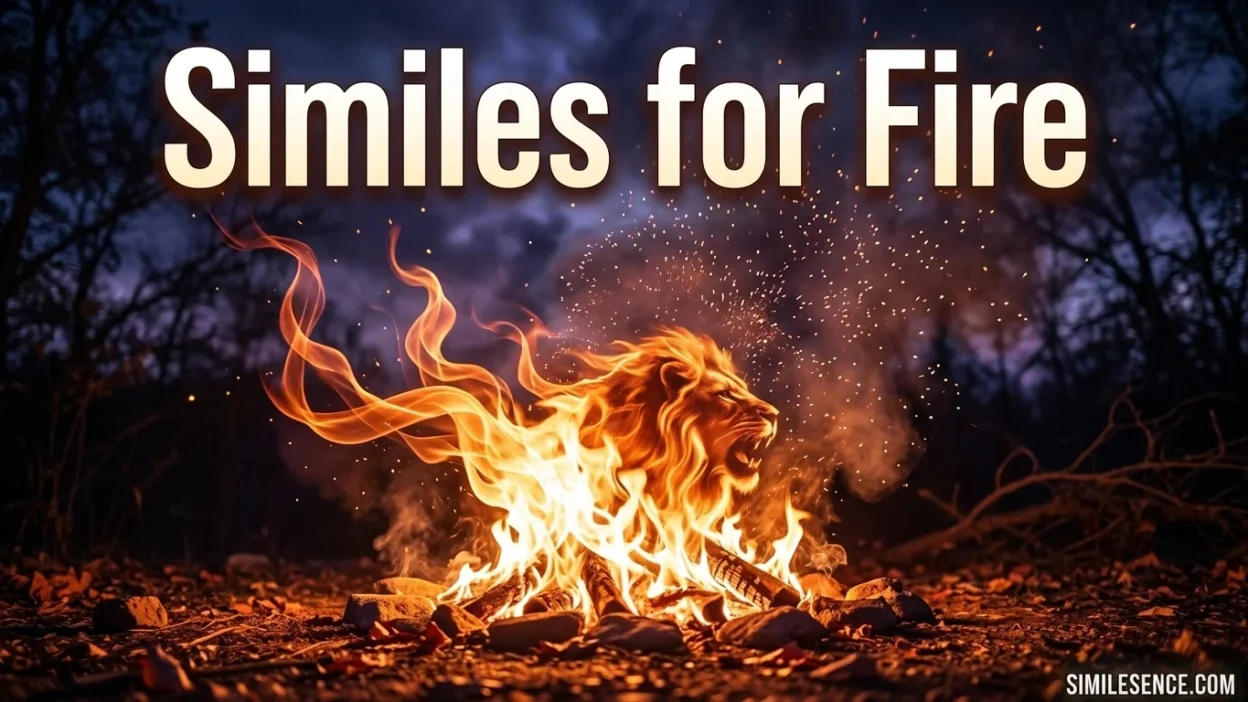
3. The fire roared like a hungry lion.
Meaning: The fire made a loud and powerful sound.
What it conveys: It gives the fire a wild and fierce personality.
Examples:
- The fire roared like a hungry lion as the wind grew stronger.
- Behind the cabin, the flames roared like a hungry lion.
4. The flames spread like wildfire.
Meaning: The fire spread very quickly.
What it conveys: This is a familiar comparison that emphasizes speed and rapid growth.
Examples:
- The flames spread like wildfire across the dry grass.
- The news of the fire traveled like wildfire through the town.
5. The fire was as bright as a thousand candles.
Meaning: The fire gave off a great deal of light.
What it conveys: The comparison creates a strong image of brilliant brightness.
Examples:
- The bonfire was as bright as a thousand candles.
- The flames were as bright as a thousand candles in the dark forest.
6. The fire flickered like golden stars.
Meaning: The small flames moved and shone like stars.
What it conveys: This creates a peaceful, beautiful image of a gentle fire.
Examples:
- The campfire flickered like golden stars beneath the trees.
- Tiny sparks flickered like golden stars above the flames.
7. The flames leaped like excited children.
Meaning: The flames moved quickly and energetically.
What it conveys: The comparison makes the fire seem playful and full of energy.
Examples:
- The flames leaped like excited children when another log was added.
- Bright sparks leaped like excited children into the cold air.
8. The fire glowed like molten gold.
Meaning: The fire had a rich, golden appearance.
What it conveys: This simile highlights the warm and beautiful color of the flames.
Examples:
- The fireplace glowed like molten gold.
- At sunset, the burning logs looked like molten gold.
9. The flames curled like red ribbons.
Meaning: The flames moved in long, twisting shapes.
What it conveys: It helps readers visualize the smooth, flowing movement of fire.
Examples:
- The flames curled like red ribbons around the wood.
- Red flames curled like ribbons in the evening breeze.
10. The fire crackled like popping popcorn.
Meaning: The fire made many small popping sounds.
What it conveys: This creates an easy-to-understand picture of the sounds made by burning wood.
Examples:
- The fire crackled like popping popcorn beside us.
- All night, the logs crackled like popping popcorn.
11. The flames were as hot as a furnace.
Meaning: The fire was extremely hot.
What it conveys: A furnace is known for intense heat, so this comparison makes the temperature easy to imagine.
Examples:
- The flames were as hot as a furnace.
- Standing near the fire felt as hot as standing beside a furnace.
12. The fire consumed the wood like a hungry monster.
Meaning: The fire quickly burned through the wood.
What it conveys: This makes the fire seem powerful, unstoppable, and dangerous.
Examples:
- The fire consumed the dry branches like a hungry monster.
- The flames ate through the wooden fence like a hungry monster.
13. The sparks flew like tiny shooting stars.
Meaning: Sparks moved quickly through the air.
What it conveys: This creates a vivid and almost magical picture.
Examples:
- Sparks flew like tiny shooting stars above the campfire.
- The burning logs sent sparks into the sky like tiny shooting stars.
14. The fire spread like an angry snake.
Meaning: The flames moved quickly and unpredictably.
What it conveys: The comparison creates a sense of danger and fear.
Examples:
- The fire spread like an angry snake through the dry bushes.
- Flames moved like angry snakes across the field.
15. The fireplace was warm like a cozy blanket.
Meaning: The fire gave a comforting feeling of warmth.
What it conveys: This comparison focuses on the pleasant and relaxing side of fire.
Examples:
- The fireplace felt warm like a cozy blanket on a winter night.
- Its gentle heat wrapped around us like a cozy blanket.
16. The flames rose like orange flowers.
Meaning: The flames grew upward in beautiful shapes.
What it conveys: This gives the fire a soft, colorful, and natural image.
Examples:
- The flames rose like orange flowers from the glowing logs.
- Bright tongues of fire opened like orange flowers in the darkness.
17. The fire glimmered like a jewel.
Meaning: The fire shone brightly and beautifully.
What it conveys: This comparison focuses on the attractive glow of fire.
Examples:
- The small fire glimmered like a jewel in the darkness.
- The embers glimmered like jewels beneath the ashes.
18. The flames moved like a red dragon.
Meaning: The flames moved in a large, powerful, and frightening way.
What it conveys: The dragon image makes the fire feel fierce and powerful.
Examples:
- The flames moved like a red dragon across the hillside.
- The fire rose like a red dragon into the night.
19. The embers glowed like glowing rubies.
Meaning: The burning pieces of wood had a deep red glow.
What it conveys: This simile emphasizes the rich color and beauty of hot embers.
Examples:
- The embers glowed like glowing rubies beneath the ash.
- Red coals shone like glowing rubies in the fireplace.
20. The fire vanished like a fading dream.
Meaning: The fire slowly disappeared.
What it conveys: This creates a soft, emotional image of a fire coming to an end.
Examples:
- As morning arrived, the fire vanished like a fading dream.
- The last flames disappeared like a fading dream in the cold air.
How to Use Similes for Fire in Writing
Fire can represent many different ideas, so the best simile depends on what you want your reader to feel.
If you want to show danger, compare fire to something fierce, such as a lion, dragon, or monster. For example, “The flames roared like a hungry lion.”
If you want to show beauty, use gentle images such as stars, flowers, ribbons, or jewels. You might say, “The sparks flew like tiny shooting stars.”
For warmth and comfort, compare fire to something cozy. “The fireplace was warm like a cozy blanket” gives the reader a calm and pleasant feeling.
In simple terms, choose a comparison that matches the mood of your scene. Good similes do more than describe an object. They help readers see, hear, feel, and imagine it.
Practical Exercise: Test Your Simile Skills
Try these questions before checking the answers.
1. Complete the simile:
The flames danced like ________.
Answer: graceful ballerinas.
Explanation: Ballerinas move with grace, making them a good comparison for moving flames.
2. Which simile shows that fire is very hot?
A. The fire was as hot as a furnace.
B. The fire danced like a ballerina.
C. The fire faded like a dream.
Answer: A.
Explanation: A furnace is associated with intense heat.
3. Complete the sentence:
The sparks flew like tiny ________.
Answer: shooting stars.
Explanation: Both sparks and shooting stars move quickly and shine brightly.
4. Which simile makes fire sound dangerous?
A. The fire glowed like a jewel.
B. The fire roared like a hungry lion.
C. The fire was warm like a blanket.
Answer: B.
Explanation: A hungry lion suggests power, noise, and danger.
5. What does this simile mean?
“The flames curled like red ribbons.”
Answer: The flames moved in long, twisting shapes.
Explanation: Ribbons can curl and twist, so the comparison helps readers picture the movement of the flames.
6. Complete the simile:
The embers glowed like glowing ________.
Answer: rubies.
Explanation: Rubies are bright red gemstones, making them a strong comparison for glowing embers.
7. Which simile shows that a fire is spreading quickly?
A. The fire spread like wildfire.
B. The fire faded like a dream.
C. The fire glimmered like a jewel.
Answer: A.
Explanation: “Like wildfire” suggests very fast movement or growth.
8. What feeling does this simile create?
“The fireplace was warm like a cozy blanket.”
Answer: Comfort and warmth.
Explanation: A cozy blanket makes people think of relaxation and safety.
9. Create your own simile:
“The fire was as bright as ________.”
Possible answer: The fire was as bright as the morning sun.
Explanation: The sun is extremely bright, so it creates a strong image of brilliant fire.
10. Write a simile for a frightening fire.
Possible answer: The flames rose like a red dragon.
Explanation: A dragon suggests danger, strength, and fear, making it a useful comparison for a frightening fire.
Why Similes Make Writing Better
A simple sentence such as “The fire was bright” gives the reader information, but it does not create a strong picture.
Compare it with:
“The fire was as bright as a thousand candles.”
The second sentence gives your reader something familiar to imagine. That is the power of similes.
Examples of similes can make stories, poems, descriptions, and school assignments more colorful. They can also help you avoid repeating the same basic words.
When you write your own similes, think about the exact quality you want to describe. Is the fire bright, hot, loud, gentle, dangerous, or beautiful? Then choose something that shares that quality.
This simple method can help you create stronger simile sentences without making your writing complicated.
Conclusion
Similes are a simple but powerful way to make writing more vivid. By comparing fire to familiar things such as the sun, stars, ribbons, dragons, or jewels, you can help readers imagine exactly what you mean.
The best similes for fire do more than describe flames. They create a mood and help readers feel the scene. A peaceful campfire can flicker like golden stars, while a dangerous blaze can roar like a hungry lion.
Now it is your turn. Look at a fire and think about its color, sound, movement, heat, and mood. Then create your own comparison using “like” or “as.” With practice, you will become better at using similes in writing and making your descriptions shine.

John Kyle is a passionate writer specializing in similes, idioms, metaphors, and figurative language. He creates clear, engaging, and educational content that helps readers understand and confidently use English expressions.