Have you ever heard someone say, “She is as busy as a bee” or “He runs like the wind”? These fun comparisons are called similes. If you’re looking for similes for kids, you’ve come to the right place. Similes make writing more exciting because they help readers picture what you mean instead of simply reading plain words.
If you’re a student learning English, a parent helping with homework, or a teacher planning a lesson, understanding similes is an important step in improving writing skills. They are one of the easiest forms of figurative language for kids and can make stories, poems, and classroom assignments much more creative.
In this guide, you’ll learn what are similes, explore lots of examples of similes, understand the meaning of similes, and discover how to use similes in writing. You’ll also find simile sentences, fun activities, and simple exercises that make learning similes enjoyable for beginners.
Quick Answer
A simile is a figure of speech that compares two different things using the words “like” or “as.” It helps readers create a clear picture in their minds.
Example: The girl was as brave as a lion.
Table of Contents
- What Are Similes?
- Why Are Similes Important?
- Simile vs. Metaphor
- How to Identify a Simile
- 20 Similes for Kids with Meanings and Examples
- Everyday Similes Kids Hear
- Similes by Category
- Practice Activities
- Writing Challenge
- FAQs
- Conclusion
What Are Similes?
If you’ve ever asked, what are similes, the answer is simple.
A simile is a comparison between two different things using the words like or as. Writers use similes to describe people, places, objects, or feelings in a way that is easy to imagine.
Instead of saying someone is very fast, you might say:
He runs like the wind.
Instead of saying a blanket is soft, you might say:
The blanket is as soft as a cloud.
These comparisons help readers picture the description clearly.
The meaning of similes is to make writing more colorful, interesting, and easier to understand. That’s why you often see similes in English books, poems, songs, fairy tales, and even everyday conversations.
Because similes are one of the most common literary devices, they are often taught early in school. They help children improve vocabulary, reading comprehension, and descriptive writing while making learning more enjoyable.
Why Are Similes Important?
Similes do much more than decorate a sentence. They help readers connect with what they are reading by creating strong mental images.
Here are some benefits of learning similes for elementary students:
- Make stories more exciting.
- Improve creative writing.
- Strengthen writing skills.
- Expand vocabulary.
- Help readers understand emotions.
- Make school assignments more interesting.
- Encourage imagination.
- Build confidence in English similes for beginners.
Teachers often include similes in language arts lessons because they help children become better readers and writers.
Simile vs. Metaphor
Many students confuse similes with metaphors. Although both compare two things, they do it in different ways.
| Simile | Metaphor |
| Uses like or as | Does not use like or as |
| “She is as quiet as a mouse.” | “She is a mouse.” |
| Makes a direct comparison | Makes an implied comparison |
| Easier for beginners | Slightly more advanced |
Understanding this difference makes it easier to recognize different types of figurative language.
How to Identify a Simile
Wondering how to identify a simile?
Ask yourself these three questions:
- Does the sentence compare two different things?
- Does it use like or as?
- Does the comparison help create a picture in your mind?
If the answer is yes, you’ve probably found a simile.
Example
The baby slept like a log.
It compares a baby with a log using the word like, making it a simile.
10 Easy Similes for Kids with Meanings and Examples
These easy similes for kids include simple explanations, similes with meanings, and simile sentences to help you understand each one.
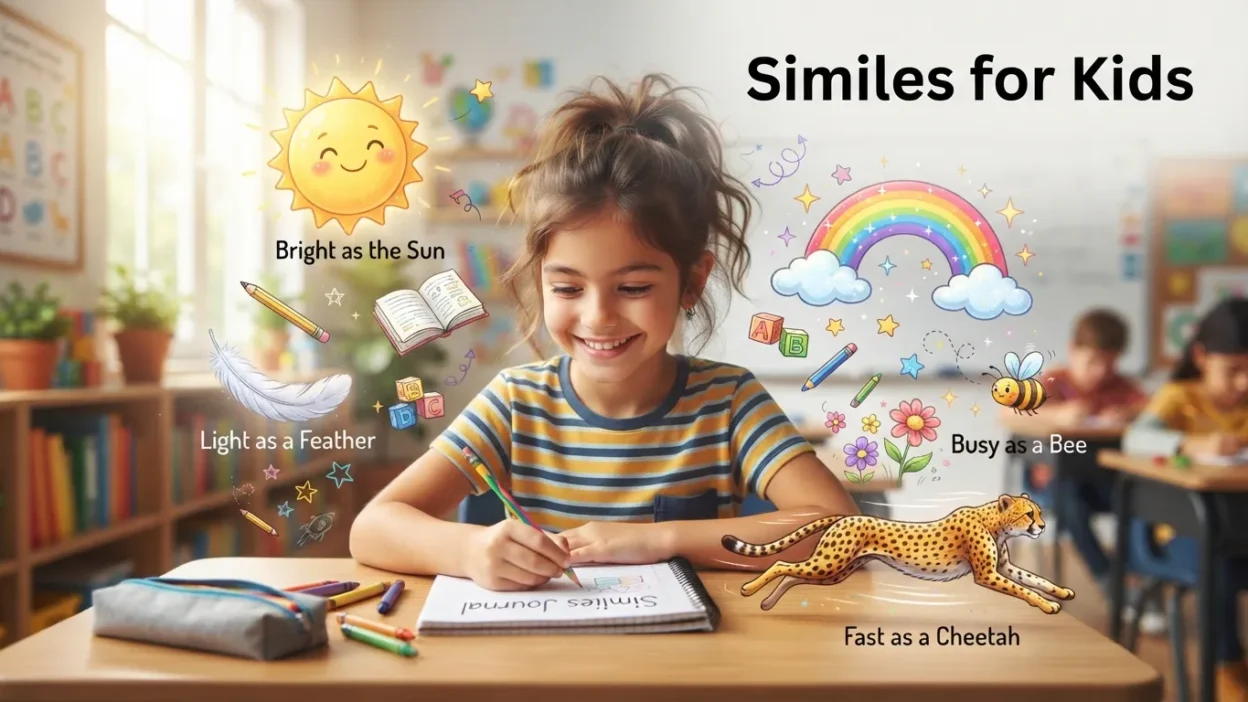
1. As Busy as a Bee
Meaning: Very hardworking and active.
What it conveys: Someone who is always busy doing something.
Example Sentences
- Emma was as busy as a bee decorating the classroom.
- Dad looked as busy as a bee while fixing the garden fence.
2. As Brave as a Lion
Meaning: Very courageous.
What it conveys: Someone who is not afraid to face challenges.
Example Sentences
- Noah was as brave as a lion during the school play.
- The firefighter stayed as brave as a lion while helping others.
3. As Quiet as a Mouse
Meaning: Extremely quiet.
What it conveys: Someone making almost no sound.
Example Sentences
- The classroom became as quiet as a mouse during the test.
- Mia walked as quiet as a mouse into the library.
4. As Light as a Feather
Meaning: Very light.
What it conveys: Easy to lift or carry.
Example Sentences
- The balloon was as light as a feather.
- The little bird felt as light as a feather.
5. As Fast as Lightning
Meaning: Extremely fast.
What it conveys: Incredible speed.
Example Sentences
- Ethan ran as fast as lightning to catch the ball.
- The race car moved as fast as lightning.
6. As Cool as a Cucumber
Meaning: Very calm.
What it conveys: Staying relaxed during stressful situations.
Example Sentences
- Ava remained as cool as a cucumber before the competition.
- My brother stayed as cool as a cucumber after losing the game.
7. As Happy as a Clam
Meaning: Very happy.
What it conveys: Feeling cheerful and satisfied.
Example Sentences
- Lily was as happy as a clam on her birthday.
- We felt as happy as a clam after the picnic.
8. As Strong as an Ox
Meaning: Very strong.
What it conveys: Great physical strength.
Example Sentences
- Grandpa is as strong as an ox.
- Jake carried the heavy boxes as strong as an ox.
9. As Slow as a Snail
Meaning: Very slow.
What it conveys: Moving at a slow pace.
Example Sentences
- Traffic moved as slow as a snail this morning.
- The turtle crawled as slow as a snail across the garden.
10. As Bright as the Sun
Meaning: Very bright or cheerful.
What it conveys: Full of light, joy, or energy.
Example Sentences
- Her smile was as bright as the sun.
- The classroom looked as bright as the sun after the curtains were opened.
Everyday Similes Kids Hear
You may hear these common similes for kids in conversations, books, or movies:
- She sings like an angel.
- My backpack is as heavy as a rock.
- Dad snores like a bear.
- The pillow feels as soft as cotton.
- The soup is as hot as fire.
- The baby sleeps like a log.
- The ice cream is as cold as ice.
- The little puppy is as playful as a monkey.
These are excellent simile examples for kids because they are easy to understand and use in everyday life.
Similes by Category
Grouping similes makes them easier to remember.
Animal Similes
- As busy as a bee
- As brave as a lion
- As quiet as a mouse
- As strong as an ox
- As gentle as a lamb
Nature Similes
- As bright as the sun
- As white as snow
- As fast as lightning
- Like the wind
Food Similes
- As sweet as honey
- As cool as a cucumber
School Similes
- As sharp as a pencil
- As neat as a notebook
- As quick as the school bell
Common Mistakes When Using Similes
Even experienced writers sometimes make mistakes. Here are a few common ones:
❌ He is a lion. (This is a metaphor.)
✅ He is as brave as a lion. (This is a simile.)
❌ She runs like airplane.
✅ She runs like an airplane.
Remember, most similes use like or as to compare two different things. Paying attention to these small details will help you use similes in creative writing more effectively.
Teacher’s Tip
Teachers often introduce similes in elementary school because they help children improve vocabulary, reading comprehension, storytelling, and descriptive writing. Reading stories aloud and asking students to find examples of similes is one of the best ways to make learning fun and memorable.
11. Sleeps Like a Log
Meaning: Sleeps very deeply.
What it conveys: Someone who sleeps so soundly that they are difficult to wake up.
Example Sentences
- After soccer practice, Ben slept like a log.
- My little brother sleeps like a log every night.
12. Eats Like a Horse
Meaning: Eats a large amount of food.
What it conveys: Someone with a very big appetite.
Example Sentences
- After the hike, I ate like a horse.
- My cousin eats like a horse after football practice.
13. Runs Like the Wind
Meaning: Runs very fast.
What it conveys: Incredible speed.
Example Sentences
- Sophie runs like the wind during races.
- The deer ran like the wind across the field.
14. As Gentle as a Lamb
Meaning: Very kind and calm.
What it conveys: A soft and caring personality.
Example Sentences
- Our teacher is as gentle as a lamb.
- The puppy was as gentle as a lamb with the baby.
15. As White as Snow
Meaning: Very white.
What it conveys: Pure whiteness.
Example Sentences
- The rabbit was as white as snow.
- Her dress looked as white as snow.
16. As Red as a Tomato
Meaning: Very red, often from embarrassment or exercise.
What it conveys: A bright red face.
Example Sentences
- Liam became as red as a tomato when everyone clapped.
- I was as red as a tomato after running around the playground.
17. As Sweet as Honey
Meaning: Very kind and friendly.
What it conveys: A caring and pleasant personality.
Example Sentences
- Grandma is as sweet as honey.
- My new neighbor is as sweet as honey to everyone.
18. As Sharp as a Razor
Meaning: Very smart or quick-thinking.
What it conveys: Intelligence and quick understanding.
Example Sentences
- Emma is as sharp as a razor in science class.
- His mind is as sharp as a razor when solving puzzles.
19. As Tall as a Giraffe
Meaning: Very tall.
What it conveys: Great height.
Example Sentences
- My older brother is as tall as a giraffe.
- The basketball player looked as tall as a giraffe.
20. Like a Fish in Water
Meaning: Very comfortable and confident.
What it conveys: Feeling completely at ease in a situation.
Example Sentences
- Mia felt like a fish in water during swimming lessons.
- Alex is like a fish in water whenever he plays basketball.
Simile Practice Worksheet
Now that you’ve explored these similes with meanings, let’s practice! These activities are great for students, parents, and teachers. They also work well as simile activities for kids in the classroom or at home.
Part A: Fill in the Blank
1. As busy as a __________.
2. As brave as a __________.
3. Sleeps like a __________.
4. As quiet as a __________.
5. Runs like the __________.
Part B: Multiple Choice
6. Which simile means someone is very calm?
A. As busy as a bee
B. As cool as a cucumber
C. As fast as lightning
D. As strong as an ox
7. Which sentence contains a simile?
A. The classroom was noisy.
B. The classroom was a zoo.
C. The classroom was as quiet as a mouse.
D. The classroom was empty.
Part C: True or False
8. A simile compares two things using like or as.
9. “He is a lion” is a simile.
Part D: Create Your Own Simile
10. Write a simile to describe your favorite animal.
11. Write a simile about your best friend.
12. Write a simile about the weather today.
Answers with Explanations
1. Bee
Bees are always busy working.
2. Lion
Lions often represent courage.
3. Log
A log does not move, so it represents deep sleep.
4. Mouse
Mice are known for moving quietly.
5. Wind
The wind moves very quickly.
6. B — As cool as a cucumber
This simile means calm and relaxed.
7. C — The classroom was as quiet as a mouse.
It compares two things using as.
8. True
Similes always compare two things using like or as.
9. False
“He is a lion” is a metaphor because it does not use like or as.
10–12.
Answers will be different because these are creative writing activities.
Writing Challenge
Now it’s your turn to write your own similes!
Create one simile for each topic:
- Your pet
- Your best friend
- Your teacher
- Your favorite food
- A rainy day
- A sunny day
- Your favorite game
- Your family
This fun activity helps you practice how to use similes in writing while improving your imagination and creative writing skills.
Key Takeaways
Before you go, remember these important points:
- A simile compares two different things using like or as.
- Similes make writing more colorful and descriptive.
- They are one of the easiest literary devices to learn.
- You can find similes in English books, poems, songs, and conversations.
- Practicing simile sentences helps improve vocabulary and storytelling.
- Reading and writing similes regularly builds stronger writing skills.
- Similes are an important part of figurative language for kids.
Frequently Asked Questions
What is a simile in simple words?
A simile is a comparison between two different things using like or as.
What are five easy similes for kids?
Some easy examples include:
- As busy as a bee
- As brave as a lion
- As quiet as a mouse
- As light as a feather
- As fast as lightning
Why do writers use similes?
Writers use similes to create clear pictures, make ideas easier to understand, and make stories more interesting.
What is the difference between a simile and a metaphor?
A simile uses like or as to compare two things. A metaphor compares two things directly without using those words.
Are similes part of figurative language?
Yes. Similes are one of the most common types of figurative language used in English.
Where can I find similes?
You can find similes in storybooks, poems, songs, fairy tales, movies, and even everyday conversations.
How can kids learn similes easily?
The best way is to read stories, practice simile exercises, complete worksheets, and create your own comparisons.
Why are similes important in creative writing?
They make descriptions more vivid, improve descriptive writing, and help readers imagine what the writer is describing.
Fun Fact
Did you know many famous authors use similes to make their stories more exciting? Similes help readers imagine characters, places, and adventures more clearly, which is why they are taught in schools around the world.
Conclusion
Learning similes for kids is one of the easiest ways to become a stronger writer. By understanding what are similes, exploring different examples of similes, and practicing simile sentences, you can make your stories, poems, and school assignments more engaging and descriptive.
The more you practice, the easier it becomes to identify a simile, understand the meaning of similes, and use them naturally in your own writing. If you’re completing simile exercises, joining simile activities for kids, or creating creative writing similes, every new comparison helps you grow as a writer.
So start today! Read your favorite books, listen for common similes for kids in conversations, and challenge yourself to write a few new similes every day. With practice, you’ll soon use similes in creative writing with confidence and imagination.

Henry Gavin is the Administrator of SimileSence, ensuring high-quality content about similes, idioms, and metaphors. He manages daily operations, supports editorial excellence, and helps readers explore figurative language with confidence.