
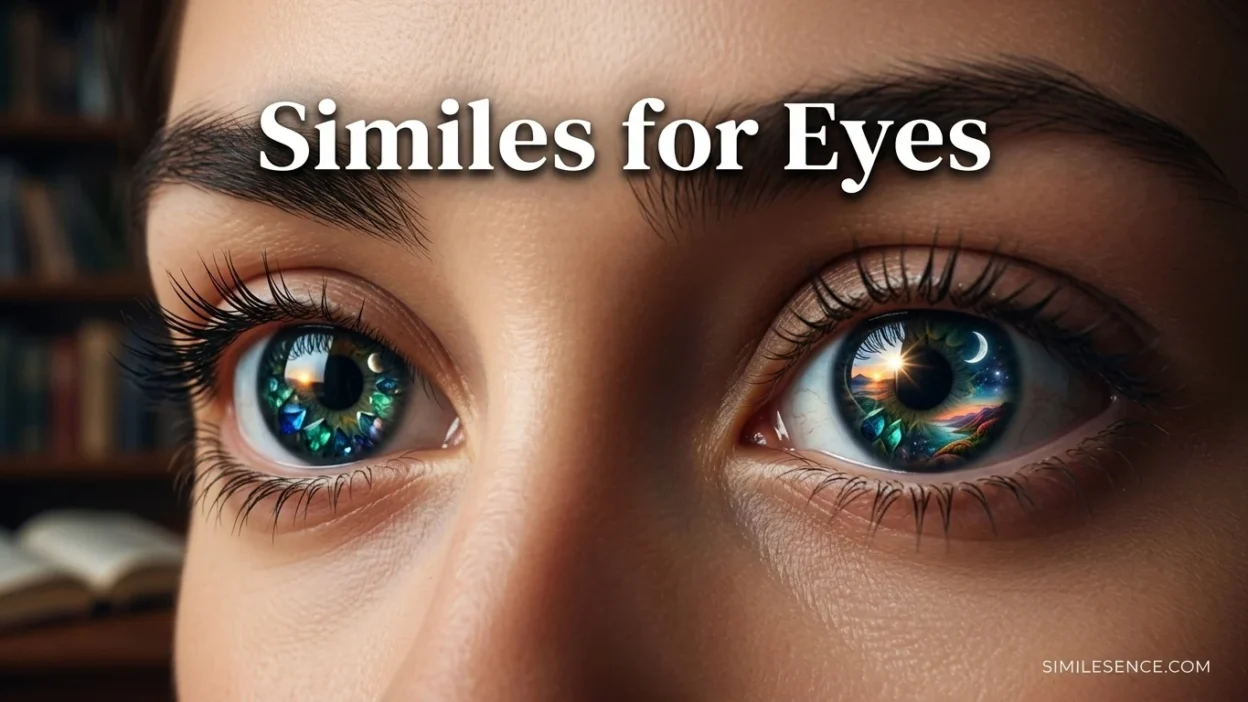
Eyes can say a lot without speaking. They can look bright, tired, warm, mysterious, sad, or full of joy. That is why writers often use similes for eyes to make descriptions more colorful and memorable.
A simile compares one thing with another using words such as “like” or “as.” For example, instead of saying, “Her eyes were bright,” you might say, “Her eyes were like shining stars.” The second sentence gives you a clearer picture.
In simple terms, similes help readers see, feel, and imagine what you are describing. They are useful in stories, poems, essays, speeches, and everyday writing. Whether you are a student, a beginner writer, or someone looking for creative ideas, the right simile can make a simple sentence much more interesting.
Let’s explore 20 creative writing similes for eyes, along with their meanings and examples. You might even find a few that inspire your own original simile sentences.
20 Similes for Eyes
1. Eyes Like Shining Stars
Simile: Her eyes sparkled like shining stars.
Meaning: Her eyes looked very bright and beautiful.
What it conveys: This simile suggests happiness, excitement, beauty, or wonder.
Examples:
- Her eyes were like shining stars when she opened the gift.
- The child looked at the fireworks with eyes like shining stars.
2. Eyes Like Deep Oceans
Simile: His eyes were like deep oceans.
Meaning: His eyes looked deep, mysterious, and difficult to understand.
What it conveys: This comparison creates a feeling of mystery and depth.
Examples:
- Her eyes were like deep oceans, hiding many secrets.
- I stared into his eyes, which were like deep oceans.
3. Eyes Like Diamonds
Simile: Her eyes glittered like diamonds.
Meaning: Her eyes looked bright and sparkling.
What it conveys: This simile suggests beauty, brightness, and elegance.
Examples:
- Her eyes shone like diamonds under the evening lights.
- His eyes looked like diamonds when he smiled.
4. Eyes Like the Moon
Simile: Her pale eyes glowed like the moon.
Meaning: Her eyes had a soft, gentle glow.
What it conveys: This comparison creates a calm, dreamy, or mysterious image.
Examples:
- Her eyes glowed like the moon in the quiet room.
- His eyes were soft and bright like the moon.
5. Eyes Like Pools of Water
Simile: Her eyes were like clear pools of water.
Meaning: Her eyes looked clear, calm, and peaceful.
What it conveys: It gives the reader a feeling of purity and calmness.
Examples:
- Her eyes were like clear pools of water on a sunny day.
- The baby looked at me with eyes like pools of water.
6. Eyes Like a Hawk’s
Simile: He watched everything with eyes like a hawk’s.
Meaning: He had very sharp and observant eyes.
What it conveys: This simile suggests alertness, focus, and careful observation.
Examples:
- The detective had eyes like a hawk’s.
- She noticed every small detail with eyes like a hawk’s.
7. Eyes Like Glittering Gems
Simile: Her eyes sparkled like glittering gems.
Meaning: Her eyes looked colorful, bright, and attractive.
What it conveys: This creates a rich and beautiful visual image.
Examples:
- Her eyes sparkled like glittering gems in the sunlight.
- The little girl smiled with eyes like glittering gems.
8. Eyes Like Burning Flames
Simile: His eyes burned like flames.
Meaning: His eyes showed strong anger or passion.
What it conveys: This comparison creates an intense and powerful feeling.
Examples:
- His eyes burned like flames when he heard the insult.
- She looked at him with eyes like burning flames.
9. Eyes Like Morning Sunshine
Simile: Her eyes were bright like morning sunshine.
Meaning: Her eyes looked cheerful, warm, and full of life.
What it conveys: This simile suggests happiness, kindness, and positive energy.
Examples:
- Her eyes were like morning sunshine on a cold day.
- He greeted everyone with eyes bright like morning sunshine.
10. Eyes Like Glass
Simile: His eyes looked like glass.
Meaning: His eyes appeared blank, still, or emotionless.
What it conveys: This can suggest shock, sadness, exhaustion, or emotional distance.
Examples:
- After hearing the news, his eyes looked like glass.
- She sat quietly, staring ahead with eyes like glass.
11. Eyes Like Velvet
Simile: Her dark eyes were soft like velvet.
Meaning: Her eyes looked smooth, gentle, and warm.
What it conveys: This simile gives a soft and romantic feeling.
Examples:
- Her eyes were like velvet beneath her long lashes.
- He admired her soft eyes, which looked like velvet.
12. Eyes Like Crystal
Simile: Her eyes were clear like crystal.
Meaning: Her eyes looked extremely clear and bright.
What it conveys: This comparison suggests purity, clarity, and beauty.
Examples:
- The baby had eyes clear like crystal.
- Her crystal-like eyes reflected the afternoon light.
13. Eyes Like Rain Clouds
Simile: His eyes looked like rain clouds.
Meaning: His eyes showed sadness or heaviness.
What it conveys: This creates a gloomy and emotional image.
Examples:
- His eyes were like rain clouds after he received the message.
- She looked at me with eyes like dark rain clouds.
14. Eyes Like Lanterns
Simile: Her eyes shone like lanterns in the darkness.
Meaning: Her eyes stood out brightly in a dark setting.
What it conveys: This comparison suggests hope, warmth, and guidance.
Examples:
- Her eyes shone like lanterns in the darkness.
- In the quiet room, his eyes glowed like tiny lanterns.
15. Eyes Like Chocolate
Simile: Her brown eyes were warm like melted chocolate.
Meaning: Her eyes looked rich, warm, and inviting.
What it conveys: This creates a cozy and affectionate image.
Examples:
- Her eyes were warm like melted chocolate.
- He smiled at her chocolate-like eyes.
16. Eyes Like the Sky
Simile: His blue eyes were like the summer sky.
Meaning: His eyes were bright blue and peaceful.
What it conveys: This simile creates an open, calm, and beautiful image.
Examples:
- His eyes were blue like the summer sky.
- She had eyes like the clear sky after rain.
17. Eyes Like Little Windows
Simile: Her eyes were like little windows to her heart.
Meaning: Her eyes revealed her feelings.
What it conveys: This comparison shows how emotions can be expressed through someone’s eyes.
Examples:
- Her eyes were like little windows to her heart.
- I knew she was worried because her eyes were like open windows.
18. Eyes Like a Mirror
Simile: His eyes were like a mirror.
Meaning: His eyes seemed to reflect his true emotions.
What it conveys: This simile suggests honesty and emotional openness.
Examples:
- Her eyes were like a mirror, revealing her sadness.
- His eyes reflected his joy like a clear mirror.
19. Eyes Like Flashing Lightning
Simile: Her eyes flashed like lightning.
Meaning: Her eyes showed sudden anger, excitement, or intensity.
What it conveys: This creates a strong and energetic image.
Examples:
- Her eyes flashed like lightning when she heard the accusation.
- His eyes lit up like lightning when he got the good news.
20. Eyes Like Tiny Suns
Simile: Her eyes shone like tiny suns.
Meaning: Her eyes looked extremely bright and full of energy.
What it conveys: This gives the description a cheerful, powerful, and imaginative feeling.
Examples:
- Her eyes shone like tiny suns as she talked about her dream.
- The child had eyes like tiny suns, full of excitement.
How to Use Similes for Eyes in Writing
The best similes do more than make a sentence sound pretty. They help readers understand a person’s mood, personality, or feelings.
For example, compare these two sentences:
Simple:
Her eyes were sad.
With a simile:
Her eyes were like rain clouds before a storm.
The second sentence gives the reader a stronger image. It also creates an emotional mood.
When choosing a simile, think about what the eyes are showing. Are they bright, tired, angry, peaceful, mysterious, or sad? Then choose an image that matches that feeling.
You can also create your own comparisons. If someone’s eyes are extremely focused, you could compare them to a hawk. If they are warm and friendly, you might compare them to sunshine.
That is the basic idea behind how to use similes in writing: observe the feeling, find a matching image, and connect the two naturally.
Practical Exercise: Test Your Simile Skills
Try these 10 questions before checking the answers.
Questions
1. Complete the simile:
Her eyes sparkled like ________.
2. Which simile best describes very sad eyes?
A. Eyes like sunshine
B. Eyes like rain clouds
C. Eyes like diamonds
3. Complete the sentence:
His eyes were as clear as ________.
4. Which simile suggests anger?
A. Eyes like burning flames
B. Eyes like clear pools
C. Eyes like morning sunshine
5. What does “eyes like deep oceans” suggest?
6. Complete the simile:
Her blue eyes were like ________.
7. Which simile best describes sharp and observant eyes?
A. Eyes like velvet
B. Eyes like a hawk’s
C. Eyes like chocolate
8. What does “eyes like a mirror” mean?
9. Create your own simile for bright eyes using the word “like.”
10. Create a simile for tired or emotionless eyes.
Answers and Explanations
1. Shining stars.
“Her eyes sparkled like shining stars” suggests that her eyes were bright and beautiful.
2. B — Eyes like rain clouds.
Rain clouds create a gloomy image, making them a good comparison for sadness.
3. Crystal.
“His eyes were as clear as crystal” suggests that his eyes were bright and extremely clear.
4. A — Eyes like burning flames.
Flames suggest heat and intensity, so this simile works well for anger.
5.
It suggests that the eyes look deep, mysterious, or difficult to understand.
6. The summer sky.
“Her blue eyes were like the summer sky” creates a peaceful and beautiful image.
7. B — Eyes like a hawk’s.
Hawks are known for sharp vision, so this comparison suggests strong observation.
8.
It means the person’s eyes seem to reveal or reflect their true emotions.
9. Example:
“Her eyes shone like tiny suns.”
This suggests that her eyes were extremely bright.
10. Example:
“His eyes looked like still glass.”
This suggests that his eyes appeared blank, tired, or emotionless.
Conclusion
Similes can turn a simple description into something readers can easily picture. Instead of simply saying that someone’s eyes are beautiful, bright, sad, or mysterious, you can compare them with stars, oceans, sunshine, rain clouds, or other familiar images.
The similes for eyes in this guide give you plenty of starting points, but don’t be afraid to create your own. Think about the emotion or quality you want to show, then look for an image that matches it.
Remember, strong writing does not always need complicated words. A simple, well-chosen comparison can make a sentence memorable. Keep practicing different creative writing similes, experiment with your descriptions, and soon you’ll find it easier to create natural and original simile sentences.

James Jason is a passionate language writer specializing in similes, idioms, metaphors, and figurative expressions. He creates clear, engaging, and educational content that helps readers understand language, improve communication, and enjoy the beauty of English.