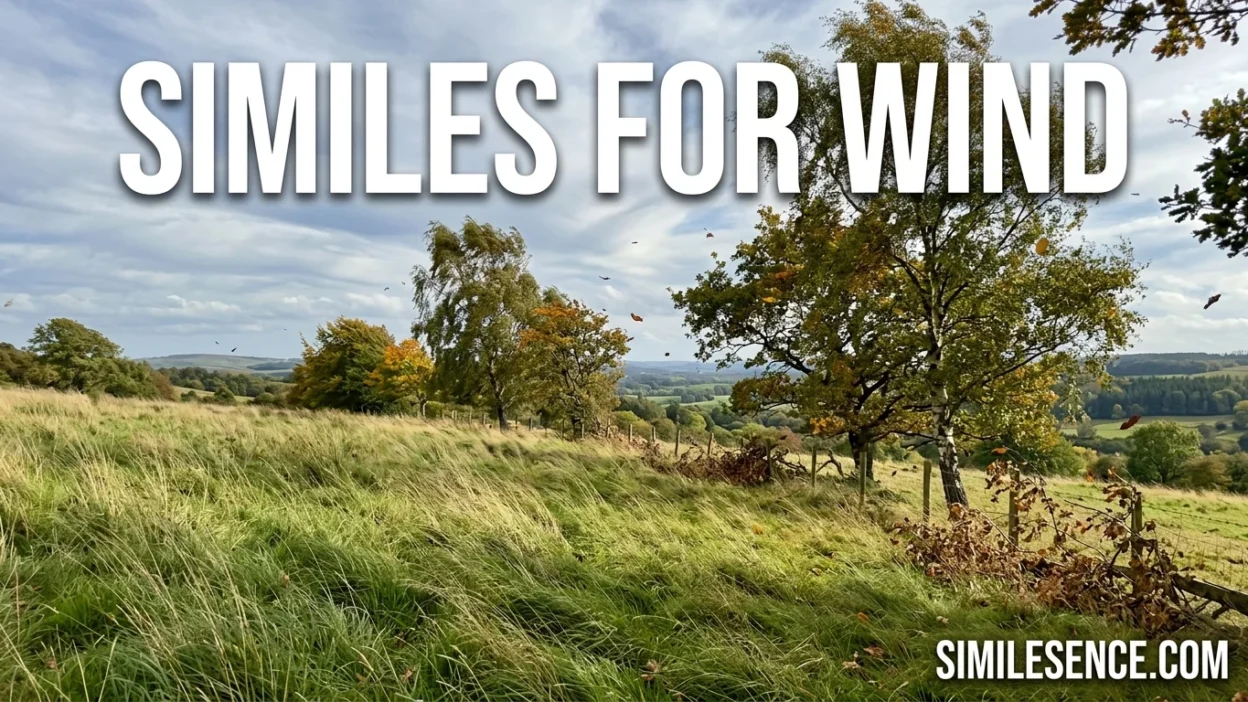
Wind is something we feel every day, but it can be difficult to describe with ordinary words. You can say the wind is strong, cold, or gentle, but a good simile can make the description much more vivid. For example, you might say, “The wind was like a wild horse running through the fields.” Suddenly, you can almost picture and feel it.
A simile compares one thing with another using words such as “like” or “as.” Similes make writing more colorful because they help readers imagine an experience instead of simply being told about it. They are especially useful in stories, poems, school assignments, and creative writing.
In this guide, let’s explore 20 similes for wind that describe different kinds of wind, from a soft breeze to a powerful storm. Each example includes its meaning and simple simile sentences so you can understand how to use these comparisons naturally in your own writing.
20 Similes for Wind
1. The Wind Was Like a Whisper
Meaning: The wind was very soft and quiet.
Explanation: This simile compares gentle wind to a quiet whisper. It creates a peaceful and calm feeling.
Example sentences:
- The wind was like a whisper moving through the trees.
- At night, the wind sounded like a whisper outside my window.
2. The Wind Was Like a Dancing Ribbon
Meaning: The wind moved smoothly and gracefully.
Explanation: This comparison helps readers imagine wind twisting and flowing through the air.
Example sentences:
- The wind was like a dancing ribbon across the open field.
- Leaves moved as the wind flowed like a dancing ribbon.
3. The Wind Was as Cold as Ice
Meaning: The wind felt extremely cold.
Explanation: Comparing cold wind to ice makes its freezing sensation easy to imagine.
Example sentences:
- The winter wind was as cold as ice against my cheeks.
- The wind was as cold as ice when we walked outside.
4. The Wind Roared Like a Lion
Meaning: The wind was loud and powerful.
Explanation: A roaring lion is strong and noisy, so this simile gives the wind a fierce and powerful quality.
Example sentences:
- The wind roared like a lion during the storm.
- Outside, the wind roared like a lion all night.
5. The Wind Was Like a Gentle Hand
Meaning: The wind felt soft and comforting.
Explanation: This simile makes a light breeze seem gentle, caring, and pleasant.
Example sentences:
- The evening wind felt like a gentle hand on my face.
- A cool breeze moved through the garden like a gentle hand.
6. The Wind Raced Like a Horse
Meaning: The wind moved very quickly.
Explanation: A running horse is fast and energetic, making this a strong comparison for fast-moving wind.
Example sentences:
- The wind raced like a horse across the empty field.
- Leaves flew behind us as the wind raced like a horse.
7. The Wind Howled Like a Wolf
Meaning: The wind made a long, eerie sound.
Explanation: Wolves are often associated with haunting howls, so this simile gives the wind a mysterious feeling.
Example sentences:
- The wind howled like a wolf outside the old house.
- At midnight, the wind howled like a wolf through the trees.
8. The Wind Was as Soft as Cotton
Meaning: The wind felt extremely gentle.
Explanation: Cotton is soft to touch, so this comparison creates an image of a light, pleasant breeze.
Example sentences:
- The morning breeze was as soft as cotton.
- The wind felt as soft as cotton against my skin.
9. The Wind Swirled Like a Dancer
Meaning: The wind moved around in smooth, changing directions.
Explanation: A dancer moves gracefully and changes direction, just like swirling wind.
Example sentences:
- The wind swirled like a dancer among the autumn leaves.
- Dust rose as the wind swirled like a dancer across the road.
10. The Wind Hit Like a Hammer
Meaning: The wind was extremely strong and forceful.
Explanation: A hammer strikes with great force, making this a powerful comparison for harsh wind.
Example sentences:
- The storm wind hit like a hammer against the windows.
- The wind hit like a hammer when we stepped outside.
11. The Wind Was Like a Cool Blanket
Meaning: The wind felt refreshing and comfortable.
Explanation: This simile compares a cool breeze to a blanket that gently surrounds you.
Example sentences:
- The evening wind felt like a cool blanket after the hot day.
- A breeze wrapped around us like a cool blanket.
12. The Wind Whistled Like a Bird
Meaning: The wind made a high, musical sound.
Explanation: This comparison helps readers imagine the light whistling sound created by moving air.
Example sentences:
- The wind whistled like a bird through the branches.
- All night, the wind whistled like a bird outside.
13. The Wind Was as Wild as a Horse
Meaning: The wind was difficult to control and moved fiercely.
Explanation: A wild horse suggests freedom, energy, and unpredictable movement.
Example sentences:
- The wind was as wild as a horse during the storm.
- Leaves scattered everywhere as the wind grew as wild as a horse.
14. The Wind Moved Like a Snake
Meaning: The wind moved in twisting and winding patterns.
Explanation: Snakes move smoothly from side to side, making this useful for describing wind that changes direction.
Example sentences:
- The wind moved like a snake through the narrow street.
- Smoke drifted as the wind moved like a snake around the trees.
15. The Wind Was Like an Invisible River
Meaning: The wind flowed continuously through the air.
Explanation: Although you cannot see wind, comparing it to a river helps readers imagine its movement.
Example sentences:
- The wind flowed like an invisible river across the valley.
- We stood quietly as the wind moved like an invisible river around us.
16. The Wind Pushed Like a Giant
Meaning: The wind was extremely strong.
Explanation: A giant represents great strength, making this simile useful for powerful wind.
Example sentences:
- The wind pushed like a giant against the front door.
- The storm wind pushed like a giant trying to move the trees.
17. The Wind Was as Fresh as Spring
Meaning: The wind felt fresh, clean, and pleasant.
Explanation: Spring is often associated with fresh air and new life, so this comparison creates a cheerful feeling.
Example sentences:
- The morning wind was as fresh as spring.
- The breeze felt as fresh as spring after the rain.
18. The Wind Flew Like a Bird
Meaning: The wind moved freely and quickly.
Explanation: Birds can fly freely through the sky, making this a natural comparison for moving air.
Example sentences:
- The wind flew like a bird over the rooftops.
- Across the valley, the wind moved like a bird in flight.
19. The Wind Shook the Trees Like an Angry Giant
Meaning: The wind was strong enough to move and shake trees.
Explanation: An angry giant suggests enormous power and movement. This creates a dramatic image for stormy weather.
Example sentences:
- The wind shook the trees like an angry giant.
- During the storm, the branches moved as if an angry giant were shaking them.
20. The Wind Was Like a Playful Child
Meaning: The wind moved lightly and unpredictably.
Explanation: A playful child can run, jump, and change direction quickly. This makes the comparison perfect for a lively breeze.
Example sentences:
- The spring wind was like a playful child running through the garden.
- The wind danced around us like a playful child.
How to Use Similes for Wind in Writing
The best creative writing similes do more than make a sentence sound interesting. They help readers see, hear, feel, or imagine what you are describing.
For example, instead of writing:
“The wind was strong.”
You might say:
“The wind roared like a lion through the forest.”
The second sentence gives the reader a much clearer picture. It also adds emotion and atmosphere.
When choosing a simile, think about the feeling you want to create. A comparison to cotton can make the wind seem soft, while a comparison to a lion can make it seem powerful.
You might also create your own comparisons by asking:
- What does the wind sound like?
- What does it feel like?
- How quickly is it moving?
- What does it remind me of?
- Is the wind peaceful, playful, scary, or powerful?
These simple questions can help you create original simile sentences.
Practical Exercise: Test Your Simile Skills
Questions
1. Complete the simile:
The gentle wind was like a ______.
2. Which comparison best describes very strong wind?
A. Like cotton
B. Like a hammer
C. Like a feather
3. What does this simile mean?
“The wind howled like a wolf.”
4. Complete the sentence:
The cold wind was as cold as ______.
5. Which simile suggests that wind is moving quickly?
A. The wind raced like a horse.
B. The wind was like cotton.
C. The wind was like a blanket.
6. What does “The wind was like a dancing ribbon” suggest?
7. Complete the simile:
The wind moved like a ______ through the narrow street.
8. Which simile creates a peaceful feeling?
A. The wind hit like a hammer.
B. The wind roared like a lion.
C. The wind was like a gentle hand.
9. What does “The wind shook the trees like an angry giant” tell us about the wind?
10. Create your own simile for a warm, gentle breeze.
Answers
1. Like a whisper.
This suggests that the wind was soft and quiet.
2. B. Like a hammer.
A hammer represents force, so this comparison suggests powerful wind.
3. It means the wind was making a long, loud, or frightening sound.
The wolf comparison creates an eerie feeling.
4. Ice.
“The cold wind was as cold as ice” emphasizes how freezing the wind felt.
5. A. The wind raced like a horse.
A racing horse suggests speed and energy.
6. It suggests that the wind was moving smoothly and gracefully.
The dancing ribbon creates an image of flowing movement.
7. Snake.
“The wind moved like a snake” suggests twisting or winding movement.
8. C. The wind was like a gentle hand.
A gentle hand creates a soft and comforting image.
9. It tells us that the wind was very powerful.
The angry giant represents great strength and force.
10. Example answer:
“The warm breeze was like a soft blanket.”
This comparison shows that the breeze felt gentle, pleasant, and comforting. Your own answer can be different as long as it makes a clear comparison.
Conclusion
Similes are a simple but powerful way to make your writing more vivid. Instead of simply telling readers that the wind is strong, cold, soft, or loud, you can compare it to something they already understand. That makes your descriptions easier to picture and more enjoyable to read.
The examples of similes above can help you understand the meaning of similes and how to use them naturally in stories, poems, essays, and everyday writing. But you do not have to copy these examples. Try looking around you and asking what the wind reminds you of.
For example, you might say the wind is like a rushing river, a playful child, or a roaring animal. Keep experimenting, and soon creating your own creative writing similes will feel natural.

Henry Gavin is the Administrator of SimileSence, ensuring high-quality content about similes, idioms, and metaphors. He manages daily operations, supports editorial excellence, and helps readers explore figurative language with confidence.