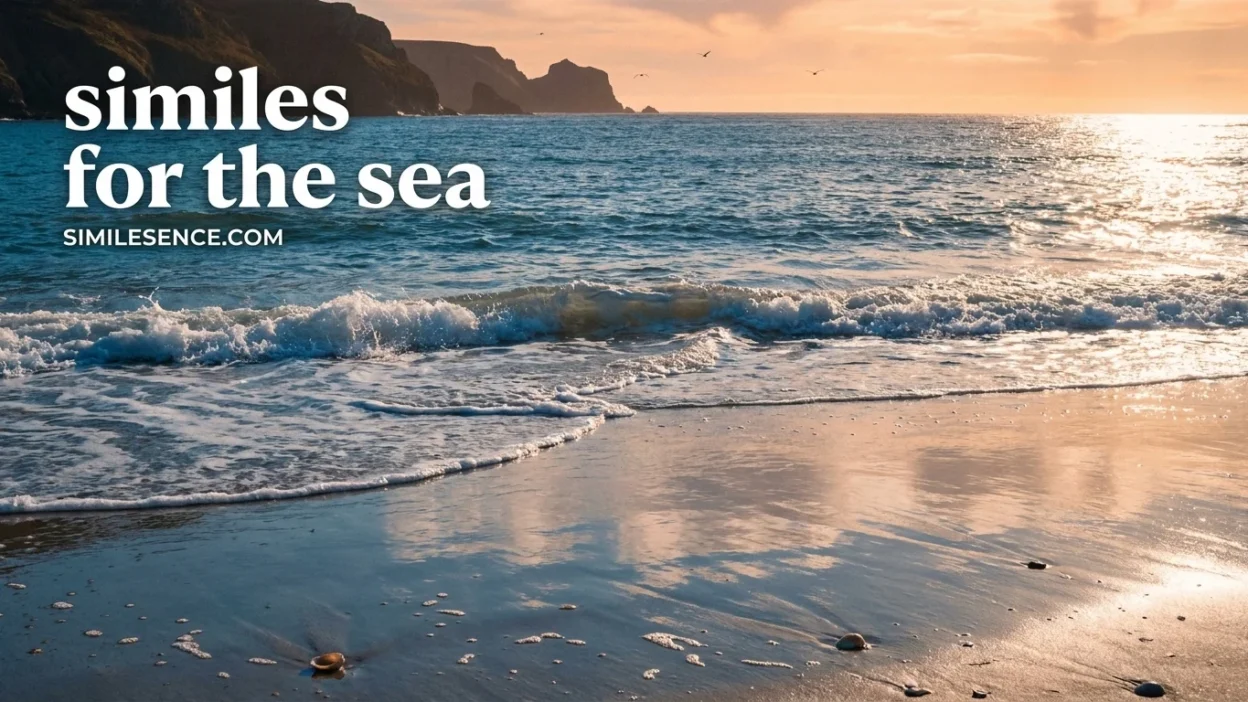
The sea can be calm, wild, mysterious, bright, or frightening. But how can you describe all those feelings without using the same simple words again and again? That is where similes can help.
A simile compares one thing with another using words such as “like” or “as.” For example, you might say, “The sea was as calm as a sleeping child.” Instead of simply saying the sea was calm, this comparison creates a clear picture in the reader’s mind.
Using similes for the sea can make stories, poems, essays, and descriptions much more vivid. A good comparison helps readers imagine the waves, hear the water, and even feel the mood of the ocean.
In simple terms, similes turn an ordinary description into something readers can picture. Let’s explore 20 creative examples of similes for the sea, along with their meanings and simile sentences. You might find a few that inspire your own creative writing.
20 Similes for the Sea
1. The sea was as calm as a sleeping baby
Meaning: The sea was very peaceful and still.
What it conveys: This simile creates a gentle image of quiet water with hardly any movement.
Example sentences:
- The sea was as calm as a sleeping baby at sunrise.
- We sat quietly beside the sea, which was as calm as a sleeping baby.
2. The sea was like a sheet of blue glass
Meaning: The water was smooth, clear, and still.
What it conveys: It helps readers imagine a perfectly flat sea reflecting the sky.
Example sentences:
- At dawn, the sea looked like a sheet of blue glass.
- From the cliff, the sea stretched out like a sheet of blue glass.
3. The waves crashed like angry giants
Meaning: The waves were large, powerful, and loud.
What it conveys: This comparison makes the sea feel strong and threatening.
Example sentences:
- During the storm, the waves crashed like angry giants.
- We watched as the waves struck the rocks like angry giants.
4. The sea sparkled like a field of diamonds
Meaning: Sunlight was shining brightly across the water.
What it conveys: It creates a beautiful image of countless bright reflections on the sea.
Example sentences:
- Under the morning sun, the sea sparkled like a field of diamonds.
- The water looked like a field of diamonds from the sandy beach.
5. The sea roared like a hungry lion
Meaning: The sea was loud, powerful, and fierce.
What it conveys: The simile gives the ocean a wild and dangerous personality.
Example sentences:
- At night, the sea roared like a hungry lion.
- The storm made the sea roar like a hungry lion.
6. The sea was as restless as a child who could not sleep
Meaning: The water was constantly moving.
What it conveys: This comparison shows waves that never seem to become still.
Example sentences:
- The sea was as restless as a child who could not sleep.
- All night, the restless sea moved like a child who could not sleep.
7. The sea stretched like an endless blue blanket
Meaning: The sea seemed to continue for a very long distance.
What it conveys: It emphasizes the vast size of the ocean.
Example sentences:
- Before us, the sea stretched like an endless blue blanket.
- From the hilltop, the sea looked like an endless blue blanket.
8. The waves danced like children at a party
Meaning: The waves moved in a lively and playful way.
What it conveys: This gives the sea a cheerful, energetic feeling.
Example sentences:
- The small waves danced like children at a party.
- Near the shore, the waves danced like happy children.
9. The sea was as dark as midnight
Meaning: The water looked extremely dark.
What it conveys: This simile creates a mysterious or slightly frightening mood.
Example sentences:
- At sunset, the sea became as dark as midnight.
- The deep water looked as dark as midnight beneath the cloudy sky.
10. The sea whispered like a secret friend
Meaning: The sound of the waves was soft and gentle.
What it conveys: It gives the sea a peaceful, almost human quality.
Example sentences:
- At night, the sea whispered like a secret friend.
- I sat alone on the beach while the sea whispered like a secret friend.
11. The waves rolled like silver ribbons
Meaning: The waves moved smoothly while reflecting light.
What it conveys: It creates a graceful and beautiful picture of moving water.
Example sentences:
- Under the moonlight, the waves rolled like silver ribbons.
- The small waves rolled toward the beach like silver ribbons.
12. The sea was as blue as the summer sky
Meaning: The water had a bright blue color.
What it conveys: This familiar comparison highlights the clear and beautiful color of the sea.
Example sentences:
- On the sunny afternoon, the sea was as blue as the summer sky.
- The bright sea looked as blue as the summer sky.
13. The ocean moved like a giant breathing creature
Meaning: The waves rose and fell in a slow, steady rhythm.
What it conveys: This gives the sea a living, powerful feeling.
Example sentences:
- In the quiet morning, the ocean moved like a giant breathing creature.
- The waves rose and fell like a giant breathing creature.
14. The sea was as wild as a runaway horse
Meaning: The sea was uncontrolled, energetic, and dangerous.
What it conveys: It shows the powerful movement of rough waves.
Example sentences:
- After the storm, the sea was as wild as a runaway horse.
- The sailors struggled against a sea as wild as a runaway horse.
15. The waves were like white horses racing toward the shore
Meaning: White-topped waves were moving quickly toward the beach.
What it conveys: The comparison makes the waves seem fast, energetic, and graceful.
Example sentences:
- The waves looked like white horses racing toward the shore.
- From the boat, we watched waves like white horses racing toward the beach.
16. The sea glittered like a treasure chest
Meaning: The sunlight made the surface of the water shine brightly.
What it conveys: It suggests that the sea looks beautiful and precious.
Example sentences:
- In the afternoon light, the sea glittered like a treasure chest.
- The golden sunlight made the sea glitter like a treasure chest.
17. The sea was as peaceful as a quiet garden
Meaning: The sea was calm and relaxing.
What it conveys: This comparison creates a soft, peaceful atmosphere.
Example sentences:
- Early in the morning, the sea was as peaceful as a quiet garden.
- We enjoyed the beach while the sea remained as peaceful as a quiet garden.
18. The waves hit the rocks like drums
Meaning: The waves struck the rocks with repeated, loud sounds.
What it conveys: It helps the reader imagine the steady rhythm of crashing water.
Example sentences:
- The waves hit the rocks like drums during the storm.
- Below the cliff, the waves sounded like drums against the shore.
19. The sea looked like a giant mirror
Meaning: The water was so smooth that it reflected the sky and surroundings.
What it conveys: It emphasizes stillness and reflection.
Example sentences:
- At dawn, the sea looked like a giant mirror.
- The calm water looked like a giant mirror beneath the clouds.
20. The sea swallowed the sun like a giant mouth
Meaning: The sun appeared to disappear into the horizon.
What it conveys: This vivid comparison makes a sunset feel dramatic and memorable.
Example sentences:
- At sunset, the sea swallowed the sun like a giant mouth.
- We watched as the horizon seemed to swallow the sun like a giant mouth.
How to Use Similes for the Sea in Writing
The best creative writing similes do more than describe an object. They also create a mood.
Before choosing a simile, think about what you want your reader to feel. Is the sea peaceful? Use a gentle comparison, such as “like a sheet of blue glass.” Is it dangerous? Try something stronger, such as “like angry giants.”
You can also describe different parts of the sea experience. Think about its color, sound, movement, size, and mood. This gives you more choices when creating your own similes.
For example:
Color: The sea was as blue as the summer sky.
Sound: The waves hit the rocks like drums.
Movement: The waves danced like children at a party.
Mood: The sea whispered like a secret friend.
In simple terms, choose a comparison that helps your reader see the sea in a new way.
Practical Exercise: Test Your Simile Skills
Try answering these questions before looking at the answers.
Questions
1. Complete the simile:
The sea was as calm as ______.
A. a sleeping baby
B. a roaring lion
C. a racing horse
2. Which sentence contains a simile?
A. The sea was beautiful.
B. The sea was like a sheet of blue glass.
C. The sea was blue.
3. Complete the sentence:
The waves crashed like ______.
A. sleeping kittens
B. angry giants
C. quiet flowers
4. What does “the sea sparkled like a field of diamonds” mean?
5. Which simile best describes a dark and mysterious sea?
A. as dark as midnight
B. as bright as the sun
C. like a happy child
6. Complete the simile:
The waves danced like ______.
A. children at a party
B. stones on the ground
C. closed doors
7. What two words are commonly used to form a simile?
8. Write your own simile describing a peaceful sea.
9. Which simile shows that the sea is very large?
A. like an endless blue blanket
B. like a small cup
C. like a tiny pond
10. Why are similes useful in creative writing?
Answers and Explanations
1. A — a sleeping baby.
A sleeping baby suggests peace and stillness, making it a good comparison for calm water.
2. B — The sea was like a sheet of blue glass.
The word “like” connects the sea with another image, making it a simile.
3. B — angry giants.
Angry giants suggest power, noise, and force, which fit crashing waves.
4.
It means sunlight is reflecting brightly across the surface of the sea. The sparkling water is compared to shining diamonds.
5. A — as dark as midnight.
Midnight is associated with darkness, so it creates a mysterious image.
6. A — children at a party.
Children at a party suggest playful and energetic movement.
7.
Similes commonly use “like” and “as” to make comparisons.
8.
Answers can vary. For example: “The sea was as peaceful as a sleeping garden.”
9. A — like an endless blue blanket.
The word “endless” emphasizes the great size and distance of the sea.
10.
Similes help readers create mental pictures. They can make descriptions clearer, more emotional, and more memorable.
Conclusion
Similes are a simple way to make descriptions more colorful and powerful. When you write about the sea, you can use comparisons to show its beauty, movement, sound, size, and mood.
The similes for the sea in this guide give you plenty of ideas for stories, poems, essays, and other creative writing. But you do not have to stop with these examples. Look closely at the sea and think about what it reminds you of.
Maybe calm water looks like glass. Maybe crashing waves sound like drums. Maybe the sunset looks as if the sea is swallowing the sun.
The more you practice creating your own comparisons, the easier it becomes to use similes naturally. So grab a pen and start describing the sea in your own unique way.

Henry Gavin is the Administrator of SimileSence, ensuring high-quality content about similes, idioms, and metaphors. He manages daily operations, supports editorial excellence, and helps readers explore figurative language with confidence.