
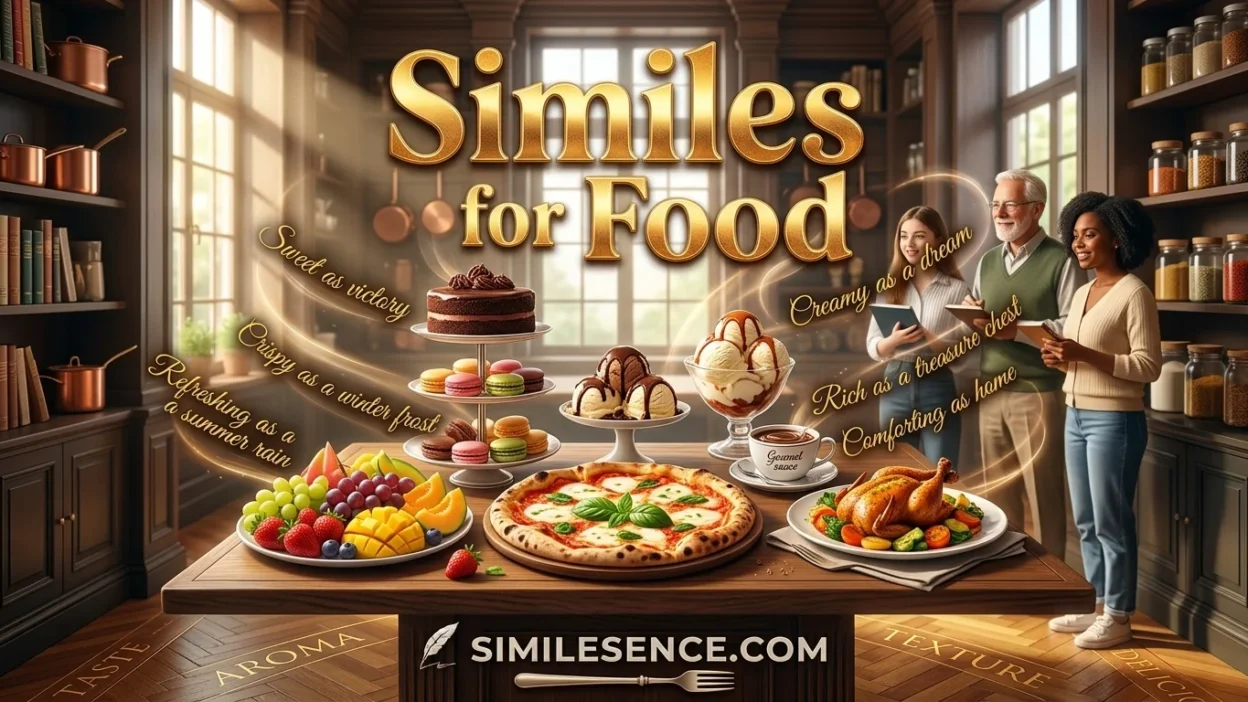
Have you ever tasted food so good that saying “it was delicious” just didn’t feel like enough? That’s where similes can help. Similes compare one thing to another using words such as “like” or “as.” They make simple descriptions more colorful, clear, and fun.
For example, instead of saying, “The cake was soft,” you might say, “The cake was as soft as a cloud.” Suddenly, the reader can imagine its texture.
When writing about food, similes can describe taste, smell, color, texture, temperature, and even appearance. They help readers picture the food and almost feel like they are experiencing it themselves.
In simple terms, a simile gives your words extra flavor. if you are a student, writer, blogger, or someone learning English, food similes can make your writing more interesting.
Let’s explore 20 creative writing similes for food and see how you can use them naturally in simile sentences.
20 Similes for Food
1. As Sweet as Honey
Simile: The mango was as sweet as honey.
Meaning: It means the food has a very sweet and pleasant taste.
What it conveys: This simile creates a strong image of rich, natural sweetness.
Examples:
- The ripe mango was as sweet as honey.
- Her homemade pudding was as sweet as honey.
2. As Soft as a Cloud
Simile: The bread was as soft as a cloud.
Meaning: It means the food is extremely soft and light.
What it conveys: The comparison helps readers imagine a fluffy and delicate texture.
Examples:
- These fresh buns are as soft as a cloud.
- The cake felt as soft as a cloud when I touched it.
3. As Hot as Fire
Simile: The soup was as hot as fire.
Meaning: It means the food is extremely hot.
What it conveys: This simile gives a strong sense of heat.
Examples:
- Be careful with the soup; it is as hot as fire.
- The curry was as hot as fire when it came out of the kitchen.
4. As Fresh as a Garden
Simile: The salad was as fresh as a garden.
Meaning: It means the food tastes fresh, crisp, and natural.
What it conveys: It creates an image of freshly picked vegetables.
Examples:
- The vegetables were as fresh as a garden.
- Her salad looked as fresh as a garden after rain.
5. Crunchy Like Autumn Leaves
Simile: The chips were crunchy like autumn leaves.
Meaning: It means the food makes a crisp, crunchy sound when eaten.
What it conveys: The comparison makes the texture easy to imagine.
Examples:
- The fried chicken was crunchy like autumn leaves.
- Every bite of the crackers was crunchy like autumn leaves.
6. Smooth as Silk
Simile: The chocolate mousse was smooth as silk.
Meaning: It means the food has a very soft, silky texture.
What it conveys: This simile suggests a rich and pleasant mouthfeel.
Examples:
- The chocolate mousse was smooth as silk.
- The creamy sauce felt smooth as silk on my tongue.
7. Spicy Like a Volcano
Simile: The curry was spicy like a volcano.
Meaning: It means the food has an extremely strong, hot flavor.
What it conveys: The volcano comparison makes the heat sound powerful and exciting.
Examples:
- That chili was spicy like a volcano.
- The restaurant served a sauce that was spicy like a volcano.
8. Golden Like the Sun
Simile: The pancakes were golden like the sun.
Meaning: It means the food has a bright golden-brown color.
What it conveys: This comparison makes the food look warm, bright, and inviting.
Examples:
- The pancakes looked golden like the sun.
- The roasted potatoes were golden like the sun.
9. Juicy Like a Ripe Peach
Simile: The watermelon was juicy like a ripe peach.
Meaning: It means the food contains plenty of flavorful juice.
What it conveys: The simile helps readers imagine a refreshing and juicy bite.
Examples:
- The watermelon was juicy like a ripe peach.
- The fresh strawberries were juicy like a ripe peach.
10. Light as a Feather
Simile: The pastry was light as a feather.
Meaning: It means the food feels very light and airy.
What it conveys: This simile suggests a delicate texture.
Examples:
- The freshly baked croissant was light as a feather.
- The dessert was light as a feather and easy to eat.
11. Rich Like Velvet
Simile: The chocolate sauce was rich like velvet.
Meaning: It means the food has a deep, smooth, luxurious quality.
What it conveys: This comparison gives the food an elegant and indulgent feeling.
Examples:
- The chocolate sauce was rich like velvet.
- The creamy dessert tasted rich like velvet.
12. Sour as a Lemon
Simile: The candy was as sour as a lemon.
Meaning: It means the food has a strong sour taste.
What it conveys: Lemons are commonly associated with sharp sourness, so the meaning is easy to understand.
Examples:
- The candy was as sour as a lemon.
- The green fruit tasted as sour as a lemon.
13. Crispy Like Crackling Leaves
Simile: The fried onions were crispy like crackling leaves.
Meaning: It means the food is very crisp and makes a satisfying sound when bitten.
What it conveys: The comparison creates a strong sensory image.
Examples:
- The fried onions were crispy like crackling leaves.
- The bacon was crispy like crackling leaves.
14. Creamy as a Dream
Simile: The ice cream was creamy as a dream.
Meaning: It means the food has an especially smooth and pleasant texture.
What it conveys: This playful simile makes the dessert sound wonderfully enjoyable.
Examples:
- The vanilla ice cream was creamy as a dream.
- Her homemade pudding was creamy as a dream.
15. Red Like a Strawberry
Simile: The apple was red like a strawberry.
Meaning: It means the food has a bright red color.
What it conveys: The comparison creates an immediate visual picture.
Examples:
- The apple was red like a strawberry.
- The tomatoes were red like strawberries in the summer sun.
16. Warm as Fresh Bread
Simile: The kitchen smelled warm as fresh bread.
Meaning: It suggests a warm, comforting, and inviting feeling.
What it conveys: Fresh bread is strongly connected with warmth and comfort.
Examples:
- The room felt warm as fresh bread from the oven.
- The bakery smelled warm as fresh bread.
17. Tasty Like a Homemade Feast
Simile: The meal was tasty like a homemade feast.
Meaning: It means the food tastes especially delicious and comforting.
What it conveys: This simile suggests food made with care and love.
Examples:
- The dinner was tasty like a homemade feast.
- Grandma’s soup was tasty like a homemade feast.
18. Sweet as a Candy Shop
Simile: The dessert was sweet as a candy shop.
Meaning: It means the dessert was extremely sweet.
What it conveys: A candy shop is filled with sweet treats, making this a fun and colorful comparison.
Examples:
- The frosting was sweet as a candy shop.
- Her birthday cake was sweet as a candy shop.
19. Delicious Like a Summer Picnic
Simile: The fresh fruit was delicious like a summer picnic.
Meaning: It compares the pleasant taste of food to the enjoyable feeling of a summer picnic.
What it conveys: It creates a cheerful and refreshing mood.
Examples:
- The fruit salad was delicious like a summer picnic.
- The homemade sandwiches tasted delicious like a summer picnic.
20. Fragrant as Fresh Flowers
Simile: The freshly baked bread was fragrant as fresh flowers.
Meaning: It means the food has a wonderful and noticeable smell.
What it conveys: This comparison focuses on aroma rather than taste.
Examples:
- The bread was fragrant as fresh flowers.
- The warm cinnamon rolls smelled fragrant as fresh flowers.
How to Use Similes in Writing
Using food similes is easy once you focus on the sense you want to describe. First, decide whether you are describing taste, smell, texture, color, temperature, or appearance.
For example, if food is very crispy, think of something else that is crispy, such as autumn leaves or crackers. Then connect the two with like or as.
You might say:
- The toast was crisp like autumn leaves.
- The soup was as hot as fire.
- The cake was soft as a cloud.
- The berries were red like rubies.
Good similes should make sense and help the reader imagine the food. You do not need complicated words. Simple comparisons often create the strongest images.
Practical Exercise: Test Your Simile Skills
Try these questions before looking at the answers.
Questions
- Complete the simile: The cake was as soft as a ______.
- Which word best completes this simile? “The soup was as hot as ______.”
- A. ice
- B. fire
- C. snow
- D. cotton
- What does “as sweet as honey” mean?
- Complete the sentence: The chips were crunchy ______ autumn leaves.
- Which simile best describes a very smooth sauce?
- A. Smooth as silk
- B. Hot as fire
- C. Red like a strawberry
- D. Sour as a lemon
- Write a simile to describe food that is very spicy.
- What sense does “fragrant as fresh flowers” mainly describe?
- Complete the simile: The pancakes were golden like the ______.
- Create your own simile for a juicy fruit.
- Why are similes useful when describing food?
Answers and Explanations
1. Cloud.
“The cake was as soft as a cloud” compares the cake’s soft texture to something light and fluffy.
2. B. Fire.
“Hot as fire” is used to describe something extremely hot.
3. Very sweet.
Honey is naturally sweet, so this simile helps readers understand that the food has a strong sweet taste.
4. Like.
The complete sentence is: “The chips were crunchy like autumn leaves.”
5. A. Smooth as silk.
Silk is known for its smooth texture, so this simile works well for sauces and creamy foods.
6. Example: “The curry was spicy like a volcano.”
This comparison shows that the curry has intense heat.
7. Smell.
“Fragrant” describes a pleasant smell or aroma.
8. Sun.
“The pancakes were golden like the sun” describes their bright golden color.
9. Example: “The peach was juicy like a summer rain.”
This creates an image of something full of refreshing moisture.
10. Similes make descriptions clearer and more vivid.
Instead of simply saying food is tasty, hot, soft, or crunchy, a simile helps readers imagine the experience.
Conclusion
Similes are a simple but powerful way to make food descriptions more colorful. Instead of saying that a cake is soft, you can say it is as soft as a cloud. Instead of saying that chips are crunchy, you can compare them to autumn leaves.
These examples of similes show how a simple comparison can help readers imagine taste, texture, smell, color, and temperature. The key is to choose a comparison that feels natural and easy to understand.
Now that you know the meaning of similes and how to use similes in writing, try creating your own. Look at your next meal and ask yourself: “What does this food remind me of?” That simple question can lead to creative and memorable simile sentences.

Sophia Taylor is a passionate language writer specializing in similes, idioms, and metaphors. She creates engaging, easy-to-understand content that helps readers explore figurative language, improve communication skills, and enjoy the beauty of English expressions.