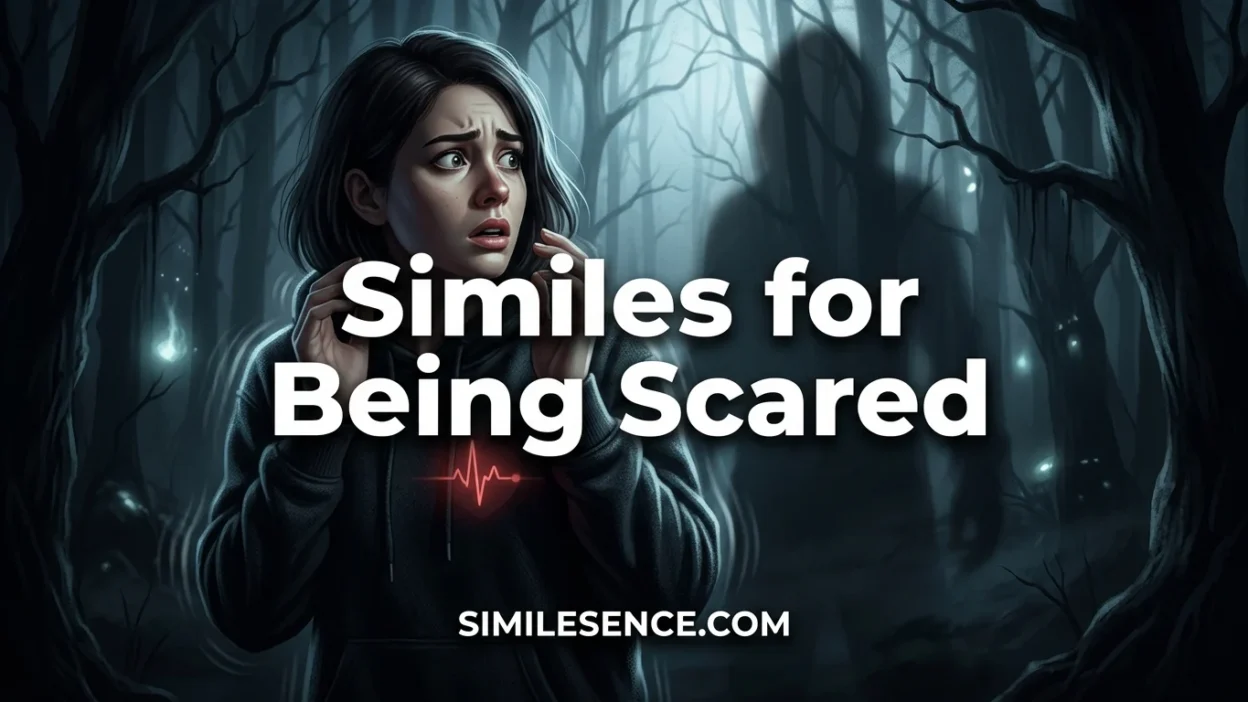
Have you ever felt so scared that your heart seemed to jump out of your chest? When you want to describe fear in writing, simply saying “I was scared” may not be enough. This is where similes for being scared can make your writing much more vivid.
A simile compares one thing to another using words such as “like” or “as.” For example, instead of saying “She was very scared,” you might say, “She was as nervous as a rabbit hiding from a fox.” Now the reader can picture the fear more clearly.
In simple terms, similes help readers feel what your character feels. They can make stories, poems, essays, and everyday descriptions more interesting.
You may have seen the phrase “strohl simile,” but there is no common literary device called a “strohl simile.” You are most likely looking for a simile. Let’s explore some creative writing similes that can help you describe fear in a powerful but simple way.
20 Similes for Being Scared
1. Scared as a Rabbit in a Trap
Simile: He was as scared as a rabbit caught in a trap.
Meaning: This describes someone who feels helpless and frightened.
What it conveys: It creates a strong image of sudden fear and danger.
Example sentences:
- He was as scared as a rabbit in a trap when he heard the strange noise.
- The little boy looked as scared as a rabbit in a trap.
2. Shaking Like a Leaf
Simile: She was shaking like a leaf in the wind.
Meaning: She was trembling because she was afraid.
What it conveys: This simile shows physical fear through shaking.
Example sentences:
- I was shaking like a leaf before walking into the dark room.
- He stood at the door, shaking like a leaf.
3. Scared as a Deer in Headlights
Simile: He looked as scared as a deer in headlights.
Meaning: He was frozen and unable to react because of fear.
What it conveys: It shows sudden shock and panic.
Example sentences:
- She looked as scared as a deer in headlights when the teacher called her name.
- The boy stood there as scared as a deer in headlights.
4. Heart Pounding Like a Drum
Simile: Her heart was pounding like a drum.
Meaning: Her heart was beating very fast because she was frightened.
What it conveys: It focuses on the physical feeling of fear.
Example sentences:
- My heart was pounding like a drum as I opened the door.
- His heart pounded like a drum when he heard footsteps behind him.
5. Frozen Like Ice
Simile: He stood frozen like ice.
Meaning: He was too frightened to move.
What it conveys: This describes fear that causes a person to become still.
Example sentences:
- She was frozen like ice when she saw the shadow.
- I stood frozen like ice as the noise grew louder.
6. Scared as a Mouse
Simile: He was as scared as a mouse hiding from a cat.
Meaning: He was extremely timid and frightened.
What it conveys: The comparison makes the person seem small and helpless.
Example sentences:
- The child was as scared as a mouse during the storm.
- He looked as scared as a mouse when the dog barked.
7. Trembling Like a Leaf
Simile: His hands were trembling like leaves in a storm.
Meaning: His hands were shaking badly because of fear.
What it conveys: It gives the reader a clear picture of nervousness.
Example sentences:
- Her hands were trembling like leaves before the speech.
- He was trembling like a leaf when he heard the crash.
8. Eyes Wide Like a Deer
Simile: Her eyes were wide like a frightened deer’s.
Meaning: Her eyes showed surprise and fear.
What it conveys: It focuses on the character’s facial reaction.
Example sentences:
- His eyes were wide like a deer’s when the lights went out.
- She stared at the strange figure with eyes wide like a frightened deer.
9. Running Like a Rabbit
Simile: He ran like a rabbit being chased by a fox.
Meaning: He ran very quickly because he was scared.
What it conveys: It shows panic and a strong desire to escape.
Example sentences:
- The children ran like rabbits when the dog started chasing them.
- He ran like a rabbit after hearing the loud crash.
10. Cold as Ice
Simile: Her hands were as cold as ice with fear.
Meaning: Fear made her body feel cold.
What it conveys: It shows the physical effects of being frightened.
Example sentences:
- His fingers were as cold as ice as he waited outside.
- Her hands felt as cold as ice when she heard the news.
11. Breathing Like a Runner
Simile: He was breathing like a runner after a long race.
Meaning: He was breathing quickly because he was frightened.
What it conveys: It shows panic through rapid breathing.
Example sentences:
- She was breathing like a runner after hearing the sudden scream.
- He breathed like a runner as he hid behind the wall.
12. Scared as a Kitten in a Storm
Simile: She was as scared as a kitten in a storm.
Meaning: She felt small, vulnerable, and frightened.
What it conveys: This creates a gentle but emotional image of fear.
Example sentences:
- The little girl was as scared as a kitten in a storm.
- He felt as scared as a kitten when the thunder began.
13. Heart Jumping Like a Frog
Simile: His heart felt like it was jumping like a frog.
Meaning: His heart was beating suddenly and strongly from fear.
What it conveys: It gives a playful image to a nervous feeling.
Example sentences:
- My heart was jumping like a frog when I heard the knock.
- Her heart jumped like a frog when the phone suddenly rang.
14. Pale as a Ghost
Simile: He became as pale as a ghost.
Meaning: His face lost its normal color because he was frightened.
What it conveys: It shows how strongly fear affected him.
Example sentences:
- She turned as pale as a ghost after seeing the accident.
- He was as pale as a ghost when he heard the terrible news.
15. Hiding Like a Turtle
Simile: He was hiding like a turtle in its shell.
Meaning: He wanted to protect himself from something frightening.
What it conveys: It shows fear mixed with a desire to feel safe.
Example sentences:
- The child hid like a turtle in its shell during the thunderstorm.
- She curled up in bed like a turtle hiding in its shell.
16. Scared Like a Bird in a Cage
Simile: She felt scared like a bird trapped in a cage.
Meaning: She felt frightened and unable to escape.
What it conveys: It suggests both fear and helplessness.
Example sentences:
- He felt like a bird in a cage, scared of what might happen next.
- She stood there like a frightened bird in a cage.
17. Jumping Like a Startled Cat
Simile: He jumped like a startled cat.
Meaning: He suddenly moved because something frightened him.
What it conveys: It describes a quick reaction to unexpected fear.
Example sentences:
- I jumped like a startled cat when someone touched my shoulder.
- She jumped like a startled cat after hearing the bang.
18. Nervous Like a Cat in a Strange Place
Simile: He was as nervous as a cat in a strange place.
Meaning: He felt uncomfortable, uncertain, and afraid.
What it conveys: It works well for situations where fear builds slowly.
Example sentences:
- I felt as nervous as a cat in a strange place before the interview.
- She looked as nervous as a cat in a strange place.
19. Silent as a Mouse
Simile: He became as silent as a mouse.
Meaning: He became very quiet because he was afraid of being noticed.
What it conveys: It creates a tense feeling of hiding or danger.
Example sentences:
- We stayed as silent as mice while footsteps came closer.
- He became as silent as a mouse when he heard someone outside.
20. Scared Out of His Wits Like a Child in the Dark
Simile: He was scared out of his wits like a child alone in the dark.
Meaning: He was extremely frightened.
What it conveys: This comparison emphasizes intense fear and helplessness.
Example sentences:
- I was scared out of my wits like a child alone in the dark.
- She felt scared out of her wits when the lights suddenly went off.
How to Use Similes in Writing
Good similes do more than add the word “like” or “as.” They help your reader imagine an emotion, action, person, or place.
For example, compare these two simile sentences:
Simple:
“He was scared.”
More descriptive:
“He was shaking like a leaf in the wind.”
The second sentence gives the reader something to picture. That is the main power of creative writing similes.
When writing your own similes for fear, think about what fear looks, sounds, or feels like. You might compare fear to an animal, storm, cold object, dark place, or sudden movement.
Practical Exercise: Test Your Simile Skills
Try these 10 questions before checking the answers.
Questions
1. Complete the simile:
“She was shaking like a ______.”
2. Which simile best describes someone who cannot move because of fear?
A. Frozen like ice
B. Bright like the sun
C. Soft like cotton
3. Complete the sentence:
“His heart was pounding like a ______.”
4. What does “as pale as a ghost” mean?
5. Which comparison best describes someone running away in fear?
A. Running like a rabbit
B. Sleeping like a baby
C. Floating like a cloud
6. Complete the simile:
“He became as silent as a ______.”
7. What does “like a deer in headlights” suggest?
8. Create a simile for someone whose hands are cold because of fear.
9. Complete the sentence:
“She hid like a turtle in its ______.”
10. Write your own simile for someone who is extremely scared.
Answers and Explanations
1. Leaf
“Shaking like a leaf” describes someone trembling with fear.
2. A. Frozen like ice
This shows that fear has made the person unable to move.
3. Drum
“Pounding like a drum” shows a fast and powerful heartbeat.
4. It means the person looks very frightened.
Fear can make someone’s face look unusually pale.
5. A. Running like a rabbit
This comparison suggests quick movement caused by fear.
6. Mouse
“Silent as a mouse” means someone is extremely quiet.
7. It suggests sudden shock or fear.
A frightened person may freeze instead of knowing what to do.
8. Example:
“Her hands were as cold as ice.”
This compares the coldness of her hands to ice.
9. Shell
A turtle hides inside its shell when it needs protection.
10. Example answer:
“He was as scared as a kitten during a thunderstorm.”
There can be many correct answers. The goal is to create a comparison that clearly communicates fear.
Conclusion
Similes can turn a simple statement into a vivid picture. Instead of only saying that someone is scared, you can show their fear through shaking, freezing, running, hiding, or a racing heart. That makes your writing easier to imagine and more enjoyable to read.
The meaning of similes becomes clear when you connect an emotion to something familiar. For example, “shaking like a leaf” instantly gives the reader an image of someone trembling.
When you practice how to use similes in writing, try creating comparisons from everyday things around you. Think about animals, if we sounds, and objects. With a little practice, you can create your own powerful simile sentences and make your stories much more expressive.

James Jason is a passionate language writer specializing in similes, idioms, metaphors, and figurative expressions. He creates clear, engaging, and educational content that helps readers understand language, improve communication, and enjoy the beauty of English.