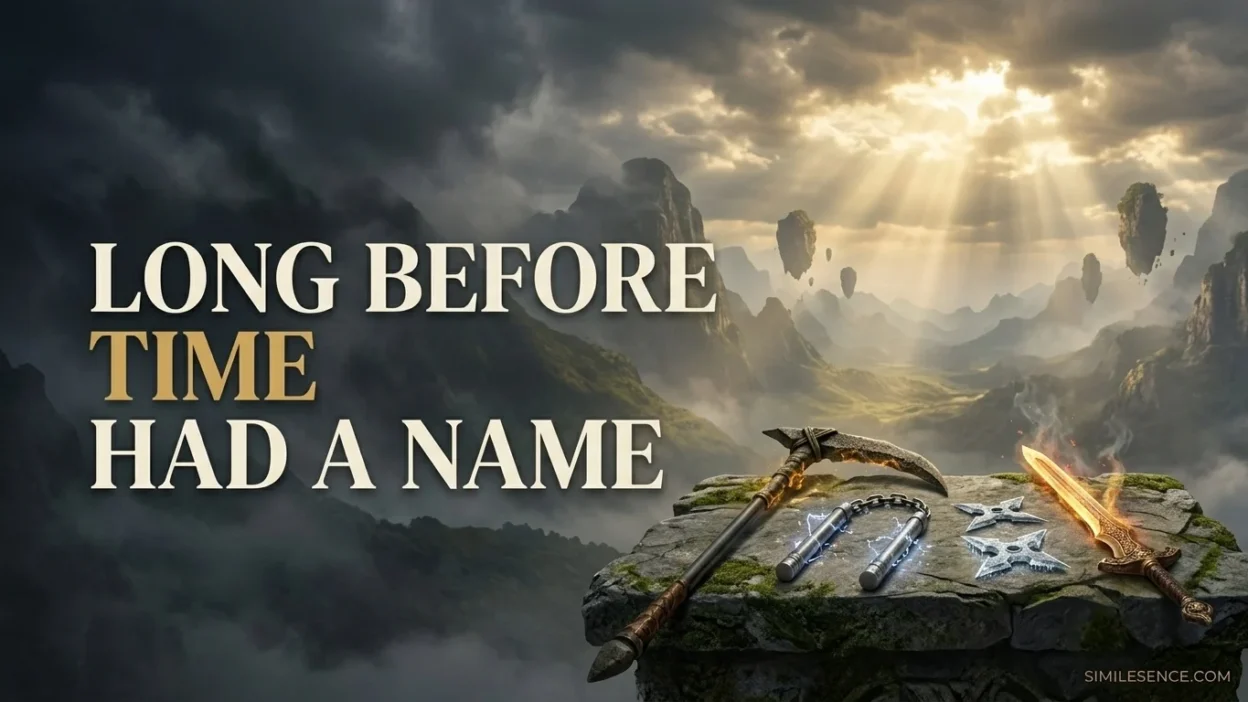
“Long before time had a name” is the famous opening phrase associated with Ninjago: Masters of Spinjitzu, introducing the legendary story of how Ninjago was created. In the series, the First Spinjitzu Master creates the world using four powerful elemental weapons. After his death, his two sons promise to protect these weapons, but the older brother becomes consumed by darkness and seeks to possess them. Their conflict changes the fate of Ninjago forever.
Beyond its connection to the animated series, the phrase describes an unimaginably distant past filled with mystery, ancient legends, and extraordinary beginnings. if you are looking for the original Ninjago story, the meaning behind the famous opening line, or the reason it became an internet meme, understanding its origins reveals why it remains memorable.
Quick Answer: What Does “Long Before Time Had a Name” Mean?
“Long before time had a name” is the iconic opening phrase associated with Ninjago: Masters of Spinjitzu. It introduces the ancient history of Ninjago, including the creation of the world by the First Spinjitzu Master and the legendary four Weapons of Spinjitzu. More generally, the phrase describes a mysterious, unimaginably distant past.
What Is “Long Before Time Had a Name” From?
The phrase is best known from the opening narration of Ninjago: Masters of Spinjitzu, the animated fantasy series featuring a team of young ninja who protect their world from powerful enemies.
The narration introduces viewers to the origins of Ninjago before the main adventures begin. Rather than starting with the ninja and their daily lives, the story reaches back to an ancient era when the world was shaped by extraordinary powers.
At the center of this history is the First Spinjitzu Master, the legendary creator of Ninjago. His remarkable abilities and four elemental weapons establish the foundation for the conflicts that follow.
The opening works like an ancient myth passed down through generations. It explains where the world came from, introduces the objects that hold immense power, and reveals how a family conflict becomes part of Ninjago’s history.
This is why the phrase is more than a dramatic introduction. It signals that the story begins long before the main characters understand their destinies.
How Was Ninjago Created?
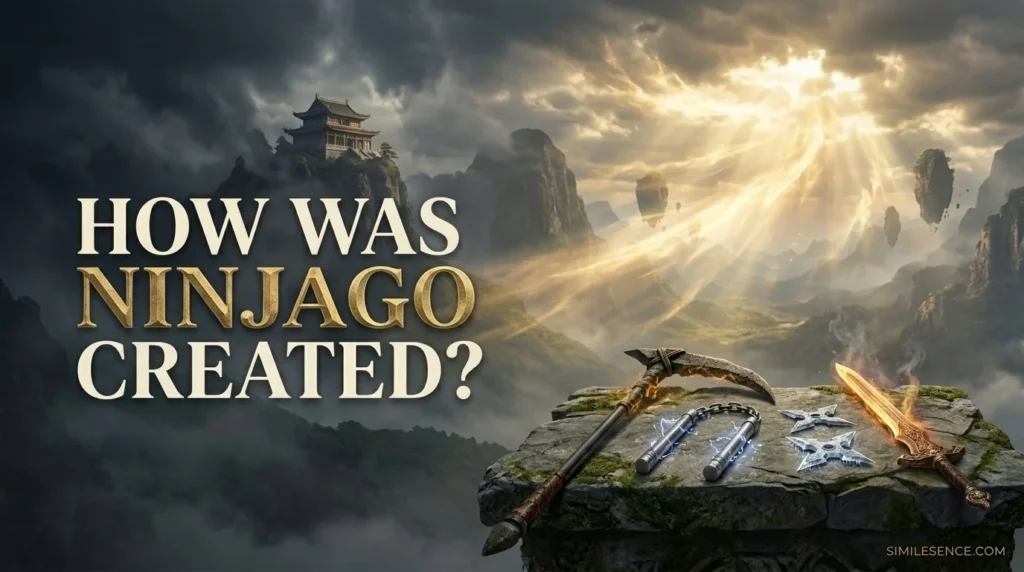
According to the fictional history of Ninjago, the First Spinjitzu Master created Ninjago using the four Weapons of Spinjitzu. These legendary artifacts possess extraordinary elemental power, making them among the most important objects in the series.
The weapons are not ordinary tools. They are connected to the world’s creation and become central to the struggle between those who want to protect Ninjago and those who want to control its power.
The First Spinjitzu Master
The First Spinjitzu Master is one of the most important figures in Ninjago lore. As the creator of Ninjago, he represents the beginning of the world and the legacy that later generations must protect.
His story also establishes the central tension between creation and destruction. Although he leaves behind a world and powerful artifacts, his family must deal with the consequences of those powers.
The First Spinjitzu Master’s two sons inherit a responsibility that tests their loyalty, judgment, and relationship with each other.
The Four Weapons of Spinjitzu
The four legendary weapons are the Scythe of Quakes, the Nunchucks of Lightning, the Shurikens of Ice, and the Sword of Fire.
Each weapon represents a different elemental force and contributes to the mythology of Ninjago.
| Weapon of Spinjitzu | Elemental power | Role in the story |
| Scythe of Quakes | Earth | Represents immense ground-shaking power |
| Nunchucks of Lightning | Lightning | Channels powerful electrical energy |
| Shurikens of Ice | Ice | Represents the power of ice and cold |
| Sword of Fire | Fire | Channels destructive and transformative fire |
The weapons are so powerful that no single person can safely handle all their power at once. This limitation makes protecting them essential to maintaining balance in Ninjago.
Their importance also explains why the brothers’ disagreement becomes such a serious threat. Whoever controls these artifacts could gain extraordinary power over the world.
What Happened After the First Spinjitzu Master Died?
After the First Spinjitzu Master passed away, his two sons swore to protect the four Weapons of Spinjitzu. Their promise was meant to preserve their father’s legacy and prevent the weapons from being used for selfish purposes.
However, the brothers did not share the same intentions.
The older brother became consumed by darkness and developed a desire to possess all four weapons. Rather than treating them as a responsibility, he saw them as a source of power that he wanted for himself.
His ambition created a conflict between the brothers, turning a promise of protection into a battle over control.
The Battle Between the Brothers
The younger brother opposed his older sibling’s desire to claim the weapons. Their disagreement eventually developed into a battle that would shape Ninjago’s future.
The older brother was ultimately defeated and banished to the Underworld. His defeat ended the immediate conflict, allowing peace to return to Ninjago.
However, the banishment did not erase the danger associated with his ambition. His desire for power remained an important part of the larger fictional history.
This conflict introduces one of the series’ recurring themes: power can become dangerous when ambition overcomes responsibility.
How the Younger Brother Protected the Weapons
After peace returned, the younger brother hid the four weapons to prevent them from falling into the wrong hands.
He understood that his older brother’s ambition could lead to another attempt to seize them. Simply hiding the weapons, however, was not enough to guarantee their safety.
To protect them, he placed a guardian in charge of guarding the weapons. He also arranged for a map to be hidden, providing a way for an honest person to find them.
These precautions reflected the younger brother’s concern about both the weapons’ immense power and the possibility of future conflict.
The decision to hide the weapons and appoint a guardian helped establish the mystery surrounding them. Their location, protection, and eventual discovery would remain important elements of Ninjago’s unfolding story.
Who Are the Two Sons of the First Spinjitzu Master?
The two sons are Sensei Wu and Lord Garmadon, central characters in the Ninjago universe.
Although they share the same father, their paths differ significantly. Their relationship helps explain the larger conflict between protecting the world and seeking power.
Sensei Wu
Sensei Wu is the wise ninja master who guides the younger generation. He emphasizes discipline, patience, responsibility, and the importance of using power wisely.
His role as a teacher makes him an important connection between Ninjago’s ancient history and its present-day heroes.
Wu’s knowledge of the past helps the ninja understand the threats they face and the responsibilities that come with their abilities.
Lord Garmadon
Lord Garmadon is associated with darkness, ambition, and the struggle for control in Ninjago’s history. His relationship with Wu is complicated by their different paths and the conflicts that develop throughout the series.
Garmadon’s character also explores the idea that a person’s choices can shape the lives of others. His story is not simply about physical power; it is also about family, identity, conflict, and the consequences of ambition.
Together, Wu and Garmadon represent opposing approaches to power and responsibility, making their relationship an important part of Ninjago’s mythology.
What Does “Long Before Time Had a Name” Mean Beyond Ninjago?
Outside the television series, the phrase can be understood as a poetic expression for an unimaginably ancient past.
It does not identify a specific date or historical period. Instead, it asks the audience to imagine a time so distant that ordinary ways of measuring history no longer seem sufficient.
For example:
- Long before time had a name, ancient mountains rose beneath a sky filled with stars.
- Long before time had a name, a forgotten kingdom guarded the secrets of the universe.
- Their connection felt as though it had existed long before time had a name.
These examples use the phrase to create a feeling of age, mystery, and timelessness.
The meaning depends on context. In Ninjago, it introduces a fictional creation story. In poetry or fantasy writing, it can suggest ancient beginnings, forgotten worlds, eternal love, or the birth of a mysterious power.
Why the Phrase Creates a Sense of Mystery
The words create an atmosphere without explaining everything immediately.
“Long before” suggests an enormous stretch of time. “Time had a name” adds a sense of personification, making an abstract concept seem almost human.
The combination encourages readers to imagine what might have existed before the events they know.
This technique is common in fantasy storytelling, where unanswered questions help build curiosity and anticipation.
Why Is “Long Before Time Had a Name” a Popular Meme?
The phrase became recognizable beyond the original series because of its dramatic delivery and association with Ninjago nostalgia.
Online users frequently reuse memorable dialogue from television shows in humorous or exaggerated situations. The Ninjago narration works especially well because it makes ordinary events sound like the beginning of an epic legend.
The First Spinjitzu Master Copypasta
A copypasta is a block of text repeatedly copied and shared online. It can be used to celebrate a memorable moment, express a shared interest, or make a joke.
The Ninjago origin narration lends itself to this format because its serious tone and detailed account of ancient history can seem comically dramatic when repeated in unrelated contexts.
For example, someone might describe the beginning of a school assignment as though it were an event that changed the course of history.
The humor comes from the contrast between the narration’s epic tone and the ordinary situation being described.
TikTok, Nostalgia, and Ninjago Fans
Short-form videos have helped keep memorable television scenes in circulation. Fans use familiar audio to create edits, jokes, reaction videos, and nostalgic tributes.
For viewers who grew up watching Ninjago, the phrase can bring back memories of the original series, its characters, and its early storylines.
The narration also works well without much explanation. Its recognizable opening immediately establishes the reference for people familiar with the show.
This combination of nostalgia, humor, and dramatic storytelling has helped the phrase remain relevant to online fandom.
What Makes the Phrase So Memorable?
Several literary techniques contribute to the phrase’s impact.
1. Timelessness
The expression suggests a period beyond ordinary human experience. It does not require a specific year or century, allowing the audience to imagine an almost limitless past.
2. Personification
The suggestion that time once had no name gives an abstract concept a human quality. This makes the phrase imaginative rather than purely descriptive.
3. Mystery
The wording raises questions about the origins of the world and the events that happened before the main story. This encourages the audience to keep listening.
4. Epic Storytelling
The phrase establishes a grand tone suitable for ancient legends, fantasy adventures, and creation myths.
5. A Memorable Rhythm
The wording is simple enough to remember but dramatic enough to stand out. Its rhythm makes it effective as spoken narration and recognizable audio.
How Does It Compare With Similar Expressions?
Several expressions can introduce a distant past, but each creates a different impression.
| Expression | Meaning | Best use |
| Long before time had a name | An unimaginably ancient or mythical beginning | Fantasy and epic narration |
| Once upon a time | The traditional beginning of a fictional story | Fairy tales |
| At the dawn of time | The earliest imaginable period | Creation stories |
| A long, long time ago | Something that happened far in the past | Casual storytelling |
| In the beginning | The start of something important | Formal or profound narratives |
| Before recorded history | A period before written historical records | Historical discussion |
Unlike “before recorded history,” which refers to a historical distinction, “long before time had a name” is primarily figurative. Its purpose is to create a feeling rather than define a measurable period.
Is “Long Before Time Had a Name” Scientifically Accurate?
The phrase is poetic, not a scientific statement. It should not be interpreted as proof that time literally existed without a name or that a specific event occurred before time began.
Modern cosmology estimates the universe’s age at approximately 13.8 billion years. The Big Bang model describes the universe’s early hot, dense state and its subsequent expansion.
Questions about the earliest moments of the universe and whether anything preceded them remain complex subjects in physics. The phrase does not attempt to answer those questions.
Instead, it uses imaginative language to describe a beginning that feels too ancient to measure.
This distinction matters when interpreting the expression: its meaning comes from storytelling and imagination, not from a literal scientific timeline.
Frequently Asked Questions
1. What is the meaning of “long before time had a name”?
It means an unimaginably distant past. In Ninjago, the phrase introduces the fictional world’s ancient history; in creative writing, it can describe something mysterious, timeless, or extremely old.
2. Who created Ninjago?
According to Ninjago lore, the First Spinjitzu Master created Ninjago using the four Weapons of Spinjitzu: the Scythe of Quakes, Nunchucks of Lightning, Shurikens of Ice, and Sword of Fire.
3. What are the four Weapons of Spinjitzu?
The four weapons are the Scythe of Quakes, Nunchucks of Lightning, Shurikens of Ice, and Sword of Fire. Each represents a different elemental power and plays an important role in Ninjago’s creation story.
4. What happened to the older son of the First Spinjitzu Master?
The older brother became consumed by darkness and wanted to possess the four weapons. After a battle with his younger brother, he was defeated and banished to the Underworld.
5. Who are Sensei Wu and Lord Garmadon?
Sensei Wu and Lord Garmadon are the sons of the First Spinjitzu Master. Wu becomes a wise teacher and guide to the ninja, while Garmadon’s story involves darkness, ambition, family conflict, and the struggle for power.
6. Why did the younger brother hide the four weapons?
He hid them to protect Ninjago from their immense power and prevent his older brother from claiming them. He also arranged for a guardian and a map to help protect their location.
7. Why is “long before time had a name” a meme?
The phrase is associated with a memorable Ninjago narration. Its serious, epic tone makes it entertaining to repeat in jokes, social media videos, and situations where ordinary events are presented as legendary.
8. Can “long before time had a name” be used in original writing?
Yes. It can introduce fantasy stories, poems, fictional histories, and dramatic scenes. Writers can use the phrase as inspiration while developing their own original continuation and ideas.
Final Thoughts
“Long before time had a name” introduces more than an ancient moment in the history of Ninjago. It opens the door to a fictional world shaped by the First Spinjitzu Master, four powerful elemental weapons, and a conflict between two brothers whose choices affect generations to come.
The Ninjago creation story gives the phrase its distinctive identity, while its poetic meaning makes it useful beyond the series. Its association with Sensei Wu, Lord Garmadon, the Weapons of Spinjitzu, and internet memes has helped make it recognizable among fans.
if you are exploring Ninjago lore, looking for the meaning of the famous opening line, or using it as inspiration for fantasy writing, the phrase captures a powerful idea: every great legend has a beginning, and some beginnings feel older than time itself.

John Kyle is a passionate writer specializing in similes, idioms, metaphors, and figurative language. He creates clear, engaging, and educational content that helps readers understand and confidently use English expressions.