
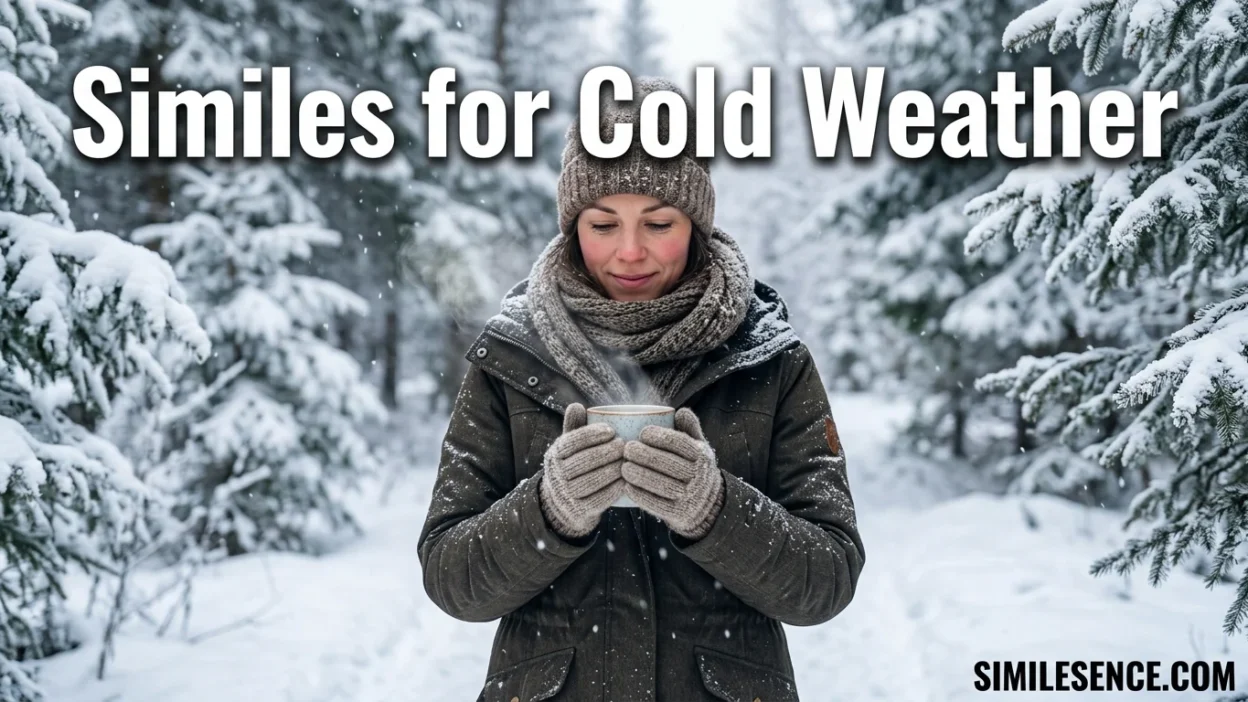
Cold weather can be hard to describe with only a few simple words. Saying “it was cold” tells the reader the temperature was low, but it does not help them feel the freezing air, icy wind, or chilly morning. This is where similes for cold weather can make your writing much more vivid.
A simile compares two different things using words such as “like” or “as.” For example, you might say, “The morning was as cold as an icebox.” This comparison gives the reader a stronger picture of the weather.
Similes are useful in stories, poems, school assignments, and everyday writing. They can turn a plain description into something readers can easily imagine. In simple terms, a good simile helps you show the cold instead of simply telling your reader about it.
Let’s explore some creative writing similes for cold weather. You’ll find simple meanings, useful examples, and practical exercises to help you understand how to use similes in writing.
20 Similes for Cold Weather
1. As cold as ice
Meaning: Extremely cold.
This is one of the simplest ways to describe freezing weather. It compares the temperature to the coldness of ice.
Example sentences:
- The morning air was as cold as ice.
- Her hands felt as cold as ice after walking outside.
2. As cold as a freezer
Meaning: Very cold and uncomfortable.
A freezer is designed to keep things extremely cold, so this comparison creates a strong image of freezing weather.
Example sentences:
- The kitchen felt as cold as a freezer.
- The winter wind was as cold as a freezer.
3. As cold as an icebox
Meaning: Unusually cold.
An icebox is associated with keeping food and drinks cold. This simile makes the cold feel intense and noticeable.
Example sentences:
- The bedroom was as cold as an icebox.
- Outside, the air felt as cold as an icebox.
4. Like a knife against your skin
Meaning: Extremely sharp and biting cold.
This comparison describes cold air that feels harsh when it touches your skin.
Example sentences:
- The winter wind felt like a knife against my skin.
- The freezing air was like a knife against her cheeks.
5. Like walking through a freezer
Meaning: Extremely cold and uncomfortable.
It compares being outside in cold weather to stepping inside a large freezer.
Example sentences:
- Walking outside felt like walking through a freezer.
- The early morning was like walking through a freezer.
6. As cold as a snowbank
Meaning: Very cold.
Snow stays frozen in cold conditions, making it a natural comparison for chilly weather.
Example sentences:
- The air was as cold as a snowbank.
- His fingers were as cold as a snowbank after playing outside.
7. Like a frozen breath
Meaning: Cold enough to make your breath feel icy.
This simile creates an image of freezing air and visible breath during winter.
Example sentences:
- The morning felt like a frozen breath against my face.
- The wind moved through the trees like a frozen breath.
8. As chilly as a winter morning
Meaning: Pleasantly or noticeably cold.
This simile works well when you want to describe cool weather without suggesting extreme freezing.
Example sentences:
- The evening was as chilly as a winter morning.
- The classroom felt as chilly as a winter morning.
9. Like an icy blanket
Meaning: Cold air that seems to cover everything.
An icy blanket creates an image of cold spreading across the ground, buildings, and people.
Example sentences:
- The cold settled over the town like an icy blanket.
- Frost covered the fields like an icy blanket.
10. As cold as a mountain peak
Meaning: Very cold and crisp.
High mountain peaks can have freezing temperatures, especially during winter.
Example sentences:
- The wind was as cold as a mountain peak.
- The air outside felt as cold as a mountain peak.
11. Like a breath from the Arctic
Meaning: Extremely cold air.
This comparison suggests powerful freezing air coming from a very cold region.
Example sentences:
- The wind felt like a breath from the Arctic.
- A cold breeze swept through the street like a breath from the Arctic.
12. As cold as a frozen lake
Meaning: Deeply cold and freezing.
A frozen lake gives readers a strong picture of winter temperatures.
Example sentences:
- The night air was as cold as a frozen lake.
- His hands felt as cold as a frozen lake.
13. Like icy fingers
Meaning: Cold air that feels as if it is touching or gripping you.
This creates a vivid image of the cold reaching into your clothes and touching your skin.
Example sentences:
- The wind wrapped around me like icy fingers.
- Cold air crept through the window like icy fingers.
14. As cold as a snowstorm
Meaning: Very cold, often with harsh winter conditions.
A snowstorm can bring freezing temperatures, strong winds, and heavy snow.
Example sentences:
- The night was as cold as a snowstorm.
- The winter air felt as cold as a snowstorm.
15. Like stepping onto a sheet of ice
Meaning: Shockingly cold.
This comparison works especially well when someone suddenly experiences very cold weather.
Example sentences:
- Opening the door felt like stepping onto a sheet of ice.
- The cold floor felt like stepping onto a sheet of ice.
16. As cold as winter itself
Meaning: Extremely cold and strongly connected with harsh winter weather.
This is a broad and expressive simile that gives the weather a powerful winter feeling.
Example sentences:
- The night was as cold as winter itself.
- The wind felt as cold as winter itself.
17. Like a cold wave washing over you
Meaning: A sudden rush of cold air.
This comparison makes the cold feel like a wave that quickly surrounds your body.
Example sentences:
- A cold wave washed over me like water from the sea.
- When I opened the door, the air felt like a cold wave washing over me.
18. As cold as a winter shadow
Meaning: Deep, unpleasant cold.
A winter shadow suggests a dark, quiet, and chilly atmosphere.
Example sentences:
- The alley was as cold as a winter shadow.
- The evening felt as cold as a winter shadow.
19. Like a blanket of frost
Meaning: Cold weather that covers everything with frost.
This simile is useful for describing frosty mornings, frozen grass, cars, windows, and rooftops.
Example sentences:
- The morning air felt like a blanket of frost.
- Frost covered the garden like a blanket of frost.
20. As cold as a winter night
Meaning: Very cold, especially during the quiet hours of darkness.
This familiar comparison creates a strong picture of a freezing nighttime scene.
Example sentences:
- The evening was as cold as a winter night.
- The wind was as cold as a winter night in the mountains.
How Similes Make Cold Weather More Vivid
A simple sentence such as “The weather was cold” gives the reader basic information. A simile can make that same idea much more powerful.
For example:
Simple:
“The wind was cold.”
With a simile:
“The wind felt like icy fingers against my face.”
The second sentence gives you something to imagine. You can almost feel the cold touching your skin.
This is why creative writing similes are so useful. They help readers connect a physical feeling with something they already understand.
You might describe mild cold with a gentle comparison, such as “as chilly as a winter morning.” For harsh weather, you might choose something stronger, such as “like a knife against your skin.”
The best simile depends on the feeling you want to create.
How to Create Your Own Similes for Cold Weather
Creating your own similes is simple. Start by thinking about what the cold feels, looks, or sounds like.
Ask yourself:
- Does the air feel sharp?
- Does the wind feel like something touching your skin?
- Does the cold cover everything?
- Does it remind you of ice or snow?
- Does it make you want to hide under a blanket?
Then choose a familiar object or experience that matches that feeling.
For example:
Cold air + sharp feeling:
“The wind felt like tiny needles.”
Cold air + covering feeling:
“The frost spread like a silver blanket.”
Cold air + uncomfortable feeling:
“The morning was as cold as a freezer.”
This is an easy way to create your own simile sentences. You do not need complicated words. You only need a clear comparison that helps the reader picture the weather.
Practical Exercise: Similes for Cold Weather
Now it is your turn. Try answering these questions before checking the answers.
Questions
1. Complete the simile:
“The morning was as cold as ________.”
A. ice
B. sunshine
C. summer
2. Which sentence uses a simile?
A. The weather was cold.
B. The weather was like a freezer.
C. The weather changed.
3. What does “the wind felt like icy fingers” suggest?
A. The wind felt warm.
B. The wind felt cold against the skin.
C. The wind was completely still.
4. Complete the sentence:
“The cold air felt like ________.”
A. an icy blanket
B. warm soup
C. a summer breeze
5. Which comparison best describes extremely cold weather?
A. As cold as ice
B. As warm as sunshine
C. As soft as cotton
6. Turn this simple sentence into a simile:
“The winter wind was very cold.”
7. Which sentence contains a simile?
A. Frost covered the grass.
B. Frost covered the grass like a silver blanket.
C. The grass was green.
8. Complete the simile:
“Walking outside felt like ________.”
A. walking through a freezer
B. sitting beside a fire
C. lying on a beach
9. What does “as chilly as a winter morning” mean?
A. Very hot
B. Noticeably cold
C. Extremely humid
10. Create your own simile for cold weather using “like” or “as.”
Answers and Explanations
1. Answer: A — ice
Ice is naturally very cold, so it makes a clear and easy comparison.
2. Answer: B — The weather was like a freezer.
The word “like” compares the weather with a freezer. This makes it a simile.
3. Answer: B — The wind felt cold against the skin.
Icy fingers create a strong image of cold air touching your body.
4. Answer: A — an icy blanket
An icy blanket suggests cold air spreading over an area and covering everything.
5. Answer: A — As cold as ice
Ice is a familiar example of something very cold, making the comparison easy to understand.
6. Possible answer:
“The winter wind was as cold as ice.”
This makes the simple statement more vivid by comparing the wind to something extremely cold.
7. Answer: B — Frost covered the grass like a silver blanket.
The word “like” creates a comparison between frost and a silver blanket.
8. Answer: A — walking through a freezer
A freezer is extremely cold, so this comparison clearly communicates how uncomfortable the weather feels.
9. Answer: B — Noticeably cold
“Chilly” usually describes weather that is cool or cold without necessarily being dangerously freezing.
10. Possible answer:
“The morning air felt like icy fingers on my face.”
This comparison helps the reader imagine the sharp, uncomfortable feeling of cold air.
Why Similes Matter in Writing
Similes give ordinary descriptions more life. Instead of simply telling readers that the weather is cold, you can help them feel it through a familiar comparison.
A sentence like “The wind was cold” is clear, but “The wind felt like icy fingers” creates a stronger mental picture. This is the real meaning of similes in creative writing: they connect an idea or feeling with something readers already know.
You can use similes when writing stories, poems, school assignments, descriptions, or even short social posts. The key is to choose comparisons that match the mood.
When you describe cold weather, think beyond ice and snow. Think about sharp wind, frozen windows, chilly mornings, frosty grass, or the feeling of cold air on your face. These details can help you create fresh and memorable comparisons.
Conclusion
Similes for cold weather can make your descriptions much more vivid and interesting. Instead of simply saying that the weather is cold, you can compare it to ice, a freezer, icy fingers, a frozen lake, or a winter night.
The goal is not to make every sentence complicated. A simple comparison can be enough to help your reader see, feel, or imagine the cold.
As you practice how to use similes in writing, try looking at ordinary weather in a new way. Ask yourself what the cold reminds you of and turn that idea into a comparison using “like” or “as.” With a little practice, you can create your own original simile sentences that make your writing stronger, clearer, and more memorable.

James Jason is a passionate language writer specializing in similes, idioms, metaphors, and figurative expressions. He creates clear, engaging, and educational content that helps readers understand language, improve communication, and enjoy the beauty of English.